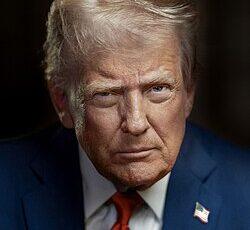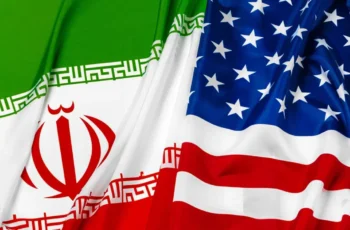
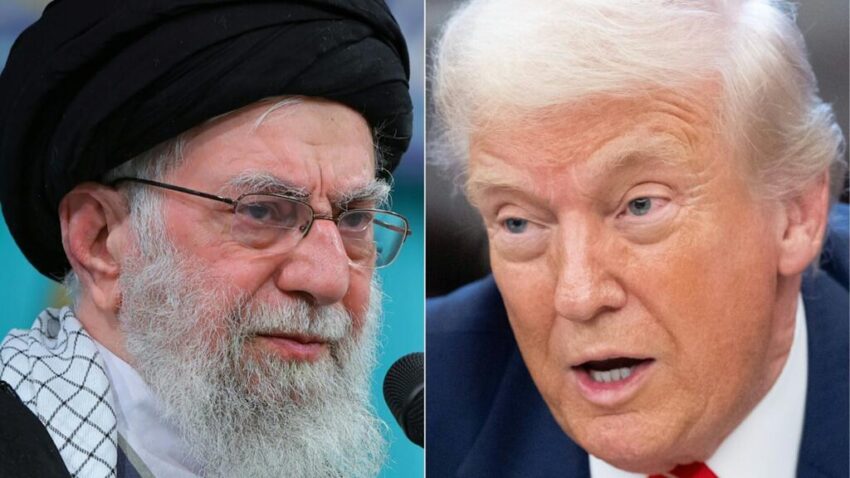
U.S. President Donald Trump has issued a fresh warning to Iran’s leadership, saying the country’s supreme leader should be “very worried” as Washington and Tehran prepare for their first formal talks since last year’s U.S. strikes on Iran’s nuclear infrastructure.
The comments, delivered during a televised interview, come at a moment of heightened tension between the two longtime adversaries, following weeks of unrest inside Iran and an escalating military presence in the Middle East. While both sides are preparing to sit across the table, their sharply different expectations underline how fragile the diplomatic path remains.
Rising tensions before talks
Relations between the United States and Iran have deteriorated rapidly in recent weeks after Iranian security forces launched a sweeping crackdown on nationwide anti-government protests. The demonstrations, driven by economic hardship and political frustration, spread across multiple cities and were met with arrests, forceful dispersal, and a near-total internet shutdown that lasted weeks.
In response, Trump ordered a visible buildup of U.S. military assets in the region, including naval deployments that he described as a show of strength and deterrence. Iranian officials, in turn, warned that any direct attack would be met with swift retaliation, including strikes on U.S. forces and interests across the Middle East.
Against this backdrop, Trump’s warning was unusually blunt. Asked about Iran’s top leadership, he said the supreme leader should be deeply concerned, reinforcing his long-standing hardline stance toward Tehran.
Trump links pressure to support for protesters
Trump argued that his threats and military posture were meant to back ordinary Iranians rather than provoke war. He stopped short of announcing new strikes but insisted that sustained pressure had weakened the Iranian government’s confidence.
According to Trump, his approach helped reassure U.S. allies in the region who had long viewed Iran as a destabilizing force. He claimed that fears among Arab states had eased following last year’s U.S. action against Iranian nuclear facilities, saying those countries no longer saw Tehran as untouchable.
“If decisive action hadn’t been taken, there would be no peace in the Middle East,” Trump said, maintaining that the strikes changed the balance of power and limited Iran’s ability to project influence.
Talks set for Muscat, but agendas clash
Despite the heated rhetoric, both countries are moving toward talks scheduled to take place in Muscat, the capital of Oman, a frequent diplomatic bridge between Washington and Tehran. Iran is expected to be represented by Foreign Minister Abbas Araghchi, while the U.S. delegation will be led by Trump’s special envoy Steve Witkoff.
However, officials on both sides have signaled that the scope of the negotiations remains a major point of contention. U.S. officials have made it clear that Washington wants talks to go beyond nuclear issues, encompassing Iran’s ballistic missile program, its support for armed groups across the region, and its human rights record at home.
Iran, on the other hand, has insisted that discussions be limited strictly to its nuclear program and the removal of economic sanctions, which continue to weigh heavily on the country’s economy.
Nuclear talks derailed by strikes
The upcoming meeting follows a turbulent year for diplomacy. Earlier rounds of indirect nuclear negotiations were held in April and May 2025, raising cautious hopes of progress. Those talks were abruptly halted after an Israeli strike on Iranian targets in mid-June, followed days later by U.S. military action against Iran’s nuclear sites.
Those strikes effectively ended the negotiating process at the time, hardening positions on both sides and fueling fears of a wider conflict. Trump has repeatedly defended the decision, arguing that Iran was close to reviving sensitive nuclear activities.
He also claimed U.S. intelligence had uncovered attempts by Iran to restart its nuclear program at alternative locations after the strikes. According to Trump, those plans were thwarted, and Iran was warned against pursuing any new facilities.
Military incidents add to pressure
While diplomats prepare for talks, the situation on the ground remains volatile. Earlier this week, the U.S. military reported that one of its aircraft carriers shot down an Iranian drone that approached the ship in what was described as an aggressive manner in the Arabian Sea.
Hours later, tensions flared again in the Strait of Hormuz, a critical global shipping route, when Iranian Revolutionary Guard gunboats reportedly confronted a U.S.-flagged tanker and threatened to seize it. Although no shots were fired, the incident underscored how quickly miscalculations could escalate.
Regional analysts warn that even a limited clash could spiral into a broader conflict, disrupting oil supplies and drawing neighboring countries into the crisis. As a result, several Middle Eastern states have intensified behind-the-scenes mediation efforts to keep both Washington and Tehran at the negotiating table.
Uncertain outlook for diplomacy
Inside Iran, the aftermath of the protests continues to shape the political climate. Although internet access has been partially restored, digital rights experts say the government retains the capacity to impose renewed shutdowns, limiting information flow and public mobilization.
For now, the planned talks in Oman represent a rare opening after months of confrontation. Yet Trump’s warning — and Iran’s equally firm responses — highlight how narrow the path to de-escalation remains.
Whether the meeting produces even modest progress or collapses under the weight of mistrust will likely set the tone for U.S.–Iran relations in the months ahead, with consequences that extend far beyond the negotiating room.