By Desmond Ogbonmwan
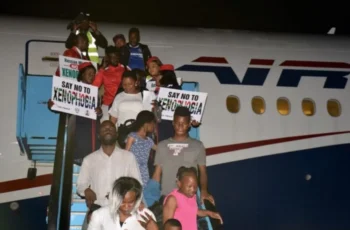
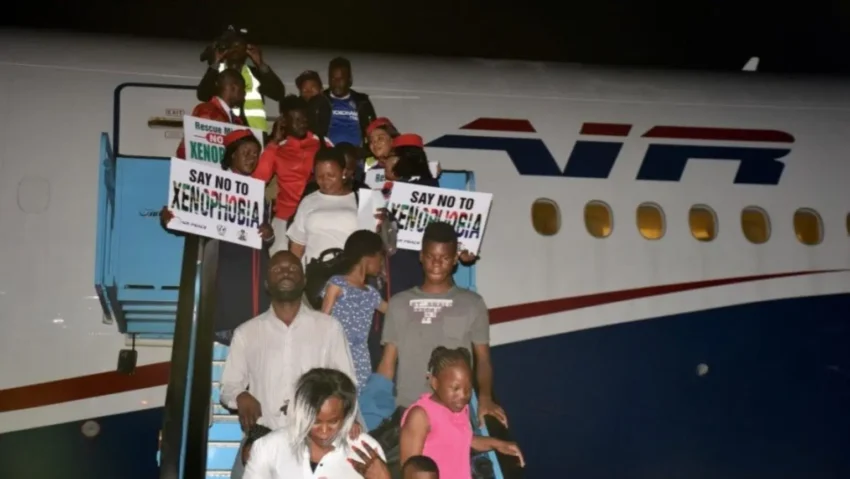
When evacuation flights land, television cameras often capture the same scenes.
Passengers carrying small bags.
Government officials waiting at airport terminals.
Families embracing relatives they have not seen for years.
To many viewers, it appears to be the end of a difficult journey.
In reality, it is often the beginning of an even harder one.
For hundreds of Nigerians returning from South Africa following renewed xenophobic tensions, coming home does not automatically mean life becomes easier.
Many are not simply changing countries.
They are leaving behind businesses they spent years building, homes filled with memories, children whose education has been interrupted and friendships developed over decades.
For some, the return represents safety.
For others, it also represents uncertainty.
Behind every evacuation flight is a deeply personal story that rarely receives the same attention as the headlines announcing another group of returnees.
Forced Migration Is Different From Choosing to Relocate
Migration is often associated with opportunity.
People move abroad to study, work, reunite with family or pursue business ambitions.
Forced migration is very different.
It occurs when people feel they have little or no realistic choice but to leave because remaining would place their lives, safety or livelihoods at risk.
Unlike planned relocation, forced migration leaves little time for preparation.
There may be no opportunity to sell property.
No chance to close a business properly.
No time to transfer children to new schools or organise finances.
The result is a sudden disruption that affects every part of a family’s life.
Leaving Behind More Than Property
When discussions focus on compensation, attention often turns to physical assets.
Shops.
Vehicles.
Homes.
Equipment.
Furniture.
Stock.
These losses are significant.
But many returnees say the greatest losses cannot be measured financially.
Years spent building trust within a community.
Long-standing friendships.
Professional networks.
Customers who supported businesses for years.
Children who grew up calling South Africa home.
These are not assets that insurance policies or financial compensation can fully replace.
A Family Forced to Begin Again
Imagine spending fifteen years building a successful business.
You know your customers by name.
Your children have grown up in the same neighbourhood.
You have employees who depend on your company to support their own families.
Then, within days, everything changes.
You are advised to leave for your safety.
You lock your business without knowing if you will ever return.
You pack only what you can carry.
Everything else stays behind.
For many returnees, this is not imagination.
It reflects the difficult decisions they have recently faced.
Children Often Carry Invisible Burdens
Adults may understand why relocation becomes necessary.
Children often struggle to process it.
A child who suddenly leaves school may not understand why favourite teachers, classmates and routines have disappeared.
Teenagers may lose friendships built over many years.
Younger children may experience confusion after moving into unfamiliar surroundings in a country they know only through family stories.
Psychologists note that major disruptions during childhood can affect emotional wellbeing, particularly when accompanied by uncertainty about the future.
Supporting children through forced migration therefore requires more than providing accommodation.
It also requires emotional reassurance and stability.
The Financial Shock Does Not End at the Airport
Returning home is only the first step.
Many families quickly encounter new financial realities.
Accommodation must be secured.
Transportation costs increase.
Children may need to be enrolled in new schools.
Businesses must be rebuilt.
Some returnees arrive with limited savings because much of their wealth remains tied to properties or businesses left behind.
Others may have borrowed money before relocating years earlier and now face the challenge of rebuilding without established income.
Starting again under these circumstances demands extraordinary resilience.
Parents Carry the Heaviest Emotional Burden
For parents, forced migration often brings a unique form of pressure.
Beyond worrying about their own safety, they must also reassure children who may not fully understand why their lives have changed so suddenly.
Many parents try to remain calm even when they are uncertain about where the family will live, how they will earn an income, or whether their children will be able to continue their education without interruption.
Some suppress their own fears because they believe showing anxiety could affect their children.
Psychologists describe this as “protective parenting”—where adults absorb emotional stress in an effort to shield younger family members.
Over time, however, carrying that burden without adequate support can affect mental health, relationships and decision-making.
Starting Over Means Rebuilding More Than a Business
Returning home is often described as “starting again.”
In reality, rebuilding extends far beyond replacing physical assets.
Entrepreneurs who spent years developing customer relationships must find new markets.
Professionals may need to rebuild careers from the beginning.
Children adjust to unfamiliar schools and new classmates.
Families search for accommodation while trying to stretch limited savings.
Even everyday routines change.
A familiar neighbourhood is replaced by unfamiliar surroundings.
Trusted colleagues become distant contacts.
Daily habits formed over many years disappear almost overnight.
For many returnees, rebuilding confidence becomes just as important as rebuilding income.
Communities Often Become the First Safety Net
One encouraging aspect of many return journeys is the role played by families, religious organisations, community associations and local support groups.
Relatives frequently provide temporary accommodation.
Friends assist with transportation.
Faith-based organisations sometimes donate food, clothing and household items.
Community groups help families reconnect with opportunities and support networks.
These acts of solidarity remind many returnees that rebuilding is rarely achieved alone.
While government assistance remains important, community support often provides immediate relief during the difficult first weeks after returning home.
Compensation Is About More Than Money
Much of the current public discussion has focused on Nigeria’s plan to seek compensation for abandoned businesses and properties.
Financial compensation would undoubtedly help many affected families.
However, many returnees say the issue goes beyond recovering money.
Compensation also represents recognition.
Recognition that legitimate businesses were disrupted.
Recognition that families experienced genuine hardship.
Recognition that years of work should not simply disappear without accountability.
Even where financial recovery cannot replace everything that has been lost, official acknowledgement can play an important role in helping families move forward.
Lessons From Forced Migration Around the World
Forced migration is not unique to Nigeria or South Africa.
Around the world, conflicts, political instability, natural disasters and economic crises have displaced millions of people.
While each situation differs, researchers have identified common themes among those rebuilding their lives.
Successful recovery often depends on:
- access to employment;
- stable housing;
- education for children;
- community support;
- mental health services;
- opportunities to restart businesses.
Countries that invest in reintegration programmes generally help returnees recover more quickly and contribute economically once again.
These lessons may also prove valuable for Nigerians returning from South Africa.
Resilience Has Become Part of the Story
Despite the hardship, many returnees remain determined to rebuild.
History shows that entrepreneurs often possess remarkable resilience.
Many who previously built successful businesses from modest beginnings believe they can do so again, even if the journey proves difficult.
That optimism is rooted in experience.
Starting a business requires persistence.
Rebuilding one requires even greater determination.
Several returnees have already expressed interest in establishing new enterprises in Nigeria while maintaining hope that stronger diplomatic protections will improve conditions for Nigerians living elsewhere on the continent.
Why This Story Matters Beyond One Crisis
The evacuation from South Africa is not only a migration story.
It is also a story about identity, resilience and the realities of cross-border entrepreneurship in modern Africa.
As African nations pursue closer economic cooperation through initiatives such as the African Continental Free Trade Area (AfCFTA), greater movement of people and investment is expected.
That makes the protection of migrants increasingly important.
If entrepreneurs fear that years of work can disappear during periods of unrest, they may hesitate to invest beyond their home countries.
Conversely, creating environments where lawful residents feel secure encourages business growth, innovation and stronger regional cooperation.
Final Thoughts
Behind every evacuation flight is a story that cannot be captured by passenger numbers alone.
It is the story of a restaurant owner wondering whether customers will ever return.
A child saying goodbye to classmates without knowing if they will meet again.
A family locking the door of a home they may never see again.
A business owner carrying years of dreams in a single suitcase.
These stories remind us that migration is ultimately about people rather than statistics.
While diplomatic discussions about compensation and future protections continue, the greatest challenge for many returnees will be rebuilding lives with dignity, confidence and hope.
Their resilience deserves recognition not only during moments of crisis but also throughout the long process of recovery that follows.
Frequently Asked Questions
What is forced migration?
Forced migration occurs when people leave their homes because of threats to their safety, conflict, persecution, violence or other circumstances that leave them with little practical choice.
Why are Nigerians returning from South Africa?
Many Nigerians have chosen to return following renewed xenophobic tensions and concerns about personal safety, businesses and property.
What challenges do returnees face?
Common challenges include finding employment, securing housing, enrolling children in schools, rebuilding businesses and coping with emotional stress after sudden relocation.
Why is Nigeria seeking compensation?
The government says many returnees abandoned businesses, homes and valuable assets. Officials intend to document these losses while pursuing discussions with South African authorities.
Can families fully recover after forced migration?
Recovery varies. Financial assistance, employment opportunities, community support and access to education and healthcare all play important roles in helping families rebuild.
Related Stories
FG Seeks Compensation for Nigerians’ Abandoned Properties as South Africa Evacuation Continues
Why Xenophobic Attacks Keep Returning in South Africa: Understanding the Causes and Impact
How Nigerian-Owned Businesses Have Helped Shape South Africa’s Economy
Photos: Second Batch of Nigerians Evacuated From South Africa Arrive Lagos
Ghanaian Evacuee Sparks Debate With Claim After South Africa Xenophobia Scare