
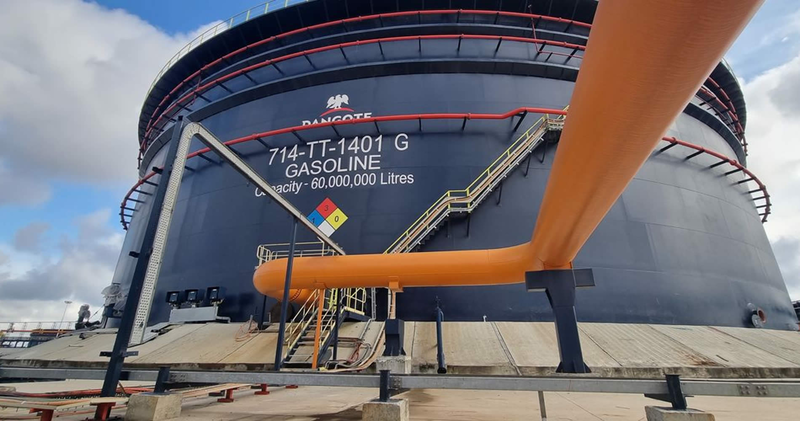
Dangote Petroleum Refinery has announced a reduction in the ex-depot prices of petrol and diesel, marking its first downward adjustment after a series of price increases in recent months.
The new pricing structure, released by the refinery on March 10, 2026, shows that the gantry price of Premium Motor Spirit (PMS)—commonly known as petrol—has been reduced significantly.
According to the latest pricing template, the price of petrol has been cut by ₦100 per litre, bringing it down to ₦1,075 per litre from the previous rate of ₦1,175 per litre.
Lower Price for Coastal Distribution
In addition to the reduction in gantry pricing, the refinery disclosed that petrol supplied through coastal distribution channels will be sold at ₦1,050 per litre.
This slightly lower price reflects the logistics structure for marine deliveries, which are commonly used to transport petroleum products to coastal depots and distribution points.
The refinery explained that these adjustments form part of its ongoing efforts to respond to market conditions and maintain competitive pricing within the petroleum sector.
Diesel Price Also Reduced
The refinery also announced a notable reduction in the price of Automotive Gas Oil (AGO), widely known as diesel.
Under the new pricing structure, the gantry price of diesel has dropped to ₦1,430 per litre, representing a ₦190 decrease from the previous price of ₦1,620 per litre.
This adjustment is expected to have an impact on several sectors of the Nigerian economy, particularly industries that rely heavily on diesel for power generation and transportation.
Prices Exclude Regulatory Charges
Despite the reductions, Dangote Refinery clarified that the quoted prices do not include statutory charges imposed by the Nigerian Midstream and Downstream Petroleum Regulatory Authority (NMDPRA).
These regulatory fees are typically added during the distribution and retail process, meaning the final pump price paid by consumers may differ from the refinery’s ex-depot rate.
Impact on Nigeria’s Fuel Market
The latest price adjustment comes at a time when global oil markets are experiencing fluctuations.
Industry analysts note that the reduction appears to be influenced by recent declines in international crude oil prices, which have eased some of the cost pressures affecting refineries around the world.
Lower crude prices often allow refiners to reduce the cost of refined petroleum products, which can eventually translate into lower prices within domestic markets.
Potential Relief for Businesses and Consumers
Fuel prices have remained a major concern for many Nigerians due to their impact on transportation costs, food prices, and overall living expenses.
The reduction in diesel prices may particularly benefit businesses that depend on generators and heavy machinery to maintain operations.
Manufacturing companies, logistics firms, and small businesses across Nigeria could experience some relief if the price adjustment leads to lower energy and transportation costs.
Dangote Refinery’s Growing Role in Nigeria’s Energy Sector
The Dangote Refinery, located in Lagos, is one of the largest single-train refineries in the world and has been positioned as a key player in transforming Nigeria’s energy sector.
Since it began supplying petroleum products, the refinery has become an important supplier in the domestic fuel market, helping reduce Nigeria’s dependence on imported refined products.
Market observers believe that pricing decisions by the refinery could continue to influence fuel costs across the country.
With the latest reduction, industry stakeholders will be watching closely to see whether fuel marketers and distributors adjust pump prices accordingly.