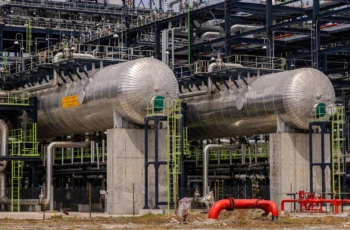

Nigeria has recorded a fresh oil discovery through a joint exploration effort between the Nigerian National Petroleum Company Limited (NNPC Ltd) and global energy giant Chevron, raising renewed optimism about the country’s crude oil production outlook and long-term revenue prospects.
The discovery, announced amid ongoing efforts to revitalise Nigeria’s oil and gas sector, comes at a critical time when Africa’s largest oil producer is seeking to stabilise output, attract new investments, and strengthen foreign exchange inflows into the economy.
Industry sources confirmed that the discovery was made during recent exploration activities carried out under the Chevron–NNPC joint venture, one of Nigeria’s longest-standing partnerships in the upstream oil sector. While detailed estimates of the volume of recoverable reserves are yet to be officially disclosed, early indications suggest commercially viable deposits that could support future production growth.
Renewed Hope for Nigeria’s Oil Sector
Nigeria’s oil sector has faced persistent challenges in recent years, including declining output, pipeline vandalism, oil theft, underinvestment, and operational disruptions. These factors have contributed to the country repeatedly falling short of its OPEC production quota, leading to lost revenue and weakened fiscal performance.
The new discovery is therefore being viewed as a positive signal that exploration efforts are beginning to yield results, particularly under the restructured NNPC Ltd framework introduced following the passage of the Petroleum Industry Act (PIA).
Energy analysts say the discovery reinforces Nigeria’s position as a key hydrocarbon producer in Africa, while also demonstrating that international oil companies remain interested in the country despite global shifts toward cleaner energy sources.
“This discovery shows that Nigeria still has significant untapped potential,” said an industry analyst familiar with upstream operations. “What matters now is how quickly it can be developed and brought into production.”
Chevron–NNPC Partnership: A Longstanding Alliance
Chevron’s partnership with NNPC dates back several decades and covers multiple onshore and offshore assets across Nigeria. The collaboration has been central to some of the country’s most productive oil fields, contributing significantly to national output and export earnings over the years.
Under the PIA framework, NNPC transitioned into a commercial entity, a move intended to improve efficiency, transparency, and profitability. The Chevron–NNPC joint venture has since aligned its operations with the new regulatory environment, focusing on cost optimisation and targeted exploration.
Observers note that the latest discovery could further strengthen confidence in the reformed structure of Nigeria’s oil industry, especially if development timelines are handled efficiently.
Implications for Production and Revenue
Nigeria currently targets crude oil production of over two million barrels per day, combining both oil and condensate. However, actual output has frequently lagged behind this target due to operational and security-related setbacks.
If successfully developed, the new oil find could help close the production gap over time, boosting export volumes and increasing government revenue from oil sales, royalties, and taxes.
Oil remains Nigeria’s primary source of foreign exchange, accounting for the bulk of export earnings despite efforts to diversify the economy. Any increase in sustainable production is therefore expected to have a positive ripple effect on foreign reserves and fiscal stability.
However, experts caution that discoveries alone do not automatically translate into immediate economic gains.
“Discovery is just the first step,” said a Lagos-based energy consultant. “The real work is in appraisal, investment approvals, infrastructure development, and security. Without these, the impact will be limited.”
What It Means for Fuel Prices
Amid rising public interest, analysts have been quick to clarify that new oil discoveries do not automatically lead to immediate reductions in domestic fuel prices.
Nigeria’s fuel pricing regime is now largely deregulated, with pump prices influenced by global oil prices, exchange rates, refining capacity, and distribution costs. While increased crude production can strengthen foreign exchange supply in the long run, its effect on fuel prices is indirect rather than immediate.
Still, sustained improvements in oil output could support broader economic stability, which may eventually ease pressure on energy costs.
Investment Confidence and Global Context
The discovery comes at a time when global energy companies are reassessing their portfolios amid energy transition pressures. While renewables are gaining ground, oil and gas continue to play a central role in global energy supply, particularly in emerging economies.
Nigeria’s ability to attract and retain investment in its oil sector will depend on regulatory certainty, security improvements, and consistent policy implementation.
The Chevron–NNPC discovery is seen as a confidence booster, especially as Nigeria competes with other African producers such as Angola, Guyana, and Namibia for exploration capital.
In recent months, the government has reiterated its commitment to tackling oil theft, improving pipeline security, and creating a more investor-friendly environment.
Next Steps and Expectations
Industry stakeholders expect further updates from NNPC and Chevron as appraisal activities progress and technical assessments are completed. These evaluations will determine the size of the discovery, development costs, and timelines for bringing the field into production.
If managed effectively, the new oil find could form part of a broader strategy to restore Nigeria’s oil output to sustainable levels while supporting economic recovery efforts.
For now, the announcement has injected cautious optimism into a sector that has endured years of uncertainty.
As Nigeria balances its energy transition goals with the realities of an oil-dependent economy, discoveries such as this underline the continued relevance of its hydrocarbon resources in shaping national growth and development.