
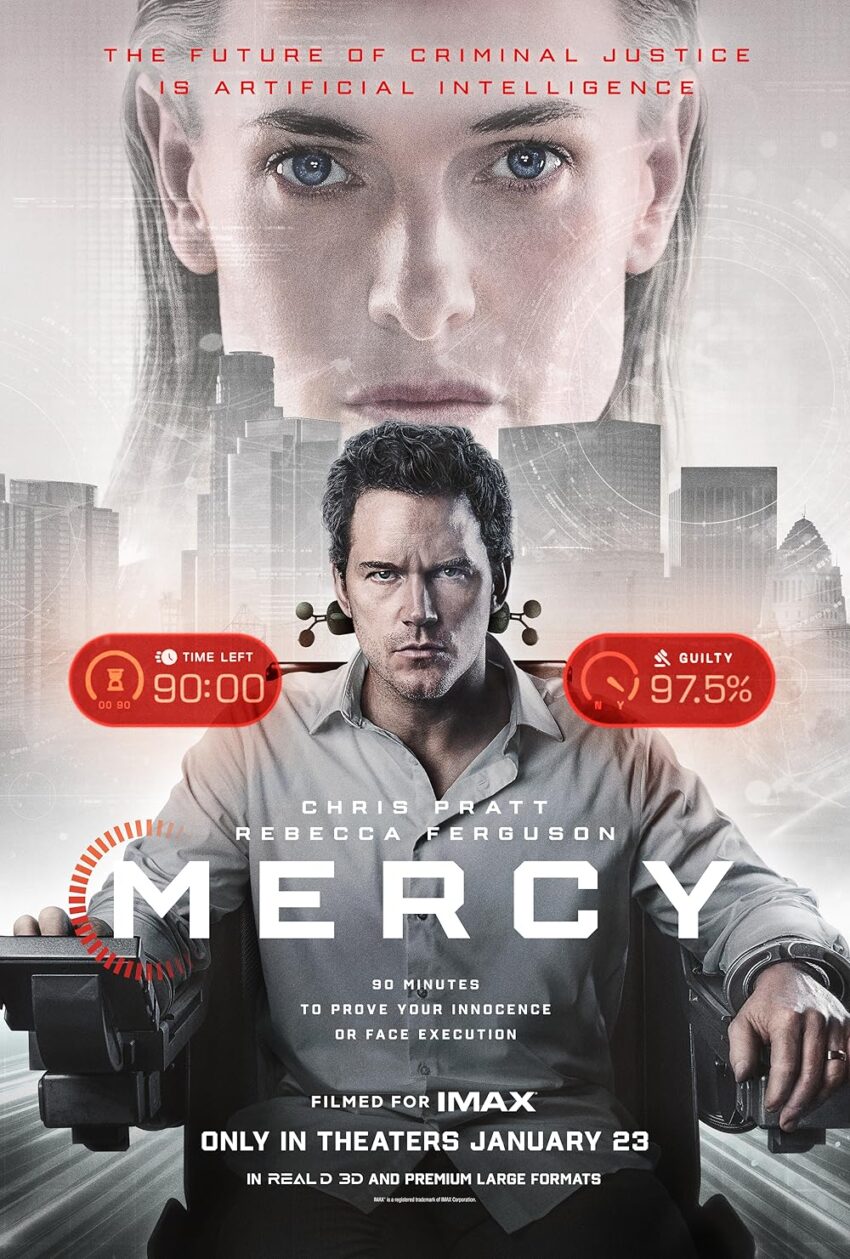
The upcoming science-fiction thriller Mercy (2026) has surged to the top of trending searches globally after fresh trailer buzz, early critic ratings, and renewed interest in its high-stakes storyline.
Directed by Timur Bekmambetov and starring Chris Pratt alongside Rebecca Ferguson, Mercy is already generating intense discussion — and it hasn’t even fully settled into its release window.
With a gripping concept built around justice, technology, and a race against time, the film is shaping up to be one of the most talked-about sci-fi releases of 2026.
What Is Mercy (2026) About?
At its core, Mercy follows a near-future scenario where capital punishment has evolved into a technologically driven system. Chris Pratt plays a man accused of a violent crime who is given just 90 minutes to prove his innocence before facing execution.
The twist? His fate is determined by artificial intelligence.
The film blends courtroom tension with futuristic surveillance, moral dilemmas, and psychological pressure — creating a story that explores whether machines should be trusted with life-and-death decisions.
The time-bound format — 90 minutes to survive — adds a thriller edge that has caught viewers’ attention online.
Cast and Creative Team
- Chris Pratt – Lead role
- Rebecca Ferguson – Key supporting role
- Director: Timur Bekmambetov
- Studio: Amazon MGM Studios
- Genre: Science Fiction / Thriller
Bekmambetov is known for stylized, high-concept storytelling, and early footage suggests Mercy leans heavily into a sleek, high-tension visual approach.
Release Date
Mercy is scheduled for release on January 28, 2026 in several markets.
With Amazon MGM Studios backing the film, distribution and streaming placement are expected to be strong.
Early Ratings and Online Buzz
While anticipation is high, early critical scores have sparked debate:
- IMDb: 6.2/10
- Rotten Tomatoes: 24%
- Letterboxd: 2.5/5
These mixed ratings have fueled online conversation. Some viewers praise the high-concept premise and Pratt’s performance, while others criticize the execution and pacing.
This divide is one of the main reasons the movie is trending.
Controversy often drives curiosity — and curiosity drives searches.
Why Mercy Is Trending Right Now
There are three major reasons behind the surge:
1️⃣ Trailer Resurgence
The official trailer has gained renewed traction on YouTube and social platforms, introducing the film to new audiences.
2️⃣ AI Debate
The film’s theme — artificial intelligence deciding guilt or innocence — connects directly to current real-world conversations about AI ethics.
As AI continues to influence industries, education, and security systems, a movie that puts it in charge of justice feels timely.
3️⃣ Chris Pratt Factor
Chris Pratt remains one of Hollywood’s most recognizable leading men. Any major release featuring him typically attracts global attention.
The Bigger Question the Film Raises
Beyond the thriller aspect, Mercy taps into something deeper:
- Can technology truly be impartial?
- Should justice be automated?
- What happens when speed replaces due process?
In a world increasingly shaped by algorithms, the film’s premise feels less like fantasy and more like a warning.
That relevance may explain why audiences are curious — even those skeptical of early reviews.
Audience Reactions So Far
Online reactions are sharply divided.
Some viewers call it:
- “A bold sci-fi experiment”
- “A tense, time-driven thriller”
- “Visually compelling”
Others argue:
- The concept outweighs the emotional depth.
- The pacing doesn’t fully match the premise.
- It doesn’t explore the moral complexity deeply enough.
Regardless of opinion, people are talking — and that’s why it’s trending.
Final Take
Whether Mercy (2026) ultimately becomes a cult sci-fi favorite or fades into the streaming catalog, one thing is certain: it has captured attention.
Its mix of artificial intelligence, capital punishment, and time-pressure storytelling places it firmly in the conversation about modern thrillers.
In an era where technology increasingly shapes real life, a film questioning who — or what — should control justice is bound to spark debate.
And debate is exactly what’s happening now.