

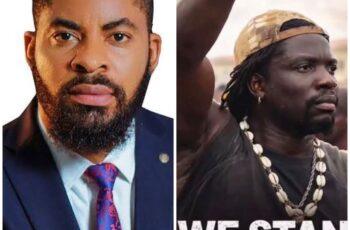
In recent weeks, Nigerian social media has been dominated by an intense and increasingly personal clash between social commentator VeryDarkMan (VDM) and activist Omoyele Sowore. What started as criticism has quickly evolved into a layered battle involving reputation, influence, and the very idea of truth in the digital age.
At the center of this storm is VDM, a figure who has built a strong online presence through bold commentary, exposés, and an unapologetic approach to calling out individuals and institutions. His content thrives on confrontation, and his ability to break down issues in a relatable, almost street-level narrative style has earned him a loyal and highly engaged audience.
But this ongoing situation raises deeper questions: Is VDM truly exposing hidden truths, or is he strategically shaping narratives for engagement? And where does that leave figures like Sowore, who himself has built a reputation on activism, accountability, and speaking truth to power?
The Rise of VDM: Content, Courage, and Control
VeryDarkMan has mastered something many digital creators struggle with—attention. In a crowded online space, he has carved out a niche as a watchdog figure, someone who appears fearless in challenging authority and calling out perceived wrongdoing.
One of his strongest assets is storytelling. His breakdowns are often detailed, emotionally charged, and presented in a way that makes complex issues easy for everyday Nigerians to understand. This has positioned him not just as a content creator, but as a voice many people trust.
There is no denying that a lot of what VDM says resonates. Many Nigerians feel frustrated with the system, disillusioned by institutions, and hungry for accountability. When someone steps forward and appears to “say it as it is,” it naturally attracts attention and support.
However, influence at this level comes with responsibility—and scrutiny.
The Sowore Factor: Activism Meets Digital Warfare
Omoyele Sowore is not new to controversy. As a long-standing activist and founder of Sahara Reporters, he has spent years positioning himself as a defender of truth and a challenger of political and societal wrongdoing.
His credibility has been built over time through investigative journalism and political activism. But in today’s digital-first environment, credibility alone is not always enough. Visibility, relatability, and narrative control now play equally powerful roles.
This is where the clash becomes interesting.
VDM operates within the fast-paced, emotionally driven world of social media, where speed often beats verification and storytelling can overshadow nuance. Sowore, on the other hand, represents a more traditional form of activism—structured, investigative, and institutional.
The tension between these two approaches is now playing out in public, and Nigerians are watching closely.
Truth vs Narrative: Where Do We Draw the Line?
From an observer’s standpoint, it is difficult to completely dismiss VDM’s claims. There appears to be a level of detail and conviction in his statements that suggests he is not simply speaking blindly. In fact, many viewers believe he is exposing realities that would otherwise remain hidden.
At the same time, it is important to recognize that no individual should be viewed as entirely flawless—especially in a space as complex as Nigerian socio-political discourse.
VDM presents himself as a figure of integrity, someone committed to due diligence before making claims. But like every influential voice, he is not immune to bias, personal motivations, or selective storytelling.
The danger lies in the tendency of audiences to adopt a “hero vs villain” mindset. When one person is elevated as the ultimate truth-teller, it becomes easy to ignore their flaws or overlook areas where they may also need to be questioned.
The Power of Numbers and Public Perception
One of the most defining elements of this situation is VDM’s reach. In today’s digital era, numbers matter. Followers, views, shares, and engagement levels all contribute to shaping public perception.
VDM has built a platform that gives him the ability to influence conversations at scale. When he speaks, people listen—and more importantly, people react.
This creates a powerful dynamic where narratives can quickly gain traction, sometimes faster than they can be verified or challenged.
For Sowore, this presents a different kind of challenge. While he may have institutional credibility, he is now operating in a space where influence is increasingly measured by digital engagement rather than legacy reputation.
The Other Side of the Story
It is also worth considering that there may be layers of this situation that have not yet come to light. Public narratives are often incomplete, shaped by the information available at a given time.
While VDM is currently in a position of strength in terms of public sentiment, it would be premature to conclude that his position is entirely beyond question.
History has shown that in situations like this, new information can emerge that shifts perspectives dramatically. Individuals who are initially seen as whistleblowers can later face scrutiny themselves, especially as more voices begin to speak.
This does not invalidate the points being raised, but it highlights the importance of maintaining a balanced view.
A Broader Reflection on Nigeria’s Digital Culture
Beyond the individuals involved, this situation reflects a larger shift in how Nigerians consume and interpret information.
Social media has democratized information sharing, giving more people a voice. But it has also blurred the lines between verified facts, personal opinions, and strategic narratives.
Influencers like VDM represent a new kind of power—one that is not tied to institutions but to attention. Figures like Sowore represent the older model, where credibility is built over time through structured efforts.
The intersection of these two worlds is where conflicts like this are born.
Final Thoughts
The ongoing clash between VDM and Omoyele Sowore is more than just a personal dispute—it is a reflection of evolving power structures in Nigeria’s information space.
There is truth on different sides, but there are also gaps, biases, and unanswered questions.
VDM may be exposing real issues, and his impact cannot be ignored. But presenting him as a flawless figure of integrity would be an oversimplification. Like every influential voice, he likely has his own complexities—some of which may only become visible over time.
For Nigerians watching this unfold, the most important takeaway is this:
Question everything, verify as much as possible, and resist the urge to fully idolize or completely dismiss any single voice.
Because in the end, truth is rarely one-sided—and in a digital world driven by narratives, it is often the most contested space of all.



Good analysis