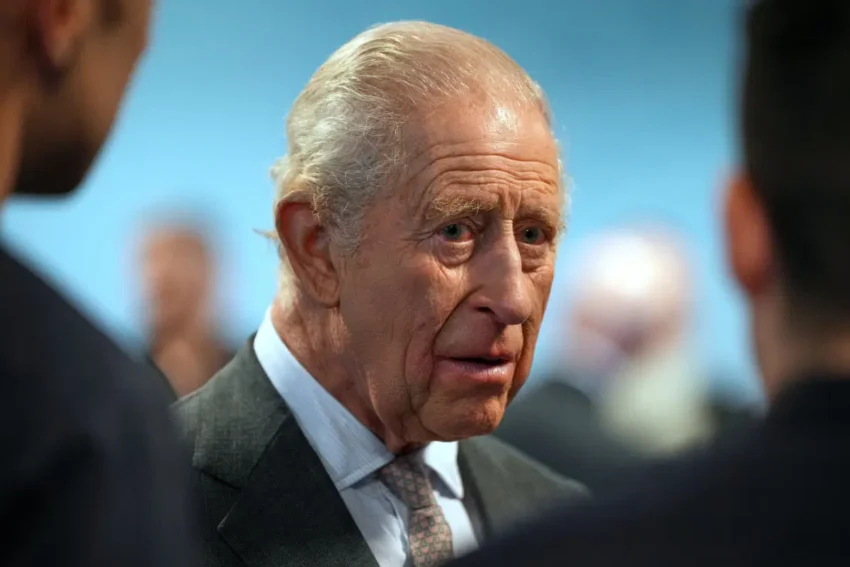
On what would have marked her 100th birthday, Britain’s King Charles III delivered a deeply personal and emotional tribute to his late mother, Queen Elizabeth II. Referring to her as “darling mama,” the king reflected on her life, her unwavering dedication, and the legacy she left behind after more than seven decades on the throne.
The tribute comes at a symbolic moment—not just marking a century since her birth, but also coinciding with the unveiling of plans for a national memorial that aims to preserve her image and impact for generations to come.
It is a moment filled with emotion, reflection, and perhaps something deeper—a reminder of how history remembers people, regardless of how complex they may have been in real life.
A Legacy Built on Duty
Queen Elizabeth II remains one of the most recognized and enduring figures in modern history. Her reign, which lasted 70 years, saw her guide the United Kingdom through periods of transformation, uncertainty, and global change.
From post-war recovery to the digital age, she remained a constant presence—calm, composed, and committed to duty. In his tribute, King Charles III emphasized this consistency, describing her as “steadfast” and “wholly devoted” to the people she served.
That image—of stability and quiet strength—is largely how she is remembered today.
But behind every legacy is a more complicated story.
The Power of Public Memory
As plans for her memorial take shape in London’s St James’s Park, the focus is on honoring her legacy in a way that reflects both her early years and her long reign. The design includes a statue inspired by a 1955 portrait, gardens, and even a symbolic “unity bridge.”
It is carefully curated.
And that’s the point.
Public memory is rarely neutral. It is shaped, refined, and often softened over time. What people choose to remember—and what they choose to forget—plays a major role in how history is written.
Moments like this remind us that remembrance is not just about facts, but about perception.
A Personal Reflection
Looking at this tribute, one thing stands out clearly—people are often remembered for how they made others feel, not necessarily for every detail of who they were.
Even individuals who may not have been perfect, or who may have had decisions that affected others negatively, can still be deeply loved, respected, and missed.
This is not unique to royalty. It is human nature.
In my opinion, this moment reflects something we see across different parts of life—not just in global figures, but even in everyday relationships.
People can have flaws. They can make questionable decisions. They can have sides that are not always visible to the public.
And yet, when they are gone, the narrative often shifts.
The focus becomes their strengths, their impact, and the emotional connection people had with them.
Beyond the Crown
The life of Queen Elizabeth II was not without controversy. Like any long-serving public figure, her reign intersected with complex political, social, and historical moments.
From debates around colonial history to internal royal family challenges, there were aspects of her era that continue to be discussed and debated today.
But as time passes, those conversations often take a back seat to a more unified narrative—one that emphasizes dedication, service, and continuity.
This does not necessarily mean those issues disappear.
It simply means they are no longer the primary lens through which the person is remembered.
Why This Matters
What we are seeing with this tribute is something much bigger than a royal event.
It is a reminder of how legacy works.
In the moment, people are judged, criticized, and analyzed from every angle. But over time, those sharp edges are often smoothed out.
What remains is a simplified version of the person—one that is easier to honor, celebrate, and preserve.
This is not necessarily right or wrong.
It is just reality.
A Changing Royal Narrative
Since the passing of Queen Elizabeth II in 2022, the royal family has faced its own set of challenges—from health issues affecting senior members to ongoing public scrutiny and internal tensions.
Yet moments like this tribute serve as a reset.
They bring attention back to a figure who symbolized stability, and in doing so, they reinforce a sense of continuity within the monarchy.
For King Charles III, this tribute is not just about honoring his mother—it is also about connecting the present to the past.
Final Thoughts
King Charles’ message on what would have been his mother’s 100th birthday is powerful, emotional, and deeply human.
But beyond the tribute itself, it opens up a broader reflection.
People are complex.
They are not defined by a single narrative, yet over time, they are often remembered as if they were.
In many cases, even those who were not perfect—or who may have had sides that were never fully understood—are still loved, respected, and missed.
And maybe that says more about us than it does about them.
Because in the end, memory is not just about truth.
It is about connection.