
By Desmond Ogbonmwan
Growing old is a privilege that many people hope to experience. Living beyond 100 years is even rarer. But having three sisters from the same family all surpass the age of 100 is something so extraordinary that it has caught the attention of scientists and earned a place in the Guinness World Records.
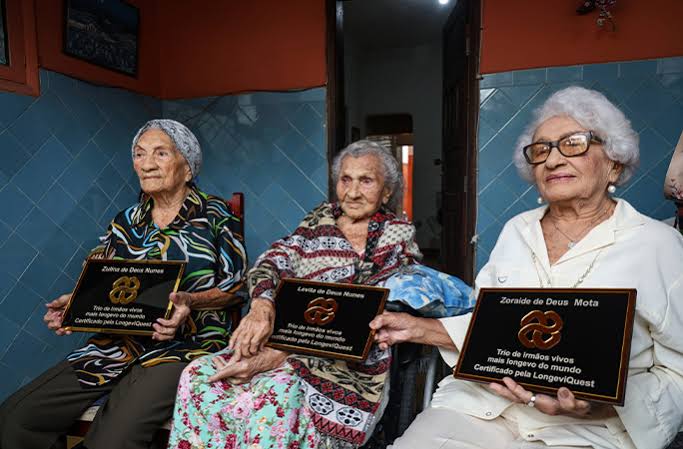
In Brazil, three remarkable women—Levita de Deus Nunes (109), Zoraide de Deus Mota (104), and Zulina de Deus Nunes (103)—have achieved what few families anywhere in the world ever have. Together, they have lived an astonishing 316 years, making them the world’s longest-living trio of sisters.
While the Guinness World Records recognition celebrates an incredible family milestone, researchers believe the sisters may offer something even more valuable than a world record. Their lives could help scientists answer one of humanity’s oldest questions:
Why do some people remain healthy, mentally sharp and physically active well beyond the age of 100 while others do not?
That question is now driving an ambitious scientific investigation that could shape future research into ageing, disease prevention and human longevity.
A World Record That Goes Beyond Numbers
Guinness World Records frequently celebrates extraordinary human achievements, from athletic feats to unique talents. However, records involving exceptional longevity often attract special attention because they provide researchers with a rare opportunity to study human ageing under exceptional circumstances.
In the case of the Brazilian sisters, the story is not simply about their combined age.
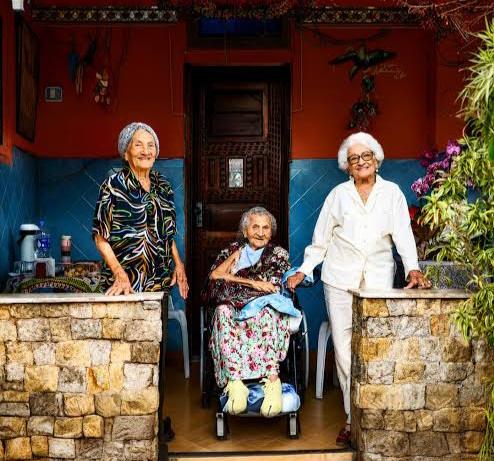
It is about three women who shared the same family, grew up in similar surroundings, experienced many of the same historical events and have all reached ages that only a tiny fraction of the world’s population ever attain.
According to researchers working with LongeviQuest, an organisation that verifies supercentenarians and longevity records around the world, families like this are exceptionally uncommon.
Their discovery immediately attracted the attention of the DNA Longevo Project, a research initiative led by scientist Professor Mayana Zatz at the University of São Paulo.
For researchers, the sisters represent far more than statistical curiosity—they may hold important biological clues about healthy ageing.
Three Different Lives, One Extraordinary Family
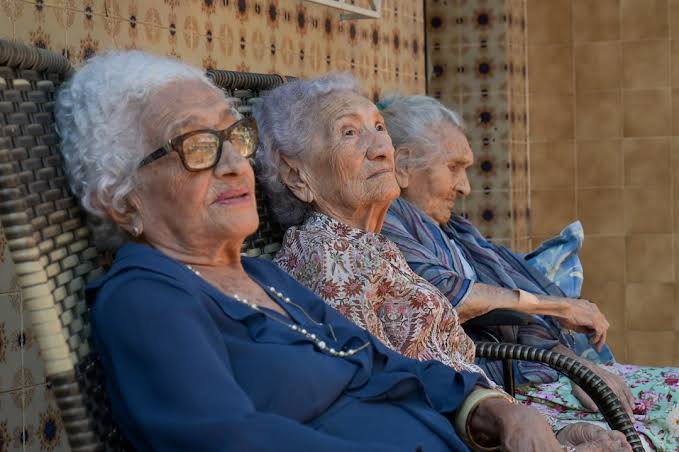
Despite sharing remarkable longevity, the sisters did not spend their lives chasing fame or extraordinary accomplishments.
Instead, they lived what many would describe as ordinary, hardworking lives.
Levita, now 109, spent part of her career working as a craftswoman before later joining a television network. Looking back on more than a century of life, she says she carries few regrets.
“I had a good childhood and adolescence. I can’t complain.”
Those simple words perhaps reveal one characteristic shared by many people who live exceptionally long lives: contentment.
Her younger sister, Zoraide, chose a different path.
She became a nurse, dedicating years of her life to caring for others while also raising five children of her own.
Meanwhile, Zulina, who raised six children as a full-time mother, remembers growing up during an era when life was far less dependent on technology.
She recalls swimming in rivers, fishing with family members and eating food that came directly from nature.
“Everything was fresh. We didn’t have a refrigerator.”
While modern life offers countless conveniences, researchers have increasingly begun asking whether older generations unknowingly benefited from lifestyles that involved fresher diets, greater physical activity and stronger community relationships.
Scientists Are Looking Beyond Diet Alone
Stories about people living past 100 often focus on favourite foods or daily habits.
Some centenarians credit olive oil.
Others mention walking every day.
Some even joke about enjoying chocolate or an occasional glass of wine.
However, researchers studying the Brazilian sisters believe there may be something much deeper involved.
Professor Mayana Zatz and her team are particularly interested in genetics.
Rather than searching for one magical secret to a long life, scientists hope to identify combinations of protective genes that help certain people avoid diseases commonly associated with ageing.
These protective genetic factors may reduce the risk of conditions such as heart disease, muscle degeneration and cognitive decline.
Understanding why some families naturally possess these biological advantages could eventually contribute to new medical treatments for future generations.
Can Good Genes Really Help People Live Longer?
Scientists have debated this question for decades.
Most experts agree that longevity is rarely determined by a single factor.
Instead, it results from a combination of genetics, environment, lifestyle and access to healthcare.
What makes the Brazilian sisters particularly valuable to researchers is that all three siblings reached exceptional ages.
Ben Meyers, Chief Executive Officer of LongeviQuest, believes this strongly suggests that inherited biology plays an important role.
“When sisters reach that age, there is clearly a strong genetic component,” he explained.
However, genetics alone may not tell the entire story.
Because the sisters have remained geographically close to one another for much of their lives, they have also benefited from continuous family support and regular social interaction.
Researchers increasingly recognise these relationships as an important contributor to healthy ageing.
The Forgotten Importance of Community
Modern society often celebrates independence.
Yet many longevity experts argue that strong family bonds may be just as important as medicine.
The three sisters have spent decades supporting one another through personal triumphs, family celebrations and inevitable moments of loss.
That shared emotional support may have helped reduce chronic stress, one of the factors frequently linked to poorer health outcomes later in life.
Communities where older adults remain socially connected consistently report better physical and mental wellbeing than those where loneliness becomes common.
In many parts of the world, including Africa, multigenerational households were once the norm.
Grandparents, parents and children often lived together, sharing responsibilities and providing emotional support across generations.
Some researchers now wonder whether modern lifestyles have unintentionally weakened one of humanity’s oldest protective health systems: family itself.
More Than Living Longer—Living Better
Perhaps the most remarkable aspect of the sisters’ story is not simply their ages.
It is their ability to remain engaged with life.
Longevity without quality of life presents very different challenges.
Researchers involved in the DNA Longevo Project are therefore focusing not only on lifespan but also on healthspan—the number of years people remain physically independent, mentally alert and socially active.
If scientists can identify why some individuals maintain good health well into their second century of life, future generations may benefit from medical advances designed not merely to extend life, but to improve the quality of those additional years.
The DNA Project That Could Change How We Understand Ageing
The remarkable lives of Levita, Zoraide and Zulina have become central to the DNA Longevo Project, one of Brazil’s most ambitious scientific efforts to understand why some people remain healthy for more than a century.
Led by renowned geneticist Professor Mayana Zatz at the University of São Paulo’s Human Genome and Stem Cell Research Center, the project is studying hundreds of Brazilians aged 100 and above. The long-term goal is to identify the biological and genetic factors that protect certain individuals from diseases commonly associated with ageing.
Researchers are particularly interested in why some centenarians maintain healthy hearts, strong muscles and sharp cognitive abilities despite advancing age.
By analysing DNA samples from people like the three sisters, scientists hope to identify protective genes that could one day contribute to treatments aimed at preventing or delaying age-related illnesses.
Professor Zatz believes that every family with multiple centenarians provides another important piece of the puzzle.
“The more people we have who live past 100, especially families with multiple centenarians, the more accurate our research will be in identifying protective genes.”
The project hopes to study at least 500 centenarians, giving researchers enough data to draw stronger scientific conclusions.
Is Longevity Written in Our DNA?
One of the biggest questions surrounding ageing is whether longevity is inherited or earned through lifestyle.
Scientists generally agree that the answer lies somewhere in between.
Genes may determine an individual’s biological resilience, but everyday habits often influence whether those advantages are fully realised.
Experts believe genetics may account for a significant portion of exceptional longevity, particularly among people who live beyond the age of 100. However, nutrition, regular movement, quality sleep, access to healthcare, social support and avoiding harmful habits such as smoking also play important roles.
The Brazilian sisters represent an unusual opportunity because they combine both shared genetics and a shared family environment, allowing researchers to study how these factors interact over an entire lifetime.
Five Lessons Their Story Teaches the Rest of Us
While scientists continue searching for genetic answers, the sisters’ lives also highlight practical habits that many health experts encourage.
1. Stay Physically Active
Long before gyms and fitness trackers became popular, the sisters’ childhood involved walking, swimming, fishing and daily physical activity.
Regular movement remains one of the strongest predictors of healthy ageing.
2. Eat Fresh, Balanced Meals
Zulina’s memories of eating fresh food before refrigerators became common reflect an important principle still recommended today—consuming nutritious, minimally processed foods whenever possible.
Modern nutrition research consistently links balanced diets with better long-term health.
3. Value Family Relationships
One striking aspect of the sisters’ story is the support they continue to receive from one another and their families.
Strong social connections have repeatedly been associated with lower stress levels and improved mental wellbeing.
4. Keep Your Mind Engaged
Many centenarians remain curious, socially active and mentally engaged throughout life.
Reading, conversations, hobbies and lifelong learning all help stimulate the brain and may contribute to cognitive health.
5. Find Contentment in Everyday Life
Perhaps the simplest lesson comes from Levita herself.
Reflecting on more than a century of life, she said she had few regrets.
A positive outlook cannot prevent ageing, but emotional wellbeing has long been recognised as an important part of overall health.
Why This Story Matters Around the World
Although the sisters live in Brazil, their story resonates far beyond South America.
Countries across the world are facing rapidly ageing populations.
Healthcare systems are increasingly challenged by dementia, cardiovascular disease, osteoporosis and other conditions associated with growing older.
If researchers discover why certain families remain remarkably healthy into their second century of life, those findings could influence future medical treatments, public health strategies and disease prevention efforts worldwide.
In that sense, the sisters’ contribution extends far beyond setting a Guinness World Record.
Their lives may ultimately help improve the quality of life for millions of future generations.
A Celebration of Life, Family and Hope
World records often recognise extraordinary achievements accomplished in a single moment.
This one is different.
It celebrates more than three centuries of shared memories, resilience and family.
Levita, Zoraide and Zulina have lived through world wars, technological revolutions, social transformation and countless personal milestones.
Their story reminds us that longevity is measured not only by the number of birthdays celebrated but also by the relationships built, families nurtured and experiences accumulated along the way.
Whether science ultimately attributes their remarkable lives to genetics, lifestyle or a combination of both, one fact remains beyond dispute.
The three sisters have become living symbols of hope for researchers and inspiration for families across the world.
Their Guinness World Records title may recognise the years they have lived, but their greatest legacy could be the knowledge they leave behind for generations yet to come.
Frequently Asked Questions
Who are the world’s oldest living trio of sisters?
According to Guinness World Records and LongeviQuest, the title belongs to Brazilian sisters Levita de Deus Nunes (109), Zoraide de Deus Mota (104) and Zulina de Deus Nunes (103), whose combined age is 316 years.
Why are scientists studying them?
Researchers hope to identify genetic and biological factors that contribute to exceptional longevity and healthy ageing.
What is the DNA Longevo Project?
It is a Brazilian research initiative led by Professor Mayana Zatz that studies centenarians to better understand ageing and protective genes.
Can genetics alone help people live beyond 100?
Scientists believe genetics plays a major role, but healthy lifestyle choices, family support and environmental factors also contribute to longevity.