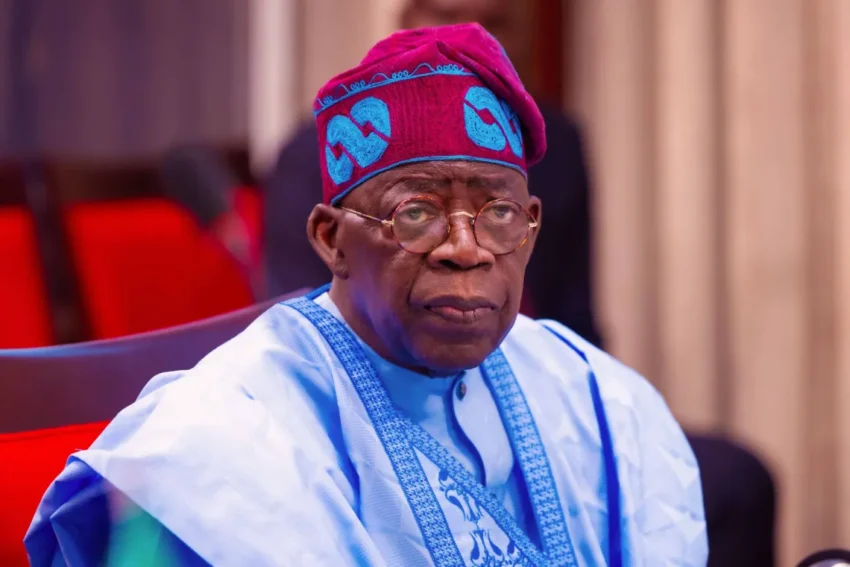
President Bola Tinubu has assured Nigerians that the sacrifices made since the beginning of his administration are beginning to yield results, insisting that the country has now stabilised and is moving forward economically.
Speaking during a nationwide address to mark the third anniversary of his administration, Tinubu acknowledged the hardship many Nigerians have experienced following major economic reforms introduced by his government.
According to the President, his administration inherited serious economic challenges, including fuel subsidy costs, exchange-rate distortions, rising debt obligations, insecurity and declining public confidence in institutions.
He defended the removal of fuel subsidies and other economic reforms, arguing that failing to act would have pushed Nigeria towards a deeper fiscal crisis.
“I remain deeply conscious of those sacrifices, and I assure you: your sacrifice has not been in vain.”
Tinubu said Nigeria is already seeing signs of recovery through improved public finances, increased investor confidence and major infrastructure projects currently underway across the country.
The President highlighted ongoing road projects including the Lagos-Calabar Coastal Highway, the Sokoto-Badagry Super Highway, the Abuja-Kaduna-Zaria-Kano Road and the East-West Road, describing them as part of efforts to stimulate economic growth and create jobs.
He also pointed to improvements in the oil and gas sector, increased local refining capacity, railway modernisation and investments in electricity infrastructure as evidence that reforms are beginning to deliver results.
On education, Tinubu disclosed that more than 1.5 million students have benefited from the Nigerian Education Loan Fund, while housing programmes under the Renewed Hope initiative are delivering thousands of housing units nationwide.
The President further stated that efforts are ongoing to strengthen agriculture, healthcare and telecommunications as part of a broader strategy aimed at long-term economic growth.
His address comes amid continuing public debate over the impact of economic reforms, rising living costs and the pace of recovery being experienced by ordinary Nigerians.