
By Desmond Ogbonmwan
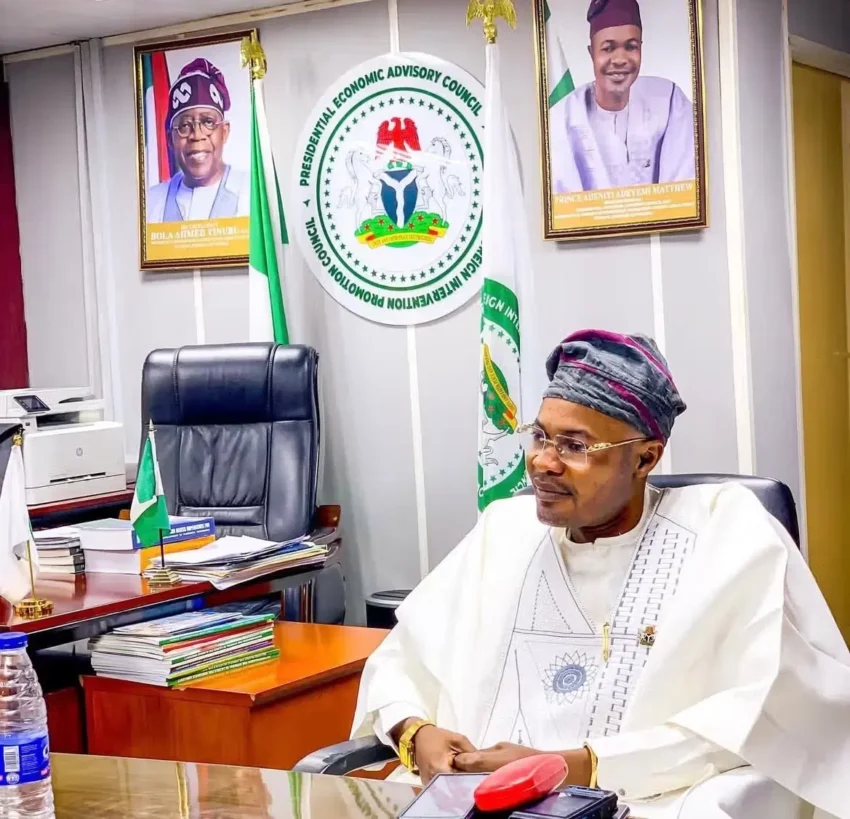
Nigeria’s Presidency has publicly disowned a man identified as Adeyemi Adeniyi Matthew, accusing him of falsely presenting himself as the Director-General of a presidential agency that officials say never existed.
According to a detailed statement issued by the Special Adviser to the President on Information and Strategy, Bayo Onanuga, the alleged scheme involved forged appointment letters, fake official seals, purported government correspondence and claims of membership in the Presidential Economic Advisory Council.
The Presidency says the matter has already progressed beyond internal investigations and is now before the Federal High Court in Abuja, where Adeyemi and two other defendants face charges relating to forgery, impersonation and obtaining by false pretence.
If proven in court, the allegations would represent one of the more elaborate cases of alleged impersonation involving government institutions in recent years.
However, it is important to note that these allegations remain before the court, and the accused persons are presumed innocent unless and until proven guilty through the judicial process.
How the Alleged Scheme Came to Light
According to the Presidency, concerns first emerged after the Nigerian Investment Promotion Commission (NIPC) reportedly alerted the Office of the Chief of Staff that another organisation appeared to be operating as though it were a federal government agency.
Officials allegedly discovered that a body calling itself the Presidential Foreign Intervention Promotion Council was presenting itself as an official institution despite there being no record of such an agency within the Federal Government.
The complaint prompted the Office of the Chief of Staff to petition both the Department of State Services (DSS) and the Nigeria Police Force on October 17, 2025, requesting a full investigation.
The petition reportedly alleged that forged appointment letters bearing fake reference numbers, signatures and official seals were being used to create the appearance of legitimate presidential appointments.
The Alleged Fake Appointment
According to investigators, Adeyemi allegedly claimed he had been appointed Director-General of the purported Presidential Foreign Intervention Promotion Council.
The Presidency insists no such appointment was ever made.
Officials also state that no federal agency bearing that name exists.
The Office of the Chief of Staff reportedly informed investigators that appointments into federal offices are not made through unofficial channels and that the alleged appointment letter did not originate from the Presidency.
This distinction became one of the central issues in the investigation.
Meetings With Diplomats Raise Further Questions
Among the allegations contained in the Presidency’s statement is that Adeyemi allegedly organised meetings with Nigerians and foreign nationals while presenting himself as a senior government official.
One incident that reportedly attracted official attention involved a meeting with ambassadors at the Wells Carlton Hotel in Abuja in October 2025.
According to the statement, officials at the Ministry of Foreign Affairs were unaware of the meeting and later sought clarification regarding the status of both the individual and the organisation he claimed to represent.
The Presidency says this inquiry reinforced concerns that unauthorised persons were presenting themselves as representatives of the Federal Government.
Alleged Visa Requests
Investigators also allege that Adeyemi sought a note verbale from the Ministry of Foreign Affairs to support visa applications for individuals said to be connected with the purported agency.
A note verbale is an official diplomatic communication commonly used between governments and diplomatic missions.
Because such correspondence carries official recognition, investigators considered the alleged request particularly significant.
The Presidency maintains that these actions formed part of the broader alleged impersonation scheme now before the court.
Police Investigation and Arrest
According to the Presidency, police officers arrested Adeyemi on October 27, 2025, at an office in Abuja where investigators believe the alleged operation was being conducted.
Searches carried out at both the office and his residence in Suleja reportedly resulted in the recovery of documents and other materials considered relevant to the investigation.
Authorities also allege that during questioning, Adeyemi identified another individual as the person who helped him obtain the purported appointment letter.
Police later stated that the individual had died in a hotel fire several days before the arrest, preventing investigators from questioning him.
Allegations Involving Bank Accounts
The Presidency’s statement further alleges that investigators uncovered 34 bank accounts, including several reportedly opened in the names of organisations presented as government agencies.
Investigators also allege that documentation was used in an attempt to establish an account connected to the Central Bank of Nigeria through the Office of the Accountant-General of the Federation.
However, according to the Presidency, investigators found no evidence that government funds had been deposited into the account.
This distinction is important because it reflects the current findings presented by investigators rather than a judicial determination of wrongdoing.
Why This Case Matters Beyond One Individual
Regardless of how the case is ultimately decided, it raises broader questions about document verification, institutional safeguards and public awareness.
Government appointments often receive significant public attention, and announcements are routinely shared across social media platforms within minutes.
Experts say this environment creates opportunities for misinformation if official claims are not independently verified.
The allegations also highlight why government institutions increasingly encourage citizens, businesses and foreign organisations to confirm appointments and official communications through recognised government channels before acting on them.
How Presidential Appointments Are Officially Made in Nigeria
One of the major issues highlighted by this case is how senior federal appointments are actually made.
Contrary to popular belief, appointments into presidential committees, agencies, ministries and government institutions follow established administrative procedures.
Depending on the position, appointments may involve:
- approval by the President;
- processing through the Office of the Secretary to the Government of the Federation (OSGF);
- publication through official government channels;
- documentation by the relevant ministry or agency;
- public announcements from authorised government spokespersons.
For appointments that require legislative confirmation, the process may also involve screening and approval by the Nigerian Senate.
Because of these multiple layers of verification, government officials say individuals should be cautious whenever appointment claims cannot be confirmed through recognised official sources.
What Makes an Official Government Appointment Authentic?
Government appointment letters are more than documents bearing official logos.
They form part of a documented administrative process that can be independently verified.
While formats may differ between institutions, authentic appointments are typically supported by:
- official government records;
- correspondence through recognised government offices;
- confirmation from the supervising ministry or agency;
- public announcements where appropriate;
- verifiable documentation maintained by the relevant authority.
Experts in public administration advise organisations dealing with government representatives to confirm appointments directly with the issuing institution whenever uncertainty exists.
Verification is particularly important before entering into financial agreements, diplomatic engagements or official partnerships.
Why Alleged Impersonation Is Taken Seriously
Impersonating a public official is regarded as a serious allegation because government institutions depend heavily on public trust.
When someone allegedly claims authority they do not possess, several risks may arise.
These include:
- misleading members of the public;
- damaging the credibility of legitimate government institutions;
- creating confusion among investors and diplomatic partners;
- facilitating financial fraud;
- undermining confidence in official communications.
For these reasons, allegations involving forged government documents or false representation are usually investigated thoroughly before prosecution decisions are made.
The Role of the DSS and the Police
The Presidency stated that both the Department of State Services (DSS) and the Nigeria Police Force became involved after concerns were raised by the Office of the Chief of Staff.
Although both agencies investigate criminal matters, their responsibilities differ.
The DSS primarily handles matters relating to national security and intelligence.
The Nigeria Police Force investigates a broad range of criminal offences, gathers evidence and may file charges where prosecutors believe sufficient evidence exists.
In cases involving alleged forgery, impersonation or fraud, investigators often work with multiple government institutions to verify documents and establish how they were created or used.
Why the Court Process Is Important
Although the Presidency has outlined extensive allegations, the legal process remains ongoing.
According to the statement, the defendants have already been charged before the Federal High Court in Abuja, with further proceedings scheduled for later this month.
This means the court—not the Presidency, the police or the media—will ultimately determine whether the allegations are supported by admissible evidence.
During trial:
- prosecutors will present evidence;
- witnesses may testify;
- the defence will have an opportunity to challenge the allegations;
- the judge will assess the evidence according to Nigerian law.
This process reflects one of the fundamental principles of the justice system: allegations alone do not establish criminal liability.
The Presumption of Innocence
One of the most important legal principles in democratic societies is the presumption of innocence.
Every person charged with a criminal offence is entitled to a fair hearing before an independent court.
This means:
- allegations must be proven with evidence;
- defendants have the right to legal representation;
- witnesses may be cross-examined;
- courts—not public opinion—determine guilt or innocence.
Maintaining this principle protects the integrity of the justice system and ensures that criminal responsibility is determined through due process rather than headlines or speculation.
Lessons for the Public
Beyond the criminal allegations, the case offers practical lessons for individuals, businesses and organisations.
Whenever someone claims to represent the Federal Government, it is prudent to verify that claim before taking official action.
This is particularly important where requests involve:
- investment opportunities;
- diplomatic correspondence;
- government partnerships;
- employment offers;
- procurement discussions;
- financial transactions.
Official government announcements are generally published through recognised institutions, making independent verification an important safeguard against fraud and misinformation.
Why Institutional Credibility Matters
Public institutions rely heavily on credibility.
When fraudulent claims circulate unchecked, they can weaken confidence in legitimate government processes.
For investors, diplomatic missions and development partners, confidence in official communication is essential.
Cases involving alleged forged documents therefore extend beyond criminal investigations—they also highlight the importance of secure administrative systems and transparent verification procedures.
Strengthening those systems helps protect both public institutions and citizens from deception.
Final Thoughts
The Presidency’s allegations against Adeyemi Adeniyi Matthew describe what investigators believe was an elaborate attempt to create the appearance of official authority through a purported government agency that officials insist never existed.
The investigation has involved multiple institutions, including the Office of the Chief of Staff, the Ministry of Foreign Affairs, the DSS and the Nigeria Police Force, and has now entered the judicial phase.
As the case proceeds before the Federal High Court, the outcome will depend on the evidence presented in court and the application of Nigerian law.
Beyond the courtroom, the case serves as a reminder that official appointments, government correspondence and public authority should always be verified through recognised institutions before they are accepted as genuine.
Frequently Asked Questions
Who is Adeyemi Adeniyi Matthew?
According to the Presidency, he is the individual accused of falsely presenting himself as the head of a non-existent Presidential Foreign Intervention Promotion Council. The allegations are currently before the Federal High Court, and no finding of guilt has been made.
Does the Presidential Foreign Intervention Promotion Council exist?
The Presidency states that no such federal government agency exists and says the purported appointment letter relied upon in the case was forged.
What charges have been filed?
According to the Presidency, the defendants face charges including forgery, impersonation and obtaining by false pretence. The court will determine the merits of those allegations.
Why did the Ministry of Foreign Affairs become involved?
The Presidency says the ministry sought clarification after a meeting involving ambassadors was allegedly convened without its knowledge by someone claiming to represent the purported agency.
Why is verification of government appointments important?
Verification helps prevent fraud, protects public institutions and ensures that individuals or organisations deal only with properly authorised government representatives.