
By Desmond Ogbonmwan
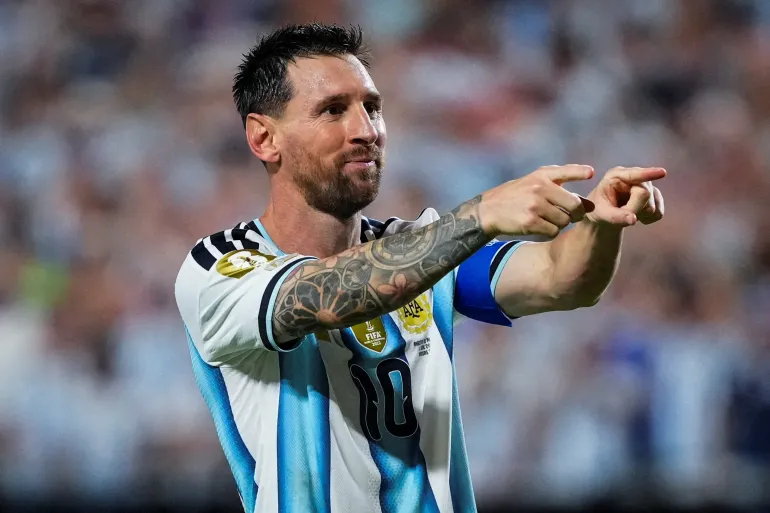
The FIFA World Cup has never lacked superstars, but few players have shaped football’s biggest stage quite like Lionel Messi. At the 2026 FIFA World Cup, the Argentine captain has once again demonstrated why, even in the latter stages of his illustrious career, he remains one of the sport’s most influential figures.
Argentina’s flawless group-stage campaign was not simply about collecting maximum points. It was about experience guiding youth, leadership inspiring belief, and tactical intelligence overcoming every challenge placed before the defending champions.
While several nations stumbled through the opening phase of the tournament, Argentina emerged as one of the most convincing teams, finishing the group stage with a perfect record and reinforcing their credentials as serious contenders to retain the World Cup trophy.
For millions of supporters, Messi’s performances have gone beyond statistics. They have become another chapter in a remarkable football journey that continues to redefine greatness.
Argentina Arrived With Expectations Unlike Any Other Team
Winning a FIFA World Cup is difficult.
Defending one is even harder.
History has shown that reigning champions often struggle under the enormous pressure that accompanies the famous gold badge on their shirts.
Every opponent raises their performance.
Every tactical mistake is punished.
Every match becomes a final.
Argentina entered the tournament carrying the weight of expectation after lifting the World Cup in Qatar four years earlier.
Questions surrounded the ageing core of the squad.
Could Lionel Messi still perform consistently?
Would younger players cope with the pressure?
Could Argentina avoid the complacency that has affected previous champions?
Those questions began disappearing from the opening whistle of the tournament.
Messi’s Leadership Has Become His Greatest Weapon
Football fans often focus on goals and assists.
Yet Messi’s greatest contribution in 2026 may not appear on the scoresheet.
Throughout the group stage, cameras repeatedly captured him speaking with teammates, encouraging younger players and calmly directing movement across the pitch.
This version of Messi is different from the explosive teenager who dazzled defenders at Barcelona.
He no longer relies solely on acceleration or endless dribbles.
Instead, he controls matches with intelligence.
Every pass slows or quickens the tempo.
Every movement creates space.
Every decision influences Argentina’s rhythm.
Managers often describe this quality as “game management”—the ability to dictate how a match unfolds.
Few players in football history have mastered it as completely as Messi.
Argentina’s Tactical Identity Revolves Around Collective Football
One reason Argentina continue to succeed is that they no longer depend exclusively on individual brilliance.
Instead, they have built a balanced system that allows every player to contribute.
Messi remains the creative heartbeat, but the team functions because of collective discipline.
During the group stage, Argentina consistently demonstrated several characteristics that separated them from many rivals.
They controlled possession without becoming predictable.
Their midfield recycled the ball patiently before accelerating attacks.
Wide players stretched opposing defences.
Full-backs joined attacks without leaving the defence exposed.
Perhaps most importantly, every player understood when to press and when to conserve energy.
This tactical maturity prevented opponents from gaining sustained momentum.
Experience Matters in World Cup Football
International tournaments differ significantly from club football.
There is little time to recover from mistakes.
Squads spend only short periods together.
Managers cannot rely on months of tactical preparation.
In these situations, experienced leaders become invaluable.
Messi’s calmness under pressure has visibly influenced Argentina throughout the tournament.
Young players rarely appear overwhelmed because they are surrounded by veterans who have experienced almost every situation football can produce.
That composure has become one of Argentina’s greatest competitive advantages.
The Jordan Match Perfectly Illustrated Messi’s Influence
Argentina’s victory over Jordan offered another example of why Messi continues to command global attention.
While the scoreline reflected Argentina’s superiority, the match also demonstrated how the captain influences every phase of play.
Opponents often commit multiple defenders simply to limit his space.
That creates opportunities elsewhere.
When defenders step toward Messi, passing lanes immediately open.
Midfield runners exploit the gaps.
Wide players receive more freedom.
Even when he does not touch the ball, Messi changes defensive structures.
Very few footballers possess that level of influence.
More Than Goals and Assists
Statistics remain important.
Goals win matches.
Assists create headlines.
However, football analysts increasingly recognise contributions that traditional numbers cannot measure.
Messi constantly scans the field before receiving possession.
He positions himself between defensive lines.
He attracts pressure before releasing teammates into dangerous areas.
His movement frequently creates opportunities that never appear beside his name in statistical reports.
Those details often determine success in knockout football.
Argentina’s coaching staff clearly understand that value.
Rather than asking Messi to carry every attack, they have built a structure that allows his intelligence to elevate the entire team.
A New Generation Is Learning From Football’s Greatest
One of the most significant developments during Argentina’s campaign has been the emergence of younger players willing to embrace responsibility.
Instead of depending exclusively on Messi, the squad now combines youthful energy with experienced leadership.
Several rising stars have spoken previously about growing up watching Messi.
Today, they share the dressing room with him.
That mentorship may become one of Argentina’s greatest strengths as the tournament progresses.
For younger footballers, learning directly from one of the greatest players in history provides an education impossible to replicate elsewhere.
Confidence Can Become Argentina’s Greatest Advantage
Momentum matters enormously in World Cup football.
Teams that begin strongly often carry confidence into the knockout rounds.
Argentina’s perfect group-stage record has strengthened belief throughout the squad.
Players appear relaxed.
Decision-making has improved.
Communication remains clear.
Every victory reinforces the idea that the defending champions remain capable of lifting another World Cup.
Yet the team also understands that knockout football offers no guarantees.
One difficult afternoon can erase weeks of excellent performances.
That reality is precisely why experienced leaders like Messi remain indispensable.
Why Argentina Have Emerged as Genuine Title Favourites
Winning every group-stage match does not automatically guarantee World Cup success, but it often provides a strong indication of a team’s readiness for the challenges ahead.
Argentina’s unbeaten run has been built on far more than individual brilliance. Their performances have reflected tactical discipline, emotional maturity and a clear understanding of what is required to navigate tournament football.
Unlike several favourites who have relied heavily on moments of inspiration, Argentina have consistently controlled games through intelligent possession, organised defending and quick transitions. The balance between attack and defence has become one of their biggest strengths.
Perhaps most importantly, the defending champions have avoided panic. Even when opponents enjoyed spells of possession, Argentina rarely appeared rattled, choosing instead to trust their system and wait for opportunities to emerge.
That composure is often what separates champions from contenders.
Messi’s Evolution Has Made Argentina More Dangerous
The Lionel Messi playing in 2026 is not attempting to beat five defenders every time he receives the ball.
Instead, he has evolved into a complete football strategist.
His ability to read matches has become arguably his greatest weapon.
Rather than dominating every attack himself, Messi now knows exactly when to slow the tempo, when to release teammates into space and when to accelerate attacks with one decisive pass.
That evolution has allowed Argentina to become less predictable.
Opponents preparing to stop Messi often discover that doing so creates space for other attacking players to exploit.
It is this tactical flexibility that has made Argentina one of the most complete teams remaining in the tournament.
Lessons Other Nations Can Learn
Argentina’s group-stage performances have highlighted several principles that many teams strive to achieve.
Leadership Still Matters
Modern football places significant emphasis on tactics and athleticism, but experienced leadership remains invaluable during major tournaments.
Messi’s calmness has influenced younger teammates, helping them remain composed under pressure.
Teamwork Outweighs Individual Talent
Although Argentina possess world-class individuals, they rarely depend on one player alone.
Defenders contribute to attacks.
Midfielders recover possession quickly.
Forwards participate in pressing.
Every player understands his role.
Patience Creates Opportunities
Argentina have repeatedly demonstrated that forcing attacks is rarely necessary.
Instead, they circulate possession, wait for defensive errors and exploit openings when they appear.
That patience has frustrated opponents throughout the tournament.
Can Argentina Successfully Defend Their Crown?
Historically, defending a FIFA World Cup title has proved one of football’s most difficult achievements.
Several reigning champions have failed to progress beyond the early stages of subsequent tournaments.
Argentina appear determined to avoid that fate.
Their current squad combines experienced veterans with energetic younger players capable of sustaining high-intensity football.
Fitness, tactical discipline and squad depth could become decisive factors as the knockout rounds become increasingly demanding.
If Argentina continue producing the same level of consistency shown during the group stage, few teams will relish facing them.
Five Reasons Argentina Could Reach Another Final
1. Tournament Experience
Many members of the squad understand the pressure associated with World Cup knockout matches.
That experience often becomes invaluable when games become tense.
2. Tactical Flexibility
Argentina can comfortably adjust their approach depending on the opposition.
They are capable of dominating possession or defending compactly before launching counter-attacks.
3. Defensive Organisation
Championship-winning teams rarely rely solely on attacking football.
Argentina have shown excellent defensive discipline throughout the tournament.
4. Squad Depth
Success at the World Cup often depends on contributions from the entire squad rather than only the starting eleven.
Argentina possess several quality options capable of changing matches from the bench.
5. Lionel Messi
Even at this stage of his remarkable career, Messi remains capable of producing moments that decide football matches.
Few players in history have demonstrated such consistency on the biggest stage.
What Lies Ahead
The knockout stage presents an entirely different challenge.
Every mistake becomes more costly.
Every opportunity becomes more valuable.
Every decision made by coaches and players carries greater consequences.
Argentina understand that previous victories count for little once the elimination rounds begin.
Yet their group-stage performances have provided an ideal platform from which to pursue another historic World Cup triumph.
Final Verdict
Argentina’s perfect group-stage campaign has not been built on luck.
It has been the product of careful planning, tactical intelligence, experienced leadership and collective belief.
While Lionel Messi continues to command headlines, perhaps his greatest contribution has been helping create an environment where every member of the squad performs with confidence.
Should Argentina continue displaying the same balance between experience and youthful energy, they will remain among the strongest contenders to lift the FIFA World Cup once again.
Whether Messi eventually adds another World Cup medal to his extraordinary career remains uncertain.
What is already clear, however, is that his influence extends far beyond goals and assists.
He continues to shape matches, inspire teammates and remind football supporters around the world why his name remains synonymous with greatness.
Frequently Asked Questions
Why did Argentina finish the group stage with a perfect record?
Argentina combined tactical discipline, efficient attacking football, experienced leadership and strong defensive organisation to win all of their group-stage matches.
What role has Lionel Messi played?
Messi has served as Argentina’s captain, chief playmaker and on-field leader, influencing matches through his vision, passing, positioning and experience.
Are Argentina favourites to win the FIFA World Cup 2026?
Following an unbeaten group-stage campaign, Argentina are widely regarded as one of the strongest contenders to retain the title, although the knockout stage presents a much tougher challenge.
What makes Argentina difficult to beat?
Their balanced playing style, experienced squad, tactical flexibility and ability to control matches have made them one of the tournament’s standout teams.