By Desmond Ogbonmwan
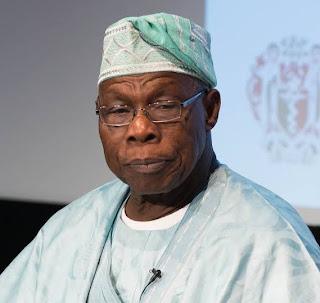
Former President Olusegun Obasanjo has described corruption as a major obstacle to national development, saying societies cannot allow corruption to thrive while expecting meaningful economic and social progress.
Obasanjo spoke on Monday, September 28, in Lagos while chairing the public presentation of “Unexplained Wealth: A Trilogy of Nigerian Financial Law,” a three-volume work authored by Senior Advocate of Nigeria, Dr Wahab Shittu.
The event, held at the Oriental Hotel in Victoria Island, brought together legal practitioners, political figures, traditional rulers and other stakeholders to discuss corruption, unexplained wealth, asset recovery and the enforcement of financial laws.
Obasanjo said corruption was fundamentally incompatible with development.
“One big handicap to development is corruption. Corruption and development are strange bedfellows. They can’t go together.”
He added that people living in poverty are often the most affected when corruption becomes entrenched in society.
Obasanjo Recalls His Anti-Corruption Journey
Obasanjo traced his interest in combating corruption to his military career, when he said he served as a prosecutor under military law and participated in a court-martial involving corruption.
He said his involvement later deepened after he left office as military head of state and became a farmer.
According to Obasanjo, it was during that period that Peter Eigen, a former World Bank official who later founded Transparency International, approached him about joining the campaign against corruption.
Obasanjo said Eigen’s experience at the World Bank had exposed him to cases involving the diversion of funds from international loans.
The two subsequently became involved in establishing Transparency International, with Eigen serving as chairman and Obasanjo becoming chairman of its Advisory Council.
From Transparency International to Nigeria’s Anti-Corruption Laws
Obasanjo also recalled efforts to persuade international institutions to strengthen their response to bribery and corruption.
He said one of the early campaigns focused on the treatment of bribes paid by companies as tax-deductible expenses.
According to his account, the campaign eventually contributed to the OECD ending the practice after several years of advocacy.
Obasanjo said his experience with Transparency International later influenced his approach to anti-corruption legislation in Nigeria.
He recalled obtaining a model anti-corruption law from the organisation, which he said became the basis for legislation establishing the Independent Corrupt Practices and Other Related Offences Commission (ICPC).
He said the legislation faced resistance in the National Assembly, with some lawmakers expressing concern that its provisions could expose them to prosecution.
According to Obasanjo, the disagreement delayed the legislation for about 18 months before it was eventually passed.
Obasanjo Recalls Establishment of EFCC
Obasanjo also linked his administration’s anti-corruption efforts to the establishment of the Economic and Financial Crimes Commission (EFCC).
He said the EFCC was created to strengthen the institutional response to financial crimes after the establishment of the ICPC.
He also commended Nuhu Ribadu, whom he described as a corruption fighter, for his role in the early years of the EFCC.
Obasanjo’s account placed the two agencies within a broader institutional effort to investigate and prosecute corruption and financial crimes.
Why Shittu’s Book Focuses on Unexplained Wealth
The event was organised around Shittu’s three-volume legal work on unexplained wealth.
The author said the publication was designed to help create a framework for distinguishing legitimately acquired wealth from illicit enrichment.
Shittu argued that Nigeria needs reliable records and a credible enforcement system if investigators and prosecutors are to establish how wealth was acquired.
He warned against a system in which people are simply suspected without sufficient evidence.
“Making wealth, becoming rich, is not a crime. But becoming rich and making wealth dubiously is a crime.”
Shittu said the objective should be an enforcement system capable of recovering illicit assets while allowing innocent people to establish the legitimacy of their property.
Sanusi Warns About Political Connections
Emir of Kano Muhammadu Sanusi II also spoke at the event, but placed particular emphasis on how political influence can affect the enforcement of anti-corruption laws.
Sanusi argued that legislation alone would have limited impact if investigators, prosecutors and judges did not apply the law fairly and transparently.
He raised concerns about situations in which people with political connections could avoid scrutiny while those without such protection could face greater exposure.
His comments shifted the discussion from simply creating stronger anti-corruption laws to questions about how those laws are applied.
Osinbajo Stresses Protection of Legitimate Wealth
Former Vice President Yemi Osinbajo, represented at the event by his former Chief of Staff, Ade Ipaye, similarly emphasised the need for safeguards.
Osinbajo said Nigeria needs a clear and constitutionally sound approach to recovering stolen assets without placing legitimately acquired property at risk.
His position highlights a central difficulty in unexplained-wealth enforcement: authorities must be able to investigate suspicious assets while protecting citizens whose wealth was obtained lawfully.
Lack of Documents Does Not Automatically Prove Criminality
Book reviewer Professor Olanrewaju Fagbohun, SAN, also warned against assuming that a lack of conventional documentation automatically establishes that wealth was acquired illegally.
He noted that Nigeria’s large informal economy creates situations in which legitimate assets may not always have the kind of conventional paper trail investigators expect.
Fagbohun therefore called for a balance between effective asset recovery and protection of legitimate property rights.
A Wider Debate Beyond Corruption
The discussion at the book launch therefore went beyond whether Nigeria needs stronger anti-corruption enforcement.
Obasanjo focused on corruption’s effect on development and poverty.
Sanusi highlighted the importance of equal application of the law and the potential influence of political connections.
Osinbajo stressed constitutional safeguards and the protection of legitimate property.
Fagbohun focused on evidentiary standards, while Shittu argued for a system capable of distinguishing legitimate wealth from illicit enrichment.
Together, the positions illustrate the two sides of the unexplained-wealth debate: the need to identify and recover illicit assets, and the need to prevent legitimate citizens from being wrongly treated as criminals.
Why This Matters
Nigeria has maintained several institutions and laws aimed at combating corruption and recovering public assets.
But the speakers at the Lagos event emphasised that enforcement requires more than legislation.
Effective investigations, credible records, fair prosecution, judicial independence and protection of legitimate property rights all form part of the debate over how unexplained wealth should be addressed.
For Obasanjo, the broader objective is development. His argument is that resources diverted through corruption ultimately reduce what is available for society, with poorer citizens bearing much of the consequence.
What Happens Next?
The publication of Shittu’s trilogy adds another legal contribution to Nigeria’s continuing debate over unexplained wealth, asset recovery and financial crime enforcement.
The challenge for policymakers and enforcement agencies will be to strengthen mechanisms for identifying illicit enrichment while maintaining due process and protecting legitimately acquired property.
As Shittu put it, the objective should not simply be to find people with wealth that cannot immediately be explained, but to create a system capable of establishing whether that wealth was lawfully acquired.
Frequently Asked Questions
What did Obasanjo say about corruption and development?
Obasanjo said corruption is a major obstacle to development and described corruption and development as “strange bedfellows” that cannot coexist. He also said people who suffer most in corrupt societies are often the poor.
What is Wahab Shittu’s Unexplained Wealth trilogy about?
The three-volume work examines the legal, institutional and societal dimensions of unexplained wealth, including prosecution, asset recovery and safeguards for people whose legitimately acquired wealth may come under scrutiny.
What did Sanusi say about unexplained wealth?
Emir of Kano Muhammadu Sanusi II stressed that anti-corruption laws must be applied fairly and transparently. He raised concerns about the influence of political connections on enforcement.
What was Osinbajo’s position on asset recovery?
Former Vice President Yemi Osinbajo called for a clear and constitutionally sound system for recovering stolen assets while protecting property that was legitimately acquired.
Did Obasanjo establish the ICPC and EFCC?
Obasanjo said his administration established the ICPC and subsequently the EFCC as part of efforts to strengthen Nigeria’s institutional response to corruption and financial crime. His comments at the book launch were a recollection of his administration’s role in those developments.