Care Workers, Pay, Pensions and the Promise of a New Britain
By Rose Peter Graham
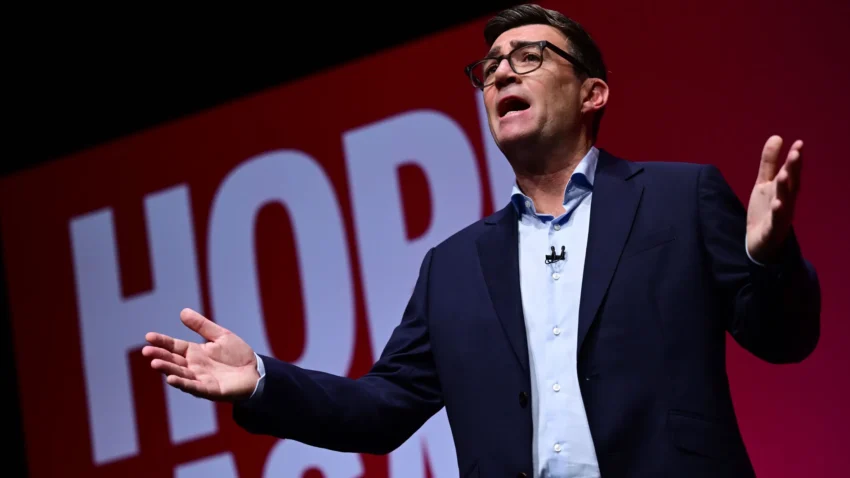
At the Labour Party Conference in Liverpool, Prime Minister Andy Burnham delivered a speech that was both personal and political. He began with his family’s story: his grandfather drove a lorry along Liverpool’s docks, while his grandmother saved to put a deposit on the house where Burnham was born. He described a working-class family whose opportunities were shaped by hard work, community and a country that once helped people get on and give back.
That opening brought to mind Barack Obama’s celebrated keynote address at the 2004 Democratic National Convention. The stories are different, but both speeches used family history to make a larger point about national identity, opportunity and hope. Obama’s address introduced his personal story to a national audience; Burnham used his own family’s journey to ask what kind of country Britain should become.
Burnham’s speech was also shaped by grief. He spoke about his father, Roy, who had died earlier in the month, and the family’s experience of a care system that he said had failed his grandmother and placed a heavy burden on his parents. He pledged to build a National Care Service, free at the point of use, and said he would pursue that reform “in memory of my dad.”
What does “I see you” mean for care workers?
The moment that may have resonated most strongly with care workers came when Burnham described the people who had looked after his father. He said they brought skill, humour and humanity to a system under strain, then addressed them directly: “You are not invisible to me. I see you. I thank you.” He promised to do everything he could to improve things for them.
For African and Afro-Caribbean communities, this recognition is personal. Black, African, Caribbean or Black British workers make up 30% of England’s domiciliary care workforce, according to Skills for Care. Many in our communities work in care homes, hospitals and people’s homes. Some work 12-hour shifts; in some families, husbands and wives take turns working long or back-to-back shifts to manage childcare and household costs.
But what does “I see you” mean in practical terms? Burnham’s conference speech did not announce a specific pay rise, a one-off bonus, a severance payment or a limit on 12-hour shifts. Nor did he set out a new care-worker benefits package. His words expressed a commitment to reform, but workers still need to know what that commitment will mean in their pay packets, rotas and working conditions.
There is, however, a separate government policy already in progress: the first Fair Pay Agreement for adult social care workers in England. Announced before the conference, it is backed by £500 million in 2028–29. An Adult Social Care Negotiating Body, bringing together worker and employer representatives, is due to negotiate pay, terms and conditions. The first agreement is expected to take effect in 2028.
No final pay rate has been agreed yet. The government has given an illustration that a full-time care worker on the National Living Wage could potentially receive up to £1,300 more per year from 2028. That is not a guaranteed increase: the eventual outcome will depend on negotiations by the new body. The agreement could also address working conditions, but no specific limit on shift length or promise of more rest time has been announced.
Burnham has previously said that his immediate priorities include better pay, training, job security and clearer routes for care workers to progress. The government is also developing a career pathway for the adult social care workforce. These measures could help workers build skills and move into more senior roles, but their value will depend on whether they lead to funded training, recognised qualifications and genuine opportunities for advancement.
For workers and families, the distinction matters. The Fair Pay Agreement is a concrete process, but its terms have not been settled. Burnham’s promise is a broader political commitment, not an immediate entitlement. Neither announcement, as it stands, guarantees that a worker doing a 12-hour shift will soon receive higher pay or a shorter working day.
The planned National Care Service could still make a major difference to families who need care for an older or disabled relative. Burnham said it would be free at the point of use, protect people’s homes and savings, and recognise the workers the country relies on. He said the service would be introduced in the next Parliament, after the next general election, and funded without borrowing. The model and funding details remain under development.
There are further questions for migrant care workers. Many Nigerians and other migrants have come to Britain to work in care and have built their lives around jobs the country needs. Burnham’s conference speech did not promise new Nigerian visa rights or a general exemption from future immigration changes. Any protection for existing care workers and their families still needs to be clearly set out by the government.
Pensions and the cost of care reform
The most difficult part of Burnham’s funding plan concerns the state pension. He promised to keep the existing triple lock for the rest of this Parliament. From April 2030, he wants to move to a “double lock”, under which the pension would rise by at least inflation or 2.5 per cent. He said the change would help fund social care and that low-income pensioners would not be drawn into paying income tax during this Parliament. This is not an immediate pension cut, but future increases could be lower than under the current triple lock when wages rise faster than inflation. That could matter to African and Caribbean pensioners who rely heavily on the state pension.
The policy has already drawn criticism. Nigel Farage accused Burnham of targeting older people and said Reform UK would maintain the triple lock. Conservative leader Kemi Badenoch argued that Burnham’s plans amounted to a return to the 1970s and said the care service would eventually require tax rises. Their criticisms raise questions the government will need to answer: how much will the service cost, who will pay, and will the proposed pension changes raise enough to fund it?
Immigration, household costs and representation
Burnham also called for a fresh look at Britain’s relationship with the European Union. He said Brexit had done more harm than good and promised to set out options for a longer-term relationship with Europe. He did not promise that Britain would rejoin the EU. On immigration, he acknowledged the contributions of people who have come to Britain, while also saying the country had lost control over immigration and that the government would work with European partners on the issue.
There were proposals with potential everyday benefits. Burnham said VAT would be removed from household electricity bills and announced that, from January 2027, a single bus journey anywhere in England would cost no more than £2. He promised more social housing and reforms to energy and water, including a new publicly owned Great British Grid. Their eventual impact will depend on implementation and how much households actually save.
Families may also look closely at his plans for young people. Burnham promised better technical education, clearer routes from age 14, work placements, apprenticeships and shorter waits for mental health support. His acknowledgement of families who struggle to secure support for children with special educational needs is particularly relevant to parents across our communities. The challenge will be turning those promises into services families can access without having to fight through the system.
On representation, Burnham announced a national commission on electoral reform and said Labour would include a commitment to change the voting system in its next manifesto. The final model has not yet been decided. For communities whose voices can feel overlooked, fairer representation could matter. But African and Afro-Caribbean Britons are not one predictable voting bloc. Any party seeking our support must show what it will do for our families, workers, businesses and young people.
The speech earned repeated standing ovations and lifted the mood among Labour delegates. That shows a strong reception inside the conference hall, although applause there cannot tell us how the whole country feels. Burnham spoke of drawing a line under a decade of division and drift. His words were confident; the test now is delivery.
For our communities, the speech contains reasons for hope: better care, stronger recognition for care workers, support for young people, lower household costs and a possible route to stronger political representation. It also raises real concerns about pension growth, immigration policy and whether the funding will match the ambition.
For care workers in particular, “I see you” must eventually mean more than a moving moment in a speech. It must be reflected in fair pay, safe and manageable working conditions, secure employment, training and the chance to progress. The Fair Pay Agreement is a step towards that conversation, but workers and families will need to see what is agreed and when it reaches their workplaces.
African and Afro-Caribbean communities should be part of that scrutiny and part of the national conversation about what comes next. We help care for the country, work in its essential services and shape its communities. We should expect to be seen not only in speeches, but in the policies that determine our pay, security, families and future.