By Desmond Ogbonmwan
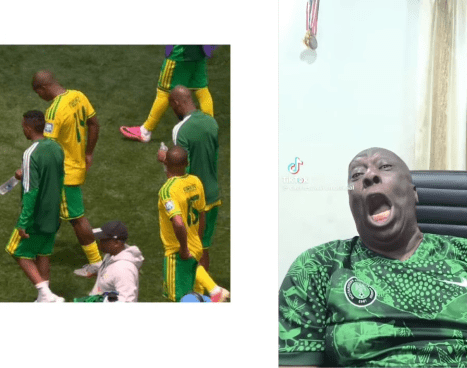
Nigeria-South Africa tensions once again spilled onto social media after Nollywood actor Charles Ndawurum mocked South Africa following Bafana Bafana’s 1-0 defeat to Canada in the FIFA World Cup knockout stage.
The actor shared a video shortly after the final whistle, laughing over South Africa’s elimination and telling the players to “go home and take care of your jobs and women“—a remark that quickly drew attention online.
While some football fans viewed the comments as harmless sporting banter, others saw them as a reflection of the lingering resentment many Nigerians still feel over recent xenophobic incidents in South Africa.
More Than Football: Why the Match Resonated With Many Nigerians
Ordinarily, a country’s elimination from the FIFA World Cup would simply be another sporting result.
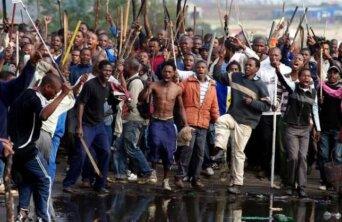
However, South Africa’s exit carried additional emotional weight for many Nigerians because it came just weeks after renewed reports of xenophobic attacks and anti-foreigner campaigns targeting African migrants.
The tensions prompted the Nigerian government to coordinate evacuation flights for citizens who wished to leave South Africa, with hundreds of Nigerians returning home through the exercise.
Those events dominated headlines and reignited conversations about the safety of Nigerians living abroad.
Against that backdrop, South Africa’s World Cup defeat became more than a football story for some social media users—it became a symbol through which they expressed frustration over recent events.
Charles Ndawurum’s Video Sparks Debate
In the video shared on his social media platforms, Charles Ndawurum laughed while reacting to the result.
He jokingly urged South African players to return home and focus on their jobs and relationships after their World Cup campaign ended.
The clip quickly circulated across Facebook, Instagram and X, where it generated mixed reactions.
Some users described it as typical football rivalry, noting that supporters around the world often tease rival nations after major tournament defeats.
Others argued that the comments reflected deeper frustrations resulting from the strained relationship between some Nigerians and South Africans in recent weeks.
The Background Behind the Reactions
Nigeria and South Africa share one of Africa’s most prominent relationships, with strong economic, diplomatic and cultural ties.
Thousands of Nigerians live, work and study in South Africa, while South African companies have invested heavily in Nigeria across sectors including telecommunications, retail, banking and entertainment.
Despite those close links, relations have periodically been tested by outbreaks of xenophobic violence targeting foreign nationals, including Nigerians.
The most recent tensions led to renewed calls for better protection of migrants and prompted Nigerian authorities to assist citizens who wanted to return home.
Those developments remain fresh in the minds of many Nigerians, helping explain why reactions to South Africa’s World Cup exit extended beyond football.
When Football Becomes an Outlet for National Emotion
Sport has long served as an emotional outlet for supporters around the world.
Victories often become expressions of national pride, while defeats sometimes trigger jokes, memes and playful rivalry between competing nations.
In Africa, football rivalries frequently intersect with broader social and political discussions.
Matches involving regional powers such as Nigeria, South Africa, Ghana, Cameroon and Egypt often generate passionate debate that extends far beyond the ninety minutes played on the pitch.
While many online comments following South Africa’s defeat were humorous, analysts also note that sporting events can amplify emotions already present because of unrelated political or social issues.
Social Media Reacts
Following Ndawurum’s post, reactions poured in from both Nigerians and South Africans.
Many Nigerian users admitted they found the actor’s remarks amusing, saying recent events had made it difficult for them to sympathise with South Africa’s World Cup exit.
Others urged restraint, arguing that football should not be used to deepen divisions between ordinary citizens of neighbouring African countries.
Some commenters also pointed out that the actions of individuals involved in xenophobic attacks should not define an entire nation or its football team.
Football Rivalry Should Not Replace Dialogue
While football naturally creates passionate rivalries, diplomatic observers continue to emphasise the importance of strengthening relations between Nigeria and South Africa.
The two countries remain among Africa’s largest economies and play significant roles in regional peacekeeping, trade, entertainment and continental development.
Many analysts argue that addressing concerns around migrant safety, law enforcement and cross-border cooperation requires sustained dialogue rather than allowing sporting rivalries to reinforce existing tensions.
Final Thoughts
Charles Ndawurum’s reaction captured the emotions of many Nigerians who remain upset by recent reports of xenophobic attacks and the evacuation of fellow citizens from South Africa.
For some, Canada’s victory over Bafana Bafana felt like sporting justice.
For others, it was simply another World Cup result that should remain separate from political disagreements.
What is clear is that football continues to reflect the emotions, frustrations and hopes of millions of supporters beyond the boundaries of the pitch.
As both countries move forward, many will hope that future headlines are defined more by sporting excellence and stronger bilateral relations than by division and hostility.