The 2026 FIFA World Cup has delivered unforgettable football moments, but it has also been overshadowed by several controversies involving officiating, politics, fan behaviour, and disciplinary decisions. From disputed refereeing calls to political intervention claims, the tournament has generated headlines both on and off the pitch.
Here’s a look at the biggest controversies that have defined the competition so far.
1. Donald Trump and Folarin Balogun’s Red Card
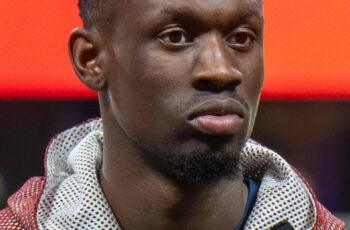
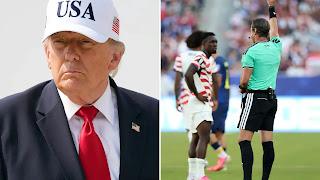
Perhaps the most talked-about controversy of the tournament came after United States striker Folarin Balogun received a straight red card during the Round of 32.
The incident escalated after US President Donald Trump confirmed he personally called FIFA President Gianni Infantino to request a review of the dismissal.
Although Trump insisted he merely asked FIFA to review the decision rather than influence it, critics questioned whether political figures should be involved in football disciplinary matters.
FIFA later overturned Balogun’s suspension, allowing him to face Belgium before the United States exited the tournament.
The decision sparked widespread debate over FIFA’s independence and transparency.
2. Belgium’s Appeal Against Balogun
Following FIFA’s decision to lift Balogun’s suspension, Belgium reportedly filed a late appeal seeking to have the American striker ruled ineligible.
FIFA dismissed the appeal, maintaining that its independent judicial bodies had already reached a final decision.
The controversy intensified criticism from European football circles, with many arguing that FIFA’s disciplinary process lacked consistency.
3. Referee Raphael Claus Faces Heavy Criticism
Brazilian referee Raphael Claus became one of the tournament’s most discussed officials after issuing Balogun’s red card.
The decision divided football fans and analysts, with many believing the challenge deserved only a yellow card.
Although FIFA stood by its officials throughout the competition, the incident renewed calls for greater consistency in VAR reviews and disciplinary decisions.
4. Political Influence in Football
Trump’s admission that he contacted FIFA President Gianni Infantino reopened long-standing debates about politics in sport.
While Infantino maintained that FIFA’s judicial bodies operate independently, critics argued that even public confirmation of such conversations risks damaging public confidence in football governance.
Supporters, however, defended Trump’s actions, saying he merely advocated for what he believed was a fair review.
5. VAR Decisions Continue to Divide Fans
As in previous tournaments, Video Assistant Referee (VAR) decisions remained one of the competition’s biggest talking points.
Supporters praised VAR for correcting clear mistakes, while critics argued that lengthy reviews interrupted the flow of matches and still produced inconsistent outcomes.
Several penalty decisions and offside rulings generated heated debate across social media.
6. Heated Fan Reactions Online
Social media has amplified every controversial moment of the tournament.
Supporters from competing nations have clashed online over refereeing decisions, disciplinary rulings and perceived bias, with hashtags relating to FIFA and VAR regularly trending after major knockout matches.
7. Pressure on FIFA’s Disciplinary System
The Balogun case has also placed FIFA’s disciplinary procedures under intense scrutiny.
Football analysts have questioned how disciplinary appeals are handled and whether the governing body should provide more detailed explanations whenever major suspensions are overturned.
Calls for increased transparency are expected to continue after the tournament.
Tournament Still Delivering Memorable Football
Despite the controversies, the 2026 FIFA World Cup has produced dramatic knockout matches, surprise results and standout individual performances.
With the quarter-finals and semi-finals still to come, attention will return to the football itself, although FIFA’s handling of controversial decisions is likely to remain under the spotlight.
As the tournament progresses, the balance between sporting integrity, officiating consistency and public confidence will continue to shape discussions around the world’s biggest football competition.