
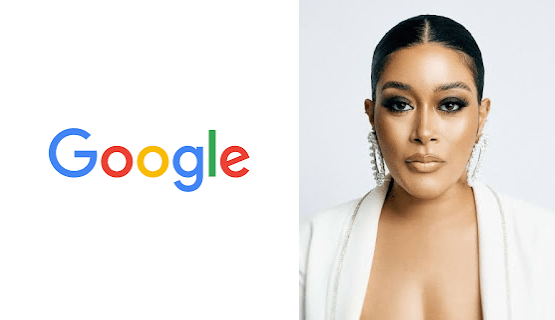
The recent court victory by Nollywood actress Adunni Ade against Google has raised an important legal question: Can Google be sued for defamatory search results in Nigeria?
The answer is yes—but only under certain circumstances.
While Google primarily functions as a search engine that indexes content published by third-party websites, Nigerian courts may hold the company responsible where its actions—or failure to act after being notified of unlawful content—are found to violate a person’s legal rights.
The issue has become increasingly important as more people rely on search engines and digital platforms for news and information.
How Google Search Works
Google does not usually write or publish the content that appears in search results.
Instead, its search engine automatically crawls billions of web pages across the internet and displays links that match a user’s search query.
This means that most articles appearing in Google Search originate from newspapers, blogs, company websites and other publishers—not from Google itself.
However, Google’s role in indexing and continuing to display certain content has increasingly become the subject of legal disputes around the world.
Can Someone Sue Google in Nigeria?
Yes.
Under Nigerian law, a person who believes their constitutional rights have been violated may institute legal proceedings before a competent court.
Depending on the circumstances, claims against Google or another digital platform may involve:
- Defamation
- Invasion of privacy
- Violation of fundamental rights
- Data protection issues
- Failure to remove unlawful content after notice
Whether such a lawsuit succeeds depends entirely on the facts of the case and the evidence presented.
What Happened in Adunni Ade’s Case?
Adunni Ade sued Google after online publications falsely linked her romantically to former Kogi West Senator Dino Melaye.
According to the actress, the publications damaged her reputation, violated her privacy and caused emotional distress.
She asked the court to order Google to remove the offending publications and sought financial compensation.
The Lagos High Court eventually ruled in her favour, awarding N30 million in general damages and directing Google to remove the defamatory publications from its platforms.
The court also ordered the removal of references linking the actress to the false allegations.
The decision illustrates that Nigerian courts may, in appropriate cases, order digital platforms to remove unlawful content and award damages where a legal violation has been established.
Does Google Automatically Become Liable?
No.
Simply appearing in Google Search does not automatically make Google legally responsible for the contents of every webpage.
Courts generally examine several factors, including:
- The nature of the publication.
- Whether the content is unlawful.
- Whether the claimant’s rights were violated.
- The role played by the platform.
- Whether the platform had notice of the complaint.
- Whether reasonable steps were taken after notification.
Each case is decided on its own facts.
What Is Defamation?
Defamation occurs when a false statement is published about a person in a way that harms their reputation.
To succeed in a civil defamation claim, a claimant generally needs to establish that:
- A defamatory statement was published.
- The statement referred to the claimant.
- It was communicated to another person.
- The publication caused reputational harm or met the applicable legal standard.
Courts also consider available legal defences, including truth, fair comment, qualified privilege and other recognised protections depending on the circumstances.
Can Courts Order Content to Be Removed?
Yes.
Nigerian courts have the power, in appropriate cases, to grant orders requiring unlawful material to be removed.
These orders may include:
- Removal of defamatory publications.
- Injunctions preventing further publication.
- Financial compensation.
- Other remedies the court considers appropriate.
The exact remedy depends on the facts presented and the legal issues before the court.
Why This Matters
As more Nigerians consume news online, disputes involving digital platforms are becoming increasingly common.
The Adunni Ade case highlights the growing importance of:
- Responsible online publishing.
- Fact-checking before publication.
- Respect for privacy rights.
- Legal accountability in the digital age.
It also serves as a reminder that individuals who believe their rights have been violated may seek legal remedies through the courts.
However, every dispute is unique, and court decisions depend on the evidence, applicable law and the specific facts of each case.
The Bigger Picture
Cases involving online publications continue to shape how Nigerian law interacts with rapidly evolving technology.
As search engines, social media platforms and digital publishers become central to everyday communication, courts are increasingly being asked to balance freedom of expression, public interest and the protection of individual rights.
Future decisions are likely to provide further guidance on the responsibilities of technology companies and online publishers operating within Nigeria.