
By Desmond Ogbonmwan
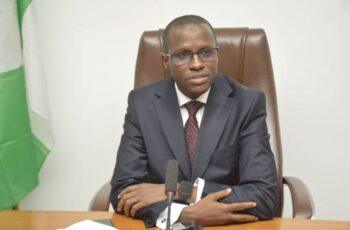
Former Minister of Science and Technology, Uche Nnaji, has been arrested in connection with an ongoing investigation into allegations that he submitted forged academic and National Youth Service Corps (NYSC) certificates during his appointment process in 2023.
According to reports, Nnaji was arrested on Tuesday morning shortly after arriving at the Nnamdi Azikiwe International Airport, Abuja, aboard a chartered flight. He is expected to be handed over to the Independent Corrupt Practices and Other Related Offences Commission (ICPC) for interrogation as investigators continue examining the allegations against him.
The arrest follows weeks of legal proceedings, including a Federal High Court order authorising the ICPC to arrest and declare the former minister wanted after he allegedly failed to honour several invitations issued by the anti-corruption agency.
The development marks a significant moment in a case that has attracted national attention because it raises broader questions about public accountability, the verification of credentials submitted by political appointees and the integrity of Nigeria’s public service recruitment process.
Why Was Uche Nnaji Arrested?
The ICPC alleges that Uche Nnaji presented forged academic credentials while being considered for ministerial appointment.
Investigators claim the documents include:
- a bachelor’s degree purportedly obtained from the University of Nigeria, Nsukka (UNN);
- a National Youth Service Corps (NYSC) certificate; and
- related credentials allegedly submitted during the ministerial screening and confirmation process.
According to the allegations, these documents were presented to several government institutions, including:
- the Office of the President;
- the Nigerian Senate during ministerial confirmation;
- the Office of the Secretary to the Government of the Federation; and
- security agencies responsible for conducting background checks.
Authorities are investigating whether the certificates were genuine and whether any false information was knowingly submitted as part of the appointment process.
At the time of publication, the allegations remain the subject of an official investigation and have not been determined by a court.
The Court Order That Led to the Arrest
The arrest did not occur suddenly.
On June 13, a Federal High Court in Abuja granted the ICPC permission to arrest the former minister after the commission argued that he had repeatedly failed to honour invitations for questioning.
The court also authorised the commission to declare him wanted through newspapers, social media platforms and other public channels if necessary.
Legal experts note that ex parte applications of this nature are generally used where investigators believe a suspect is avoiding lawful invitations or where an arrest is necessary to facilitate an ongoing investigation.
The execution of that court order has now culminated in Tuesday’s arrest at the airport.
Why Certificate Forgery Allegations Matter
Allegations involving forged academic or professional qualifications are taken seriously because educational credentials often form part of the legal requirements for public appointments.
Government agencies rely on submitted documents during background checks and security screening.
Where investigators suspect that false information has been provided, potential offences may include forgery, making false declarations or presenting fraudulent documents, depending on the evidence established during the investigation.
Ultimately, whether any criminal liability exists will depend on the outcome of the investigation and any subsequent court proceedings.
Public Confidence and Public Office
Cases involving senior public officials often attract widespread attention because they affect public confidence in government institutions.
Many Nigerians expect public office holders to meet the same legal and ethical standards required of citizens applying for employment in both the public and private sectors.
When allegations involve educational qualifications, they also prompt broader conversations about the effectiveness of document verification processes before appointments are announced.
The current investigation may therefore renew calls for stronger credential verification systems during future ministerial and senior government appointments.
What Happens Next?
Following his arrest, the next stage of the process is expected to involve questioning by investigators from the Independent Corrupt Practices and Other Related Offences Commission (ICPC).
During this phase, investigators may seek clarification on the academic and NYSC documents allegedly submitted during the ministerial appointment process.
Depending on the outcome of the investigation, several possibilities exist.
The commission could:
- conclude that no criminal offence was committed and discontinue the matter;
- continue gathering evidence before making a prosecutorial decision;
- file formal charges if investigators believe sufficient evidence exists to support prosecution.
Ultimately, only a competent court can determine criminal liability.
Until then, the allegations remain subject to investigation and due process.
How Are Academic Credentials Verified for Public Appointments?
Whenever individuals are nominated for senior government positions in Nigeria, they are generally required to submit documents relating to their educational qualifications, professional background and personal history.
Those documents may be reviewed by several institutions, including security agencies and relevant government offices responsible for background checks.
Universities and examination bodies also maintain official records that can be used to confirm whether certificates presented by applicants were legitimately issued.
The current investigation has therefore renewed public discussion about whether verification procedures should become even more rigorous before appointments are confirmed.
Some governance experts argue that digital verification systems and closer collaboration with educational institutions could reduce the likelihood of disputes over credentials.
Why Certificate Forgery Cases Attract National Attention
Cases involving alleged certificate forgery often receive significant public attention because educational qualifications are closely linked to trust and credibility.
For many Nigerians, obtaining academic certificates requires years of study, financial sacrifice and personal commitment.
When allegations emerge suggesting that a public official may have presented false qualifications, the issue extends beyond one individual.
It raises broader questions about fairness, accountability and confidence in public institutions.
Many observers argue that those seeking high public office should be held to particularly high standards because they are entrusted with making decisions that affect millions of citizens.
Lessons for Public Institutions
Regardless of the outcome of this investigation, governance experts say the case highlights the importance of strengthening institutional processes.
Possible areas for improvement include:
- more comprehensive document verification before appointments;
- greater digital integration between universities and government agencies;
- improved record management;
- faster inter-agency communication during background screening;
- stronger penalties where deliberate fraud is proven.
Supporters of these reforms argue that preventing fraudulent documentation is often more effective than investigating it after appointments have already been made.
Due Process Must Remain Central
While the allegations have generated considerable public interest, legal analysts emphasise the importance of respecting due process.
An arrest does not amount to a conviction.
Similarly, an investigation does not automatically establish guilt.
Nigeria’s legal system provides every suspect with the right to respond to allegations, present evidence and receive a fair hearing before any criminal liability is determined.
Maintaining that balance protects both the integrity of investigations and the constitutional rights of individuals involved.
For that reason, many legal observers caution against drawing final conclusions before judicial proceedings are completed.
Public Reaction
News of the arrest has generated widespread reactions across social media and political circles.
Some Nigerians welcomed the development, arguing that public officials should be fully investigated whenever credible allegations arise.
Others stressed that the investigation should proceed without political interference and that conclusions should be based solely on evidence presented through lawful procedures.
The case has also reignited conversations about transparency, public accountability and the standards expected of those appointed to high government office.
Why This Case Matters Beyond One Individual
Although the investigation centres on one former minister, its implications are broader.
It highlights the importance of institutional credibility.
Public confidence depends not only on appointing qualified individuals but also on ensuring transparent verification processes capable of identifying irregularities before appointments are finalised.
If lessons from this case result in stronger verification procedures, improved record management and greater accountability, the impact could extend well beyond the outcome of one investigation.
Final Thoughts
The arrest of former Minister Uche Nnaji represents another important development in an investigation that has attracted national attention because of the seriousness of the allegations involved.
As investigators continue their work, the focus will likely shift toward the evidence presented, the responses offered by the former minister and any decisions reached by the courts.
Whatever the eventual outcome, the case serves as another reminder that transparency, accountability and due process remain essential pillars of democratic governance.
For many Nigerians, the expectation is not simply that allegations are investigated, but that investigations are conducted fairly, professionally and without prejudice.
Only through that process can public confidence in institutions be strengthened.
Frequently Asked Questions
Why was Uche Nnaji arrested?
According to reports, the former minister was arrested in connection with an ICPC investigation into allegations that he submitted forged academic and NYSC certificates during the ministerial appointment process.
Has Uche Nnaji been convicted?
No. At the time of publication, he has been arrested for investigation. The allegations remain subject to due process, and no court has convicted him.
Which agency is investigating the case?
The Independent Corrupt Practices and Other Related Offences Commission (ICPC) is leading the investigation.
What documents are being investigated?
The investigation concerns a university degree allegedly issued by the University of Nigeria, Nsukka (UNN), an NYSC certificate and related documents reportedly submitted during the appointment process.
What happens after an arrest?
Investigators typically question the suspect, review evidence and determine whether sufficient grounds exist to file charges. Any criminal liability would ultimately be decided by the courts.