
By Rose Peter Graham
Trump, Xi and the delicate contest for economic, political and technological power in a changing world
When two of the world’s most influential men meet, the world pays attention.
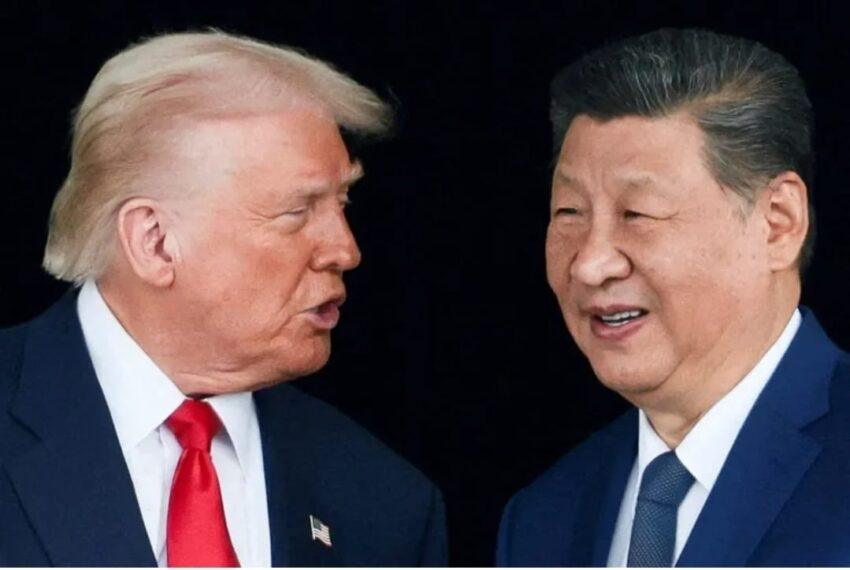
United States President Donald Trump and Chinese President Xi Jinping lead two nations whose decisions influence global economics, politics, technology, trade and military security. They may not rule the world, but together, their countries possess enough economic and strategic power to shape its direction.
President Xi’s three-day state visit to the United States therefore represented far more than a meeting between two presidents. It brought together the leaders of the world’s two largest economies at a time when their nations are locked in an increasingly intense struggle for global influence.
The relationship between the United States and China has been marked by heated exchanges, tariff battles, restrictions on technology, disputes over Taiwan and displays of military strength. Behind the formal diplomatic language lies a quiet but unmistakable contest over who will hold the greatest influence in a rapidly changing world order.
Yet, despite their rivalry, America needs China and China needs America.
A Welcome Laden with Meaning
Donald Trump’s decision to welcome Xi Jinping personally at Joint Base Andrews was more than a ceremonial gesture. It departed from the usual reception arrangements and demonstrated the importance Trump attached to his Chinese counterpart and the visit itself.
The gesture could be interpreted in different ways. Was it a calculated display of political theatre, a sign of personal respect or evidence of an improving diplomatic relationship?
Perhaps it contained elements of all three.
Trump is famous for using personal relationships as instruments of diplomacy. By offering Xi such a prominent welcome, he was not merely receiving a visiting president. He was acknowledging China’s position as a global power whose cooperation, or confrontation, can affect markets, wars and livelihoods across continents.
It would be an overstatement to describe Trump as a “prize” for China.
However, direct access to an American president who values personal diplomacy is undoubtedly valuable to Beijing.
Equally, Trump benefits from presenting himself as the leader capable of dealing directly with America’s most formidable economic competitor.
Partners, Rivals and Economic Competitors
The United States and China are deeply connected economically, even while each attempts to reduce its dependence on the other.
American consumers and businesses continue to rely on goods, manufacturing networks and vital materials connected to China. China, meanwhile, depends on global markets, American agricultural products and access to technologies that can support its economic ambitions.
This interdependence has not prevented conflict. Tariffs imposed by Washington have been met with retaliation from Beijing. America has restricted China’s access to advanced semiconductors, while China has exercised its influence over rare-earth minerals and other materials essential to technology, defence and clean energy.
The September summit produced no sweeping settlement. Its most notable economic outcome was a modest two-month extension of the existing trade truce. That may appear underwhelming after three days of ceremony, but even a temporary pause matters when renewed confrontation between the two largest economies could disrupt supply chains, unsettle financial markets and increase prices around the world.
The extension does not end the trade conflict. It simply gives both sides more time to negotiate.
Taiwan: The Most Dangerous Question
Taiwan remains one of the most sensitive and potentially dangerous issues between Washington and Beijing.
China regards Taiwan as part of its territory and has not ruled out the use of force to achieve reunification. The United States maintains unofficial relations with Taiwan and continues to play a significant role in its security.
A military confrontation over Taiwan could draw the world’s two most powerful militaries into direct conflict. That is why dialogue between Trump and Xi is important, even when it does not produce an immediate agreement.
Diplomacy is not always measured by treaties signed or dramatic announcements made. Sometimes its greatest achievement is preventing miscalculation. Regular communication between the two presidents, their military officials and diplomatic teams could mean the difference between managing a crisis and allowing one to spiral into war.
The Race for Artificial Intelligence
Artificial intelligence has become another major battleground.
The United States and China both recognise that leadership in AI will bring enormous economic, political and military advantages. The nation that leads in advanced computing, semiconductor technology, robotics and autonomous systems could shape the next era of human development.
But AI is too consequential to be treated only as a competition for supremacy.
The summit offered an opportunity for both countries to discuss AI safety, communication during technology-related crises and the danger of autonomous military systems. Experts have called for safeguards ensuring that human beings remain involved in decisions concerning nuclear weapons and other potentially catastrophic uses of artificial intelligence.
The question facing Trump and Xi is therefore bigger than which country wins the AI race. It is whether the two powers can help establish rules ensuring that AI remains a tool under meaningful human supervision rather than a force capable of endangering humanity.
There is no evidence that the summit produced a comprehensive AI agreement. That represents a missed opportunity but not necessarily the end of the conversation.
Can America and China Stabilise the World?
The influence of Washington and Beijing extends far beyond their bilateral relationship.
The United States remains central to Western military and diplomatic alliances. China possesses enormous economic influence and maintains important relationships across Asia, Africa, the Middle East and the Global South. Their cooperation could help address wars, nuclear proliferation, climate change, financial instability and future pandemics.
Their rivalry, however, could deepen global divisions and force smaller nations to choose sides.
Neither Trump nor Xi can single-handedly deliver world peace. Other nations and institutions have their own interests and responsibilities. Nevertheless, cooperation between America and China could create space for diplomacy, while open hostility between them could make existing conflicts more dangerous.
The summit reportedly included discussions about Taiwan and the wars involving Iran and Ukraine. But ceremony and personal warmth cannot substitute for concrete commitments. The real test will be whether both governments translate diplomatic language into sustained action.
Power Play or Genuine Diplomacy?
Was the state visit a breakthrough? Not quite.
The pageantry was impressive, the symbolism was powerful and the willingness to continue talking was encouraging. However, the visit ended without the kind of historic agreement capable of transforming relations between the two countries.
Perhaps expecting a grand settlement was unrealistic. The differences between the United States and China are structural. They concern trade, national security, political values, technology and competing visions of world leadership. Three days of meetings could not erase them.
The more realistic objective is what might be called competitive stability: both countries continuing to compete while establishing sufficient communication, restraint and mutual understanding to prevent that competition from becoming a devastating conflict.
When They Meet, the World Watches
Trump and Xi are not the only important leaders in the world, but few political relationships carry consequences of comparable magnitude.
When they disagree, global markets react. When tariffs rise, businesses and consumers feel the consequences. When their militaries confront one another, neighbouring countries become anxious. When they cooperate, opportunities emerge for economic stability and international diplomacy.
Their latest meeting may not have changed the world overnight. It did, however, reinforce an important reality: neither America nor China can completely isolate, intimidate or ignore the other.
The world does not simply need photographs of two powerful men shaking hands. It needs responsible leadership, practical agreements and safeguards against economic, technological and military escalation.
The question is no longer merely who possesses the greatest power in a changing world order. The more important question is whether those who possess that power have the wisdom to use it responsibly.
When Donald Trump and Xi Jinping meet, therefore, they carry more than the interests of their respective countries into the room. Whether they acknowledge it or not, they also carry some measure of responsibility for the future stability of the world.


The Chinese leader towers head & shoulder above Trump in everything from aura to class to disposition to intellectual sagacity. Same way China towers above America which is all noise & subterfuge
The Chinese leader towers head & shoulder above Trump in everything from aura to class to disposition to intellectual sagacity. Same way China towers above America which is all noise & subterfuge