By Desmond Ogbonmwan
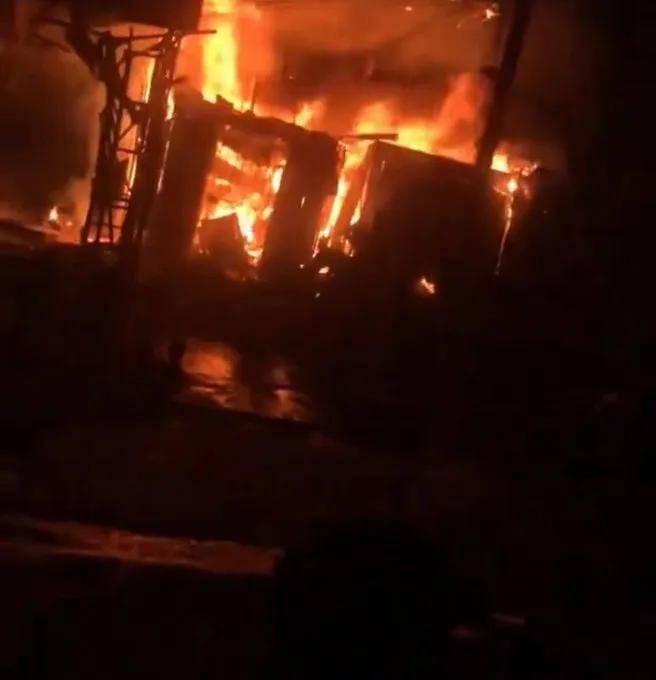
If you’ve been following the news recently, it may feel as though reports of market and shop fires have become alarmingly common across Nigeria.
Almost every week, another headline emerges: “Fire destroys shops worth millions,” “Market razed by inferno,” or “Traders count losses after overnight blaze.” For many business owners, these incidents represent more than property damage — they mean the loss of livelihoods, investments, and in some cases, years of hard work.
What is particularly troubling is that many of these fires occur late at night or in the early hours of the morning when markets are closed, security is limited, and emergency responders often face challenges accessing affected areas.
Just recently, a fire outbreak affected a one-storey commercial building within Computer Village, Ikeja, destroying goods belonging to computer dealers and electronics traders. Around the same period, another fire incident was reported at the Old Market in Sokoto, where several shops and valuable merchandise were destroyed.
Earlier incidents in Lagos, including fires at Bariga Market and commercial complexes around Ikotun and Lagos Island, also left traders counting significant losses.
As these incidents continue to occur, many Nigerians are asking the same question:
Why are market fires becoming so common, and what can be done to stop them?
The Electrical Problem Many Markets Face
One of the most frequently cited causes of market fires in Nigeria is electrical failure.
Many commercial areas rely on a combination of public electricity, generators, inverters, extension cables and improvised wiring systems.
When electricity supply fluctuates or suddenly returns after an outage, electrical surges can occur. If wiring systems are old, overloaded or poorly installed, sparks may be generated.
In crowded commercial environments filled with cartons, plastic packaging, nylon materials and electronic equipment, a small spark can quickly develop into a major fire.
Fire service reports across the country have repeatedly identified electrical faults as one of the leading causes of market and commercial building fires.
Markets Contain Highly Flammable Materials
Another major factor is the type of goods commonly stored in markets.
Many shops contain:
- Cardboard cartons
- Plastic packaging materials
- Foam products
- Electronic devices
- Batteries and power banks
- Extension cables
- Wooden partitions
- Fuel stored for generators
These materials can accelerate the spread of fire once ignition occurs.
In technology hubs such as Computer Village, where electronics and accessories are concentrated in large quantities, the risk can be particularly high.
Experts note that when combustible materials are packed closely together, fire spreads rapidly from one shop to another, making containment significantly more difficult.
Poor Market Design Creates Additional Risks
Many Nigerian markets were not originally designed with modern fire safety standards in mind.
In several commercial centres, shops are built close together with narrow pathways separating them.
When a fire breaks out, emergency responders may struggle to access affected areas quickly.
In some cases, fire trucks cannot reach the source of the fire because vehicles, structures or market stalls block access roads.
The result is often a delay in response, allowing the fire to spread further before containment efforts begin.
Locked Shops Slow Emergency Response
Another challenge is that most markets are secured at night.
While this helps protect traders from theft, it can complicate firefighting efforts.
By the time smoke is detected, market leaders or shop owners may not be immediately available to provide access.
Firefighters are sometimes forced to break through gates, shutters or walls before reaching the source of a blaze.
Every minute lost during those critical early stages increases the likelihood of widespread damage.
Lack of Fire Safety Equipment
Despite the enormous value of goods stored in many markets, fire safety equipment remains surprisingly limited.
Many traders do not own fire extinguishers, while others have extinguishers that have expired or are not properly maintained.
In some markets, there are no central fire points, alarm systems or emergency water facilities available for immediate use.
Safety experts have repeatedly emphasized that a small fire can often be contained within minutes if appropriate equipment is available and individuals know how to use it.
Without those tools, even a minor incident can quickly become a large-scale disaster.
Recent Market Fire Incidents
Several major fire incidents have been reported across Nigeria in recent months.
Among them are:
- Computer Village, Ikeja – where a commercial building housing computer dealers and electronics traders was damaged by fire.
- Old Market, Sokoto – where multiple shops were destroyed, resulting in significant financial losses.
- Bariga Market, Lagos – where dozens of shops were reportedly affected by a major blaze.
- Commercial complexes around Ikotun, Lagos – where preliminary investigations pointed toward possible electrical faults.
- Lagos Island commercial districts – where repeated market fires have affected businesses during peak trading periods.
Although investigations into some of these incidents remain ongoing, they collectively highlight the urgent need for improved fire prevention measures.
Why Rumours Often Follow Major Fires
Whenever a major market fire occurs, rumours often begin circulating almost immediately.
Some traders speculate about sabotage, land disputes, redevelopment plans or other hidden motives.
However, authorities have not presented evidence linking most recent market fires to organised attacks or deliberate destruction.
Security agencies and fire investigators generally focus on identifying physical causes such as electrical faults, negligence, fuel storage issues and safety violations.
Experts warn that while public suspicions are understandable, especially after repeated incidents, conclusions should be based on verified investigations rather than speculation.
Greater transparency from authorities could help address many of these concerns and reduce the spread of misinformation.
What Needs to Change
Reducing market fires will require action from traders, market leaders and government agencies alike.
For Traders
- Avoid overloading electrical sockets.
- Replace damaged wiring promptly.
- Limit overnight charging of devices.
- Store fuel away from business premises.
- Maintain working fire extinguishers.
- Participate in fire safety training.
For Market Authorities
- Conduct regular electrical inspections.
- Improve market layouts and emergency access routes.
- Install fire alarm systems.
- Provide emergency water points.
- Enforce safety regulations consistently.
For Government
- Strengthen fire service capacity.
- Increase public awareness campaigns.
- Improve investigation transparency.
- Support market safety upgrades.
The Bottom Line
Market fires are rarely caused by a single factor.
In many cases, they result from a combination of poor electrical infrastructure, overcrowded environments, inadequate safety measures and delayed emergency response.
As Nigeria’s commercial centres continue to grow, the need for stronger fire prevention systems becomes increasingly urgent.
For thousands of traders, a single fire can erase years of investment overnight.
Until safety becomes a priority rather than an afterthought, the headlines may continue to repeat themselves — and more businesses could find themselves counting devastating losses after yet another market fire.