By Desmond Ogbonmwan
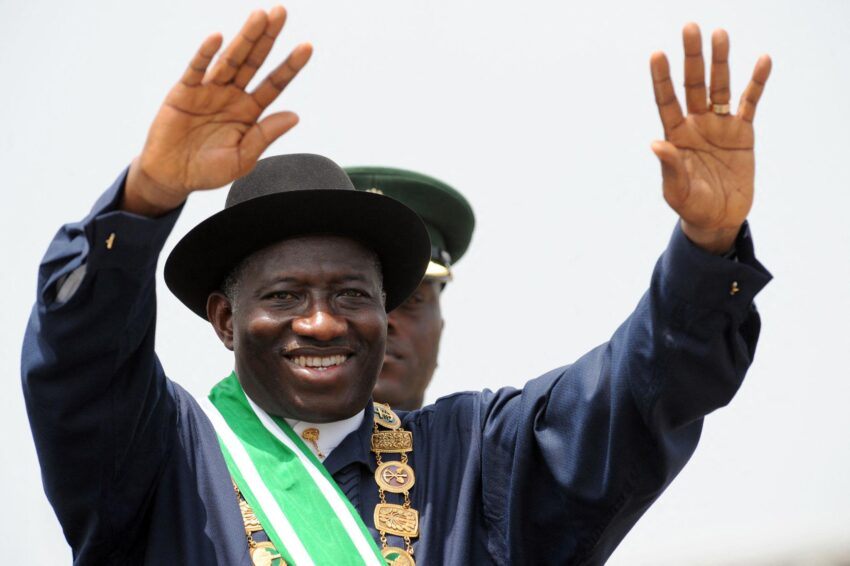
Former Nigerian President Goodluck Jonathan has once again found himself at the centre of public debate following comments made by former Vice President Atiku Abubakar, who recently suggested that Jonathan’s administration suffered from a lack of experience.
The remarks reignited conversations about one of Nigeria’s most debated presidencies and prompted many Nigerians to reassess Jonathan’s legacy more than a decade after he left office.
Responding to the criticism during a diplomatic engagement in Abuja, Jonathan did not attempt to portray his administration as flawless. Instead, he offered a simple reflection on his time in office.
“I made mistakes, but I did my best,” the former president said.
The statement was brief, but it carried significant weight. It also reopened an important question: How should Nigerians remember the leadership of Goodluck Jonathan?
A Presidency Born Out of Unusual Circumstances
Jonathan’s rise to power was unlike that of most Nigerian leaders.
After serving as Vice President under President Umaru Musa Yar’Adua, he assumed office in 2010 following Yar’Adua’s death, inheriting a nation facing political uncertainty, economic challenges and growing security concerns.
He subsequently won the 2011 presidential election and began a full term in office.
His administration would go on to oversee one of the most politically turbulent periods in Nigeria’s democratic history.
From the Boko Haram insurgency and economic pressures to fuel subsidy protests and increasing political opposition, Jonathan faced challenges that tested both his leadership and the country’s institutions.
The Criticism That Followed Him
For years, critics have argued that Jonathan’s leadership style lacked firmness.
Some political observers believed he was too cautious when stronger action was required. Others argued that his administration struggled to impose discipline within government institutions and political structures.
These criticisms intensified as security challenges expanded and public frustration grew over issues such as corruption, governance and economic management.
Atiku’s recent comments reflect a viewpoint that has existed for years—that Jonathan’s perceived inexperience affected his ability to govern effectively during periods of national crisis.
Supporters of this argument maintain that stronger leadership could have produced different outcomes in several areas.
However, the debate is far more complex than a simple assessment of strength versus weakness.
A Different Leadership Style
While critics often focus on what Jonathan did not do, supporters point to what made his administration different.
Unlike many political leaders, Jonathan was rarely associated with aggressive political confrontations.
His public image was built around consultation, compromise and restraint.
Rather than projecting force, he often preferred dialogue.
This approach earned him both praise and criticism.
Supporters viewed it as evidence of maturity and democratic commitment. Critics interpreted it as indecisiveness.
The difference often depended on what people expected from leadership.
The 2015 Election and a Defining Moment
Perhaps the most significant event shaping Jonathan’s legacy occurred during the 2015 presidential election.
After losing to Muhammadu Buhari, Jonathan conceded defeat and publicly congratulated his opponent.
The decision helped prevent political tension from escalating and was widely praised both within Nigeria and internationally.
Many analysts consider that moment one of the most important democratic transitions in the country’s history.
At a time when election disputes had previously triggered unrest in parts of Africa, Jonathan’s decision demonstrated a commitment to democratic stability over personal political ambition.
For many Nigerians, that single act remains one of the strongest arguments in favour of his leadership style.
Was Peacefulness Mistaken for Weakness?
One of the enduring debates surrounding Jonathan’s presidency is whether his calm and non-confrontational personality was misunderstood.
Nigeria’s political culture has often rewarded leaders who project strength, authority and control.
In such an environment, restraint can sometimes be interpreted as weakness.
Jonathan’s critics frequently described him as too soft.
His supporters, however, argue that he represented a different model of leadership—one based on patience, dialogue and respect for democratic processes.
Looking back, it is possible that the qualities some Nigerians criticised during his presidency are the same qualities others now appreciate.
As political tensions continue to shape national conversations, Jonathan’s preference for moderation appears increasingly distinct from the confrontational style often associated with modern politics.
Achievements That Deserve Recognition
Any balanced assessment of Jonathan’s presidency must acknowledge both successes and shortcomings.
During his administration, Nigeria experienced growth in sectors such as telecommunications, agriculture and financial services.
His government introduced reforms aimed at improving agricultural productivity and reducing dependence on food imports.
Nigeria also strengthened its diplomatic engagement internationally and maintained active participation in regional organisations, including the Economic Community of West African States (ECOWAS).
While many of these achievements were overshadowed by security challenges and political controversies, they remain part of the historical record.
Leadership and Hindsight
One of the realities of politics is that leaders are often judged differently as time passes.
Policies that were criticised can later be reassessed. Decisions once viewed negatively may eventually be understood within a broader context.
The same is true of Jonathan.
More than ten years after leaving office, public discussions about his presidency have become less emotional and more reflective.
Many Nigerians who once focused exclusively on his shortcomings are now considering the pressures, limitations and circumstances he faced while leading the country.
That does not mean criticism should disappear.
Rather, it means the conversation has become more balanced.
Final Thoughts
Goodluck Jonathan’s presidency remains one of the most debated periods in Nigeria’s democratic history.
His administration faced serious challenges, made controversial decisions and attracted substantial criticism.
Yet it also demonstrated qualities that continue to earn respect, particularly his commitment to democratic processes and peaceful political transitions.
His recent statement—”I made mistakes, but I did my best”—may not satisfy every critic, but it reflects an acknowledgement rarely heard from political leaders.
Ultimately, Jonathan’s legacy may not be defined solely by the mistakes he made or the challenges he faced.
It may also be remembered for the example he set: a leader willing to leave office peacefully, respect democratic outcomes and place national stability above personal ambition.
As Nigerians continue to debate his record, one thing remains certain: the conversation about Goodluck Jonathan’s leadership is far from over.
Related Stories
- Peter Obi Says Court Order Deregistering ADC and Other Parties Should Be Reversed
- Peter Obi Says There Is No Reason for Nnamdi Kanu’s Imprisonment
- Tinubu’s Enemies Sponsoring Insecurity to Discredit Democracy – Akpabio
- State Police Reform Moves Closer as National Assembly Advances Bill
- Aisha Yesufu Rejected House of Reps Ticket, She Said She’s Too Big for It – Seriake Dickson