By Desmond Ogbonmwan
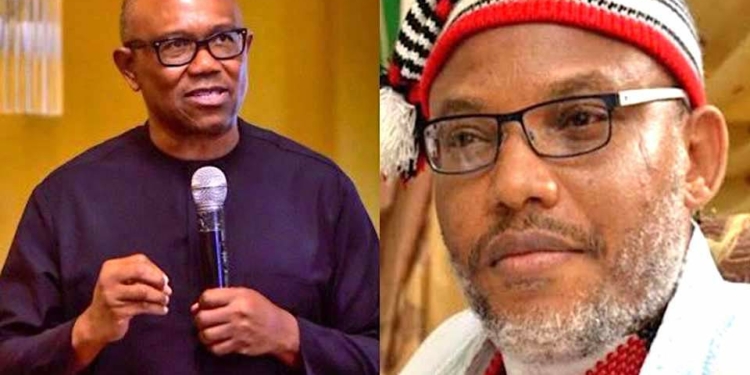
Former Labour Party presidential candidate Peter Obi has renewed his call for the release of Indigenous People of Biafra (IPOB) leader Nnamdi Kanu, insisting that there is no justification for his continued imprisonment and arguing that dialogue remains the most effective way to address separatist agitations in Nigeria.
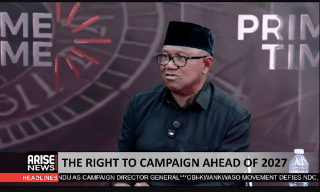
Obi made the remarks during an engagement with members of the Nigerian diaspora in Washington, D.C., where he spoke extensively on governance, national unity, security, and the challenges facing the country.
The former Anambra State governor said he has consistently maintained the position that Kanu should not remain behind bars and stressed that political grievances are best resolved through engagement rather than prolonged incarceration.
“I have said this repeatedly, there is no reason for keeping Nnamdi Kanu. As far as I’m concerned, there’s no reason whatsoever,” Obi said.
His comments have once again brought the issue of Kanu’s detention into national focus, reigniting debate over freedom of expression, national security, separatist movements, and the future of political dialogue in Nigeria.
Obi Defends Freedom of Expression
Speaking during the event, Obi argued that expressing opinions, criticising political leaders, or even making offensive remarks should not automatically result in imprisonment.
According to him, public office holders are often subjected to criticism and harsh comments, which should be tolerated in a democratic society.
“You cannot arrest somebody because he was speaking on radio and calling people names. It doesn’t make sense. Anybody can tell you anything. I’m a politician. People call me all sorts of names. I don’t think calling me names is an offence. It is not an offence,” he said.
The former governor maintained that democracy thrives when citizens are free to express their views, even when those views are unpopular or critical of those in authority.
His position reflects a broader argument made by many civil society groups and human rights advocates who have repeatedly called for greater protection of free speech and political dissent.
Call for Dialogue Over Confrontation
Obi also stated that if given the opportunity to lead the country, he would prioritise dialogue with individuals and groups expressing dissatisfaction with the Nigerian state.
According to him, meaningful engagement often provides a pathway toward understanding the root causes of conflict and developing lasting solutions.
“If I’m in government today, I will discuss with all agitators. I will engage with them. I will consult with them.
“Because I believe that they have a reason for whatever they want to do. It’s only by engaging them that we’ll learn and see how we can solve it.”
The former presidential candidate argued that governments must be willing to listen to aggrieved groups rather than relying solely on force or legal measures.
His comments come at a time when discussions about insecurity, separatist movements, and national cohesion continue to dominate public discourse across the country.
Who Is Nnamdi Kanu?
Nnamdi Kanu is the leader of the Indigenous People of Biafra (IPOB), a separatist organisation advocating for the restoration of an independent Biafra state in Nigeria’s South-East region.
He first gained prominence through Radio Biafra broadcasts and political campaigns centred on self-determination for people of the former Eastern Region.
Over the years, IPOB grew into one of the most influential separatist movements in Nigeria, attracting both strong support and fierce opposition.
The Federal Government eventually proscribed IPOB, describing it as an unlawful organisation and accusing some of its members of involvement in violent activities and attacks on security personnel.
Supporters of the group, however, insist that the movement represents a legitimate expression of political grievances and demands for self-determination.
Kanu’s Conviction and Ongoing Debate
Kanu is currently serving a life sentence after a Federal High Court in Abuja convicted him on terrorism-related charges in November 2025.
The court found him guilty on several counts, including incitement, membership of a proscribed organisation, and offences linked to separatist activities in the South-East.
The conviction marked a major development in a legal battle that had lasted several years and generated widespread national and international attention.
Since the judgment, supporters of Kanu have continued to call for his release, arguing that political solutions would be more effective than prolonged imprisonment.
Others, however, insist that the court’s ruling should be respected and that issues relating to national security must be handled within the framework of the law.
Why the Issue Remains Significant
Kanu’s detention remains one of the most politically sensitive issues in contemporary Nigerian politics.
The matter has implications that extend beyond the courtroom, touching on questions of national unity, federalism, human rights, security, and the relationship between the government and citizens in the South-East.
Analysts note that opinions remain sharply divided.
While some Nigerians support Obi’s position and believe dialogue offers the best path forward, others argue that allowing political considerations to override judicial decisions could create dangerous precedents.
The issue is also likely to remain relevant ahead of future elections, as political leaders continue to outline their approaches to national reconciliation, security challenges, and regional grievances.
Renewed National Conversation
Obi’s latest remarks have once again placed the spotlight on one of Nigeria’s most controversial political issues.
With supporters, critics, legal experts, and political actors holding differing views, the debate surrounding Nnamdi Kanu’s imprisonment shows no sign of fading anytime soon.
As discussions continue, many Nigerians will be watching closely to see whether future political and legal developments lead to renewed dialogue, further court proceedings, or fresh efforts aimed at addressing long-standing tensions in the region.
Related Stories
- Aisha Yesufu Rejected House of Reps Ticket, She Said She’s Too Big for It – Seriake Dickson
- State Police Reform Moves Closer as National Assembly Advances Constitutional Bill
- Sowore Hospitalised After Police Fire Teargas at June 12 Protesters in Abuja
- VeryDarkMan Leads Abuja Protest Against Insecurity
- Falana and CSOs Declare Nationwide Protest Over Hardship and Insecurity