
The emergence of the Nigeria Democratic Congress (NDC) is already stirring tension across Nigeria’s political landscape, even before the 2027 elections fully take shape.
What should have been a routine development — the registration of a new political party — has quickly turned into a serious dispute involving legal threats, political denials, and questions about due process.
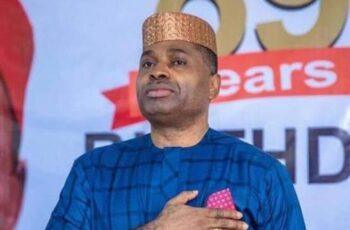
At the centre of it all is former Bayelsa State governor, Senator Seriake Dickson, who has moved to defend the legitimacy of the party’s registration.
According to him, the NDC is not a new creation rushed into existence. He insists the process dates back to 2017, long before the current political conversations around 2027 began.
He explained that the party had initiated its registration years ago, but the process was paused before eventually being revived when party registration resumed.
His argument is simple — the NDC followed due process.
And Nigerians should ignore what he describes as “propaganda” surrounding its approval.
Legal Threat Emerges
But not everyone agrees.
Dr. Umar Ardo, a leading figure behind the All Democratic Alliance (ADA), has openly challenged the legitimacy of the NDC’s registration and is preparing to take the matter to court.
His concern is not political — at least not on the surface.
It is procedural.
Ardo claims the NDC did not go through the standard registration process required by the Independent National Electoral Commission (INEC).
According to him, the party:
- Did not properly apply
- Was not shortlisted
- Did not use the official INEC portal
- And failed to submit key documents required by law
Yet, it was registered — allegedly through a court order.
That is the part he says cannot stand.
And he has made it clear he is ready to challenge both INEC and the NDC legally.
INEC’s Position
INEC has maintained that its actions were within the law.
The commission stated that political associations are assessed based on constitutional provisions and electoral guidelines.
It also confirmed that the NDC’s registration followed a court directive.
That explanation, however, has not settled the matter.
If anything, it has raised more questions about consistency in how political associations are treated.
A Party Gaining Momentum
Despite the controversy, the NDC is moving fast.
Within days of its registration, the party claims to have recorded significant growth, with millions of members reportedly joining within a short period.
It has also begun building structure across the country.
State congresses have already been held in several states, with executive committees elected and local leadership structures taking shape.
In Delta, Ondo, and Nasarawa, party officials have emerged through congress processes, signalling that the NDC is not waiting to stabilise before expanding.
The party is positioning itself early.
And that is not by accident.
High-Profile Movements Add Weight
The situation gained even more attention after notable political figures began aligning with the party.
There are reports of former governors and influential political actors joining or showing interest, turning the NDC into a talking point within opposition circles.
At the same time, other political camps have moved quickly to distance themselves.
Both the African Democratic Congress (ADC) and allies of former Vice President Atiku Abubakar have denied any form of alliance or defection talks.
Their response has been clear — there is no ongoing negotiation.
That suggests the opposition space remains fragmented.
What This Really Means
This is not just about one party.
It is about the shape of the opposition ahead of 2027.
Right now, there is no single dominant opposition platform.
Instead, there are:
- Multiple political interests
- Ongoing realignments
- And a growing search for a credible alternative
The NDC is trying to position itself as that alternative.
But it is entering a space that is already crowded and unstable.
My View
The timing of this is not a coincidence.
Every serious political move happening now is about 2027.
The controversy around NDC’s registration is bigger than legal arguments.
It is about trust.
If Nigerians start to believe that party registration is inconsistent or influenced, it damages confidence in the system.
At the same time, Ardo’s challenge also raises a valid point — process matters.
Because if the process is weak at the beginning, it creates problems later.
For the NDC, the focus should be simple:
Build credibility quickly.
Because right now, they have momentum — but momentum without trust does not last.
Final Word
The NDC has entered the political scene with speed and visibility.
But it has also entered with controversy.
And in Nigerian politics, how a party starts often shapes how it is judged going forward.
The court case, if it happens, will be important.
But beyond that, Nigerians will be watching something bigger:
Whether the NDC can move from headlines to real political strength.