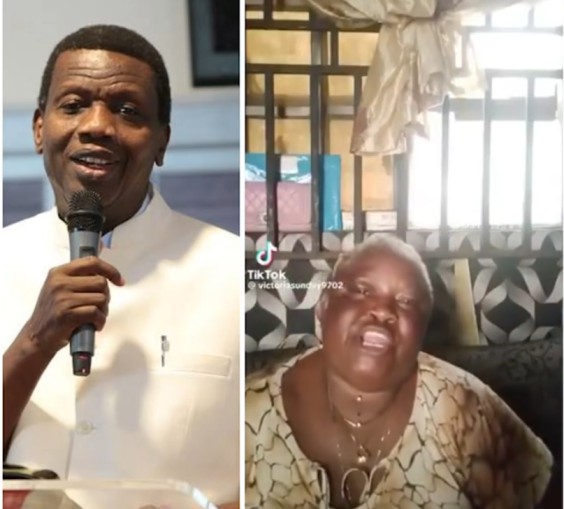
Popular TikTok personality Mama G has triggered heated reactions online after releasing a video attacking the General Overseer of the Redeemed Christian Church of God, Enoch Adeboye, over claims that church members were allegedly prevented from staging a protest following the abduction of schoolchildren in Oyo State.
The controversy comes amid public anger over the kidnapping of pupils and teachers from a school in Oyo State, a development that has renewed concerns about insecurity and the safety of children across Nigeria.
In the video circulating online, Mama G alleged that some RCCG members wanted to organise a peaceful protest to draw attention to the abductions but were discouraged from doing so.
She further claimed that the decision was linked to the church’s relationship with Nigeria’s First Lady, Oluremi Tinubu, who is a pastor within the church.
However, there has been no independent verification of those claims.
Visibly emotional in the video, Mama G accused some prominent church leaders of remaining silent on issues affecting ordinary Nigerians.
She alleged that religious leaders who should be speaking out against insecurity and hardship have instead failed to use their influence to demand accountability from those in power.
The TikToker directed particularly harsh criticism at Pastor Adeboye, accusing him and other senior clerics of contributing to societal problems through silence and inaction.
Her comments quickly divided opinion online.
While some social media users agreed that influential religious leaders should be more vocal on national issues such as insecurity, others condemned the language used in the video, arguing that criticism should not cross into personal insults and attacks.
As clips from the video continued spreading across various platforms, the debate expanded beyond the allegations themselves to broader questions about the role religious leaders should play during times of national crisis.
At the time of reporting, neither Pastor Adeboye nor RCCG’s leadership had publicly responded to the claims made in the viral video.
The incident is the latest example of how conversations around insecurity, governance and religion continue to intersect in Nigeria’s public space, often generating passionate reactions from both supporters and critics.