As the debate over Nigeria’s economy intensifies, Social Democratic Party (SDP) presidential candidate Adewole Adebayo has dismissed claims that President Bola Tinubu has improved the economy, arguing that ordinary Nigerians are yet to feel any meaningful impact.
Speaking during a television interview marking the third anniversary of the Tinubu administration, Adebayo said economic success should not be measured by government statistics alone but by the everyday realities facing citizens.
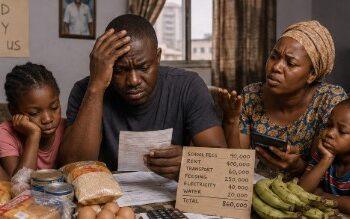
According to him, rising food prices, transportation costs, rent, healthcare expenses and declining purchasing power tell a different story from the positive economic figures often highlighted by government officials.
“No one’s life is better off except those who are in government,” Adebayo said.
The SDP chieftain argued that if an economy is genuinely improving, citizens would not need government officials to convince them.
Instead, he said farmers, traders, workers, manufacturers and consumers would naturally experience the benefits.
“The economy belongs to all of us. If it is working, everybody will know it is working,” he stated.
Adebayo also challenged attempts to blame current economic difficulties on previous administrations.
According to him, the ruling All Progressives Congress has controlled the Federal Government since 2015 and should take responsibility for both past and present economic outcomes.
He further accused the administration of creating what he described as an “illusion of progress” through naira devaluation and increased borrowing.
While government officials have pointed to higher revenues, stronger foreign reserves and signs of economic stability, Adebayo argued that those gains have not translated into improved living standards for average Nigerians.
“What they suffer from is what economists call the illusion of money,” he said.
“The devaluation of the naira creates the appearance that more money is coming in, but that money has lost purchasing power.”
The former presidential candidate also questioned the reliability of some official economic indicators, insisting that inflation figures and growth statistics do not accurately reflect the hardship being experienced by many households.
According to him, the true measure of economic performance is whether ordinary people can afford basic necessities.
“The average Nigerian wants to know whether he can buy food tomorrow. That is the true test of economic policy,” he said.
Adebayo also criticised the government’s borrowing strategy, claiming that a significant portion of the foreign reserves being celebrated is tied to debt rather than productive economic growth.
He maintained that until economic reforms lead to visible improvements in employment, household income and living standards, many Nigerians will remain unconvinced by official declarations of economic progress.
His remarks come amid ongoing national conversations about inflation, fuel prices, exchange rate pressures and the overall impact of economic reforms introduced since Tinubu assumed office.