
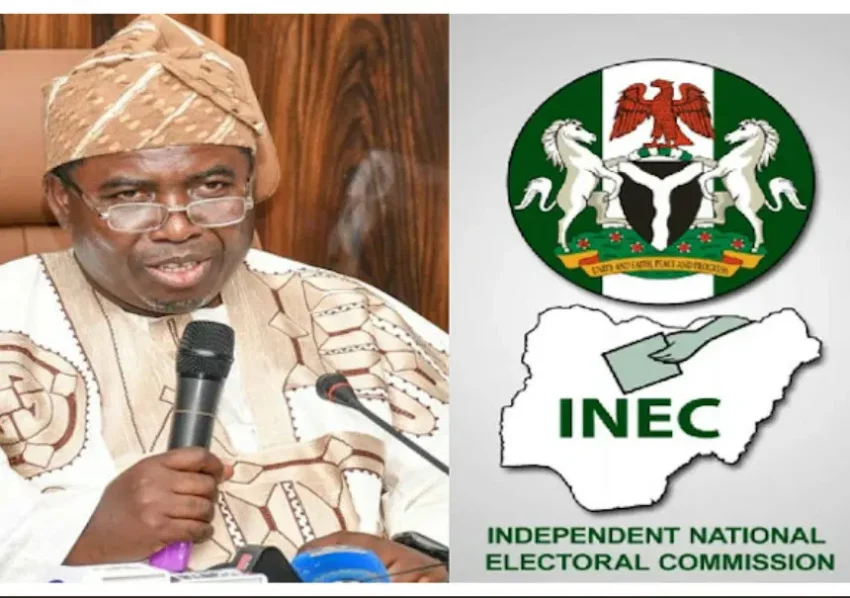
By Desmond Ogbonmwan
The Independent National Electoral Commission (INEC) has declared that Nigeria’s elections have entered a new era—one in which ballot box snatching and manual manipulation of election results should no longer determine electoral outcomes.
The assurance came during a meeting between the commission and the National Orientation Agency (NOA) in Abuja, where both institutions announced plans to strengthen voter education ahead of the 2027 general elections.
According to INEC, technological innovations introduced over the past few election cycles—including the Bimodal Voter Accreditation System (BVAS) and the INEC Result Viewing Portal (IReV)—have significantly reduced opportunities for some of the electoral malpractices that once undermined public confidence in Nigeria’s elections.
However, while celebrating improvements in election administration, the commission also warned that Nigeria now faces a different challenge: convincing millions of eligible voters that their votes truly matter.
The message from INEC is clear.
Technology alone cannot strengthen democracy unless citizens understand how the system works and actively participate in elections.
Why Ballot Box Snatching Was Once a Major Problem
For decades, ballot box snatching became one of the most recognised symbols of electoral violence in Nigeria.
During previous election cycles, reports frequently emerged of political thugs disrupting polling units, seizing ballot boxes or destroying election materials in an attempt to influence results.
In many communities, such incidents discouraged voter participation because citizens feared violence or believed their votes would ultimately be disregarded.
Although security agencies often intervened, manual voting and result collation created opportunities for manipulation whenever election materials were compromised.
The credibility of elections therefore depended not only on voting itself but also on the secure handling of results from polling units to collation centres.
How Technology Changed the Process
Nigeria’s electoral process has gradually become more technology-driven.
Two innovations have played particularly important roles.
The Bimodal Voter Accreditation System (BVAS)
BVAS is used to verify the identity of voters before they receive ballot papers.
The system confirms voter identity using biometric information, reducing opportunities for multiple voting or impersonation.
Because accreditation is conducted electronically, the number of accredited voters can be compared with votes recorded at each polling unit.
This makes certain forms of manipulation more difficult than under previous systems.
The INEC Result Viewing Portal (IReV)
The IReV allows polling unit results to be uploaded electronically after voting and counting have been completed.
Once uploaded, results become available for public viewing, increasing transparency and allowing political parties, observers, journalists and citizens to compare official records.
Electronic result uploads create an additional layer of accountability because polling unit results can be reviewed independently of later collation stages.
Why INEC Believes Ballot Box Snatching Has Lost Much of Its Impact
INEC argues that once polling unit results are captured electronically and uploaded promptly, stealing or destroying physical ballot boxes becomes far less effective than it once was.
If valid results have already been transmitted and stored digitally, interfering with physical materials after the fact may no longer alter the officially recorded outcome.
This represents one of the most significant changes introduced by Nigeria’s recent electoral reforms.
Rather than relying exclusively on physical movement of result sheets, technology now provides additional safeguards intended to preserve polling unit outcomes.
The commission believes these safeguards have fundamentally changed how elections are managed.
Recent Elections That Influenced INEC’s Confidence
The commission pointed to operational successes recorded during the Federal Capital Territory (FCT) Area Council elections and the Ekiti State off-cycle governorship election as evidence that recent technological improvements are producing positive results.
According to INEC, those elections recorded:
- early opening of most polling units;
- successful biometric voter accreditation;
- faster electronic result uploads;
- improved logistics management.
While acknowledging that no election is entirely free from operational challenges, the commission believes these experiences demonstrate that technology is increasingly strengthening electoral administration.
But Technology Is Not a Perfect Solution
Despite expressing confidence in BVAS and IReV, INEC also acknowledged that technology alone cannot guarantee credible elections.
Every election still depends on several other factors, including:
- voter participation;
- security at polling units;
- compliance with electoral laws;
- political party conduct;
- public confidence in democratic institutions.
Even the most advanced technology cannot compensate for widespread voter apathy or deliberate attempts to spread misinformation.
This explains why INEC’s latest message focuses as much on civic education as on technological innovation.
The Bigger Threat May Now Be Voter Apathy
One of the commission’s strongest warnings concerned declining voter participation.
According to INEC, recent elections revealed that many eligible Nigerians either stayed away from polling units or remained confused about issues such as polling unit transfers, voter registration updates and changes to electoral procedures.
The commission believes this lack of public awareness now represents one of the greatest risks to democratic participation.
A secure voting system has limited value if citizens choose not to vote.
For democracy to function effectively, electoral integrity must be matched by active public engagement.
Can Election Results Still Be Manipulated?
While INEC maintains that technological safeguards have made traditional forms of election fraud significantly more difficult, the commission has never suggested that elections are completely immune from malpractice.
Election observers and governance experts generally agree that technology reduces many risks, but it cannot eliminate every challenge.
Some of the concerns that still require constant monitoring include:
- vote-buying at polling units;
- intimidation of voters;
- violence in politically sensitive areas;
- misinformation and fake election results circulating online;
- logistical delays affecting voting;
- legal disputes after elections.
In other words, technology is only one part of a credible electoral process. Strong institutions, security agencies, political parties and informed citizens all have important roles to play.
Why Vote-Buying Remains a Serious Concern
As technological reforms make ballot stuffing and result manipulation more difficult, attention has increasingly shifted to vote-buying.
Rather than attempting to alter results after voting, some politicians have been accused of influencing voters before ballots are cast through cash payments or material incentives.
INEC has repeatedly warned that selling votes weakens democracy because it transfers political power from citizens to those with the greatest financial resources.
For this reason, the commission says voter education campaigns ahead of 2027 will focus not only on how to vote but also on why voters should reject inducements at polling units.
Political analysts note that reducing vote-buying requires collaboration between security agencies, election observers, political parties and voters themselves.
Fighting Misinformation Ahead of 2027
Another challenge highlighted by INEC is the rapid spread of misinformation.
Social media has transformed how Nigerians receive election news.
While this has improved access to information, it has also increased the circulation of:
- fake election results;
- manipulated videos;
- misleading polling information;
- false announcements about voting procedures;
- fabricated statements attributed to electoral officials.
Election experts say misinformation can discourage voter participation, create confusion on election day and undermine confidence in legitimate results.
INEC’s partnership with the National Orientation Agency is expected to include campaigns explaining how citizens can identify verified election information and avoid sharing unconfirmed reports.
Why Civic Education Matters More Than Ever
Perhaps the most important message from INEC was not about technology.
It was about people.
The commission acknowledged that many Nigerians remain unfamiliar with recent electoral reforms.
Some voters are still uncertain about:
- how BVAS works;
- how to confirm their polling unit;
- voter registration transfers;
- accreditation procedures;
- result viewing through IReV.
Without proper public education, even the most advanced electoral technology cannot achieve its full purpose.
This is why INEC says civic education will begin well before the 2027 elections rather than waiting until campaigns are already underway.
An informed electorate is less vulnerable to misinformation and more likely to participate confidently in the democratic process.
The Role of the National Orientation Agency
The collaboration between INEC and the National Orientation Agency (NOA) is expected to extend beyond traditional public announcements.
According to the commission, the goal is to build a nationwide voter education programme capable of reaching communities in languages and formats that people understand.
This could involve:
- community meetings;
- radio programmes in local languages;
- school and youth engagement initiatives;
- market outreach campaigns;
- faith-based community engagement;
- digital education through social media.
The emphasis is on making electoral information accessible to first-time voters, rural communities and urban residents who may have become disillusioned with the political process.
Why 2027 Will Be a Defining Election
The 2027 general election is already attracting significant public attention because it will test the effectiveness of Nigeria’s recent electoral reforms on a national scale.
For INEC, success will not be measured solely by how well technology performs.
It will also depend on whether:
- voters trust the electoral process;
- turnout improves compared with recent elections;
- polling units operate efficiently;
- results are accepted as credible;
- disputes are resolved through lawful channels rather than violence.
The commission’s confidence in BVAS and IReV reflects years of investment in electoral technology.
The remaining challenge is ensuring that public confidence grows alongside those technological improvements.
Final Thoughts
INEC’s declaration that the era of ballot box snatching and manual result manipulation is over reflects its confidence in the technological reforms introduced into Nigeria’s electoral system.
Whether those reforms fully achieve their intended goals will ultimately be tested during the 2027 general elections.
Technology has undoubtedly changed many aspects of election administration.
However, credible elections depend on much more than machines and software.
They require informed voters, transparent institutions, responsible political actors and respect for the rule of law.
As preparations for 2027 gather momentum, the success of Nigeria’s democracy will likely depend not only on the strength of its electoral technology but also on the willingness of citizens to participate actively, reject misinformation and insist that every lawful vote counts.
Frequently Asked Questions
What is BVAS?
The Bimodal Voter Accreditation System (BVAS) is an electronic device used by INEC to verify voters through biometric authentication before they are allowed to vote.
What is IReV?
The INEC Result Viewing Portal (IReV) is an online platform where polling unit results are uploaded for public viewing after voting and counting have been completed.
Has ballot box snatching been completely eliminated?
INEC says technological safeguards have greatly reduced its impact. However, security agencies and election observers continue working to prevent electoral offences on election day.
Why is voter education important?
Voter education helps citizens understand registration procedures, accreditation, polling unit information, voting rights and the role of technologies such as BVAS and IReV.
When will the 2027 general elections take place?
According to INEC’s current timetable referenced during the announcement, the presidential election is scheduled for January 16, 2027, while governorship elections are expected to follow on February 6, 2027.