By Rose Graham
Few innovations have transformed Nigeria’s electoral process as significantly as the Bimodal Voter Accreditation System (BVAS).
Introduced by the Independent National Electoral Commission (INEC), BVAS represents one of the country’s most important electoral reforms in recent years.
For decades, elections in Nigeria faced recurring allegations of multiple voting, voter impersonation, ballot stuffing and manual irregularities.
Many citizens questioned whether their votes truly counted.
To improve transparency and strengthen public confidence, INEC gradually introduced technology into the voting process.
The result was BVAS.
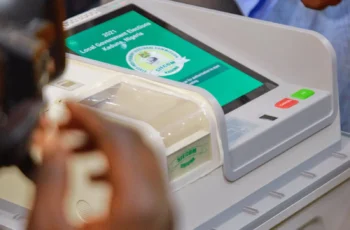
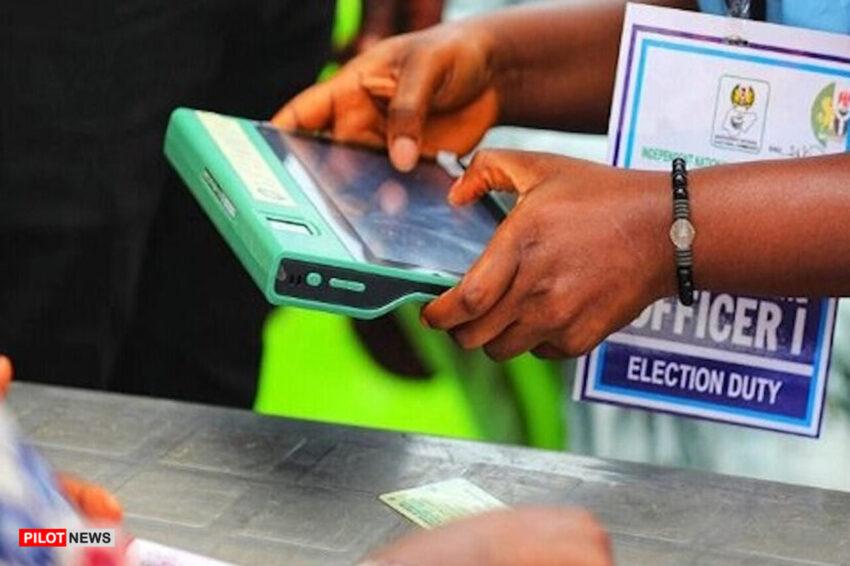
Today, BVAS is used across Nigeria to verify voters before they receive ballot papers, helping election officials confirm that every eligible voter casts only one vote.
As preparations continue for the 2027 general elections, understanding how BVAS works has become increasingly important for both first-time and experienced voters.
This guide explains what BVAS is, how it functions, why it was introduced and what every Nigerian should know before heading to the polls.
What Does BVAS Mean?
BVAS stands for Bimodal Voter Accreditation System.
The word “bimodal” refers to the two methods the device uses to confirm a voter’s identity.
These are:
- fingerprint authentication;
- facial recognition.
Rather than depending on only one identification method, BVAS combines both technologies to improve accuracy.
If fingerprint verification encounters difficulties—for example because fingerprints have become difficult to scan—the device may use facial recognition as an alternative means of confirming the voter’s identity.
This dual approach is one reason the system is considered more reliable than earlier accreditation methods.
Why Was BVAS Introduced?
Before BVAS, Nigeria primarily relied on the Smart Card Reader for voter accreditation.
Although the card reader represented a significant improvement at the time, experience from several election cycles revealed important limitations.
Some of the challenges included:
- difficulties reading certain Permanent Voter Cards (PVCs);
- incomplete biometric verification;
- technical failures;
- opportunities for voter impersonation in some situations.
INEC introduced BVAS to strengthen voter authentication while improving confidence in election integrity.
The objective was not simply to replace older technology.
It was to create a more secure accreditation process that reduced opportunities for electoral malpractice.
How Does BVAS Actually Work?
The accreditation process follows several straightforward steps.
Step 1: Arrival at the Polling Unit
On election day, voters report to the polling unit assigned to them by INEC.
Election officials organise voters according to the official register.
Only individuals registered at that polling unit are eligible to vote there.
Step 2: Presentation of the Permanent Voter Card (PVC)
Before accreditation begins, the voter presents a valid Permanent Voter Card.
The PVC contains information linking the voter to INEC’s registration database.
Election officials use the card as the starting point for accreditation.
Step 3: Fingerprint Verification
The voter places a finger on the BVAS scanner.
The device compares the fingerprint with biometric records captured during voter registration.
If the fingerprint matches the information stored in the database, the voter is successfully accredited.
Step 4: Facial Recognition
If fingerprint verification cannot be completed—for example because fingerprints have become worn or difficult to read—the election official may proceed with facial authentication.
The BVAS camera captures the voter’s facial image and compares it with the official registration record.
This second verification method significantly improves the likelihood that legitimate voters can still be accredited even when fingerprint verification proves difficult.
Step 5: Accreditation Complete
Once identity has been confirmed, the voter is officially accredited.
Only after successful accreditation does the voter receive ballot papers and proceed to cast a vote.
Without successful accreditation through BVAS, voting cannot proceed.
Why Fingerprints Sometimes Fail
Many Nigerians worry when they hear that fingerprints may not always scan successfully.
In reality, fingerprint recognition can be affected by several perfectly normal factors.
These include:
- ageing;
- manual labour;
- skin injuries;
- naturally worn fingerprints;
- environmental conditions.
This is one reason facial recognition was incorporated into BVAS.
Rather than rejecting legitimate voters simply because fingerprints cannot be read clearly, the device provides an alternative verification method.
How BVAS Reduces Election Fraud
BVAS was introduced primarily to strengthen election credibility.
It helps reduce opportunities for:
- voter impersonation;
- multiple voting;
- accreditation irregularities;
- manipulation of accredited voter numbers.
Because every accredited voter is electronically recorded, election officials can compare accreditation figures with votes cast at each polling unit.
This additional layer of accountability makes certain forms of electoral malpractice much more difficult than under entirely manual systems.
Is BVAS Connected to IReV?
Although people often mention BVAS and IReV together, they perform different functions.
BVAS is responsible for:
- accrediting voters;
- verifying identities;
- recording accreditation figures.
IReV, by contrast, is designed for the electronic upload and public viewing of polling unit results after voting and counting have been completed.
Together, these systems form important parts of Nigeria’s broader electoral technology framework.
Does BVAS Eliminate Every Election Problem?
No.
BVAS improves voter accreditation, but it cannot solve every challenge associated with elections.
Issues that still require attention include:
- vote-buying;
- political violence;
- misinformation;
- logistical delays;
- voter intimidation;
- legal disputes.
Technology strengthens elections, but credible elections also depend on institutions, security agencies, political parties and informed citizens.
Common Myths About BVAS
Since its introduction, BVAS has generated considerable discussion, with both accurate information and misconceptions circulating online. Understanding the facts can help voters participate confidently during elections.
Myth 1: BVAS Counts Votes
This is false.
BVAS does not count votes or determine election winners.
Its primary responsibility is to verify the identity of voters before they receive ballot papers. After accreditation, voters still cast their ballots manually, and votes are counted at the polling unit according to INEC’s procedures.
Myth 2: BVAS Is Connected to the Internet Throughout Voting
Not exactly.
BVAS is primarily designed to perform voter accreditation using the information stored for that polling unit. While certain functions, such as uploading polling unit results after voting, require connectivity, accreditation itself is not dependent on continuous internet access.
This distinction is important because misinformation has sometimes led people to believe that poor network coverage automatically prevents accreditation.
Myth 3: BVAS Can Change Election Results
No.
BVAS verifies voters; it does not alter election results.
Election outcomes are determined by votes cast by accredited voters and the official collation process prescribed under Nigeria’s electoral laws.
Myth 4: Older People Cannot Use BVAS
There is no age restriction.
Election officials assist every eligible voter through the accreditation process.
Whether a voter is 18 or 80 years old, the same verification procedure applies.
What Happens If BVAS Cannot Verify a Voter?
Although BVAS was introduced to improve accreditation, no technology is perfect.
There may be instances where a device experiences technical problems or fails to verify a voter’s fingerprint.
Where fingerprint authentication is unsuccessful, election officials may attempt facial recognition, which serves as the second verification method built into the system.
If technical challenges affect the device itself, INEC has operational procedures for addressing equipment failures, including replacing faulty devices where necessary.
The objective is to ensure that genuine voters are not unfairly prevented from participating while maintaining the integrity of the accreditation process.
BVAS vs the Smart Card Reader
Before BVAS, Nigeria used the Smart Card Reader (SCR) during elections.
Although both systems were designed to improve accreditation, BVAS introduced several significant improvements.
| Feature | Smart Card Reader | BVAS |
|---|---|---|
| Identity verification | Fingerprint only | Fingerprint and facial recognition |
| Accreditation accuracy | Good | Improved through dual authentication |
| Biometric methods | One | Two |
| Support for modern electoral reforms | Limited | Expanded |
| Integration with newer election processes | Partial | Designed for current electoral framework |
The introduction of facial recognition addressed one of the most common complaints under the older system—difficulty verifying voters whose fingerprints could not be read accurately.
Why BVAS Matters for the 2027 Elections
The 2027 general elections will likely be one of the biggest tests of Nigeria’s modern electoral reforms.
Millions of Nigerians are expected to vote using BVAS.
INEC believes the technology will continue to:
- improve voter accreditation;
- reduce opportunities for impersonation;
- strengthen confidence in polling unit records;
- increase transparency during elections.
However, technology alone cannot guarantee credible elections.
The success of the system will also depend on:
- adequate voter education;
- proper training of election officials;
- efficient logistics;
- peaceful conduct by political parties;
- timely resolution of disputes.
BVAS is an important tool, but democracy ultimately depends on citizens participating freely and responsibly.
The Future of Election Technology in Nigeria
Nigeria’s electoral system continues to evolve.
Many governance and technology experts believe future elections may include additional innovations such as:
- enhanced biometric verification;
- more secure digital identity systems;
- improved result management platforms;
- stronger cybersecurity protections;
- better integration between voter registration and accreditation databases.
Any future reforms will likely focus on increasing transparency while making voting easier for eligible citizens.
As technology advances, electoral management bodies around the world—including INEC—will continue adapting systems to improve efficiency and public confidence.
Tips for Voters Before Election Day
To reduce delays during accreditation, voters should prepare in advance.
Consider the following:
- confirm your polling unit before election day;
- ensure your Permanent Voter Card (PVC) is available;
- arrive early to avoid long queues;
- follow instructions from polling officials;
- avoid sharing false election information online;
- remain peaceful throughout the voting process;
- report concerns through appropriate official channels.
Prepared voters contribute to smoother elections for everyone.
Final Thoughts
The Bimodal Voter Accreditation System represents one of the most significant technological reforms introduced into Nigeria’s electoral process in recent years.
By combining fingerprint authentication with facial recognition, BVAS has strengthened voter accreditation and reduced opportunities for several forms of electoral malpractice that previously undermined public confidence.
Nevertheless, no technology can replace civic responsibility.
Credible elections require informed voters, professional election officials, respect for the rule of law and peaceful political participation.
As Nigeria prepares for the 2027 general elections, understanding how BVAS works empowers citizens to participate with greater confidence and helps reduce misinformation that often surrounds election periods.
Ultimately, protecting democracy is a shared responsibility, and informed voters remain one of its strongest safeguards.
Frequently Asked Questions
What does BVAS stand for?
BVAS stands for Bimodal Voter Accreditation System, an electronic device used by INEC to verify voters before they are allowed to vote.
Does BVAS count votes?
No. BVAS only accredits voters. Ballots are still cast and counted according to INEC’s election procedures.
What happens if my fingerprint cannot be verified?
Election officials may use the device’s facial recognition feature to verify your identity.
Is BVAS the same as IReV?
No. BVAS is used for voter accreditation, while the INEC Result Viewing Portal (IReV) is used to upload and display polling unit results after voting.
Can BVAS stop election rigging completely?
BVAS significantly reduces opportunities for certain forms of electoral malpractice, particularly voter impersonation and multiple voting. However, other challenges such as vote-buying, violence, misinformation and logistical issues still require attention.
Related Stories
- INEC Says Era of Ballot Box Snatching Is Over: What It Means for the 2027 General Election
- What Is IReV and Why Is It Important for Election Transparency?
- How to Transfer Your Voter Registration Before the 2027 Election
- Understanding Nigeria’s Electoral Act: Key Rules Every Voter Should Know
- Vote Buying in Nigeria: Why It Persists and How It Affects Elections