By Desmond Ogbonmwan
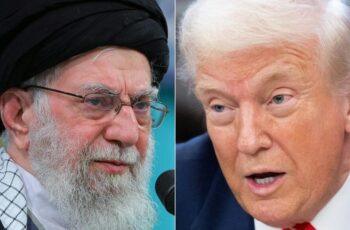
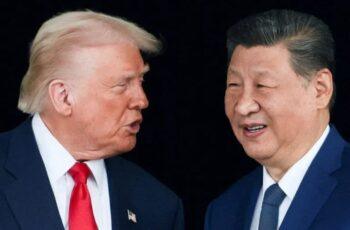
U.S. President Donald Trump has rejected an Iranian proposal that would have reopened the Strait of Hormuz within seven days while restarting negotiations aimed at ending the conflict between Washington and Tehran.
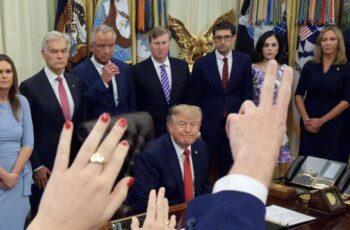
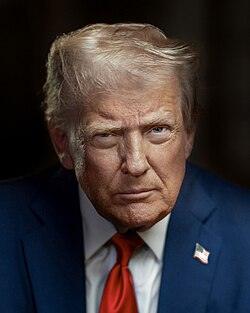
Trump made the rejection on Saturday, September 26, telling reporters outside the White House: “I reject their proposal.” He said Iran wanted a deal but that the terms presented were not acceptable to his administration.
The decision leaves the future of the strategically important waterway unresolved and keeps diplomatic efforts between the United States and Iran at an uncertain stage.
What Iran Proposed
Iranian Foreign Minister Abbas Araghchi said Tehran had delivered its proposal to Washington through intermediaries during the United Nations General Assembly in New York.
Under the plan, Iran would reopen the Strait of Hormuz within seven days after the United States accepted the proposed framework. Tehran also offered to resume negotiations over its nuclear programme.
The proposal was conditional on Washington taking several steps, including lifting its naval blockade of Iranian ports, easing sanctions affecting Iranian oil exports and observing a ceasefire covering the wider region, including Lebanon.
Araghchi described the plan as an accelerated version of an earlier understanding between the two countries. He said the seven-day timetable would begin once Washington accepted the proposal, with U.S. actions expected during the first several days before the waterway reopened.
Iranian President Masoud Pezeshkian also said Tehran was prepared to pursue negotiations rather than continue the conflict, while maintaining that the decision to end the confrontation ultimately depended on Washington.
Why the Strait of Hormuz Matters
The Strait of Hormuz is one of the world’s most important maritime energy routes.
Before the current conflict, roughly one-fifth to one-quarter of global oil flows normally passed through the waterway. The disruption of shipping through the strait has therefore had consequences beyond the immediate confrontation between Iran and the United States, contributing to concerns over energy prices, supply chains and global trade.
The waterway connects the Persian Gulf with the Gulf of Oman and the Arabian Sea, making its security important to major oil-producing states as well as countries that depend on energy imports.
For Iran, control over access to the strait has become an important element of its leverage during the conflict. For the United States and its regional partners, maintaining freedom of navigation remains a major security and economic concern.
Trump Rejects the Proposal
Trump’s rejection came after several days of renewed diplomatic activity surrounding the conflict.
Iran’s proposal had been presented during the UN General Assembly, where Iranian officials sought to keep diplomatic channels open while pressing Washington to change its military and economic approach.
Trump, however, said the proposed arrangement was unacceptable.
The rejection means that the conditions Iran attached to reopening the waterway have not been accepted by Washington, leaving no agreed seven-day timetable for restoring normal maritime traffic.
Iran Says Its Conditions Remain
Following Trump’s rejection, Iranian officials maintained that Tehran’s position had not changed.
Araghchi said Iran was still waiting for a formal response through the mediators and reiterated that any settlement would have to be negotiated.
Iran has therefore not indicated that it intends to reopen the strait unconditionally. Its proposal remains tied to a broader framework involving the ceasefire, U.S. military pressure, sanctions and the resumption of nuclear negotiations.
That distinction is important because the proposal was not simply an offer to reopen Hormuz immediately. It was a conditional diplomatic framework in which the reopening of the waterway formed part of a wider agreement.
Saudi Arabia Calls for Freedom of Navigation
The dispute has also drawn attention from Gulf states that depend heavily on secure maritime routes.
Saudi Foreign Minister Prince Faisal bin Farhan told the UN General Assembly that the security of the Gulf was directly connected to global energy security, international trade and supply chains.
He called for freedom of navigation through vital waterways, including the Strait of Hormuz, and said the waterway should return to its pre-conflict status without restrictions or fees.
Saudi Arabia’s position reflects the wider concern among Gulf states that prolonged disruption to maritime routes could affect regional economies as well as international energy markets.
Trump Posts “Trump Strait” Image
Amid the diplomatic dispute, Trump also posted an image on social media showing the Strait of Hormuz labelled “Trump Strait.”
The post came shortly after reports of Iran’s seven-day proposal. It was a social-media depiction rather than a formal change to the waterway’s internationally recognised name.
The post added another political dimension to an already tense dispute over control, navigation and sovereignty around the waterway.
What Happens Next?
Trump’s rejection does not necessarily end diplomatic efforts, but it removes the immediate possibility of implementing Iran’s proposed seven-day roadmap on the terms Tehran presented.
Iran has said it remains open to negotiations, while the United States has rejected the latest proposal as unacceptable. The next stage will depend on whether mediators can bridge the differences over the naval blockade, oil sanctions, the ceasefire and the nuclear negotiations.
For shipping markets and energy consumers, the central question remains whether normal traffic through the Strait of Hormuz can eventually be restored.
Until an agreement is reached, the waterway will remain one of the most important pressure points in the wider U.S.-Iran confrontation.
Why This Matters
The dispute over Hormuz extends beyond Iran and the United States.
The strait is connected to the global energy system, meaning prolonged restrictions can affect oil supply, shipping costs, inflation and international trade.
A negotiated reopening could reduce some of those pressures, but the latest rejection shows that major differences remain over the conditions required to reach such an agreement.
Background
The current confrontation follows months of military escalation between the United States and Iran.
An earlier understanding between Washington and Tehran had sought to create a framework for ending the naval standoff and restarting negotiations. That arrangement later collapsed, leaving the two sides again relying on military and economic pressure alongside diplomatic contacts.
Iran’s latest proposal attempts to revive elements of that earlier framework while establishing a much faster timetable for reopening the Strait of Hormuz.
Frequently Asked Questions
What did Iran offer Trump?
Iran proposed reopening the Strait of Hormuz within seven days and restarting nuclear negotiations, provided the United States met several conditions, including lifting its naval blockade, easing oil sanctions and observing a regional ceasefire.
Why is the Strait of Hormuz important?
The Strait of Hormuz is a major global energy corridor. A significant share of internationally traded oil normally passes through the waterway, making disruption there capable of affecting energy markets and global supply chains.
Why did Trump reject Iran’s proposal?
Trump said the proposal was unacceptable and told reporters that he rejected it. He did not publicly accept the conditions Iran attached to reopening the waterway.
Has the Strait of Hormuz been officially renamed “Trump Strait”?
No. Trump posted an image on social media using the label “Trump Strait,” but this did not constitute a formal international renaming of the waterway.
Will Iran reopen the Strait of Hormuz anyway?
Iran’s latest position has tied reopening the waterway to the conditions contained in its proposal. After Trump’s rejection, Iranian officials said those conditions remained in place.