US President Donald Trump has announced that CNN, MS NOW and Politico are being barred from the White House, accusing the three news organisations of repeatedly publishing what he described as “fake news” about his administration.
Trump announced the move on Truth Social on Friday, September 18, saying the ban was effective immediately and warning that other media organisations could face similar treatment.
The announcement immediately raised questions about how the restriction would be enforced and whether the administration could legally deny White House access to news organisations because of their coverage.
What Trump Said About the Media Outlets
Trump said CNN, MS NOW and Politico had engaged in what he characterised as false reporting about him, his administration and the United States.
He did not identify specific articles or reports that he said justified the ban.
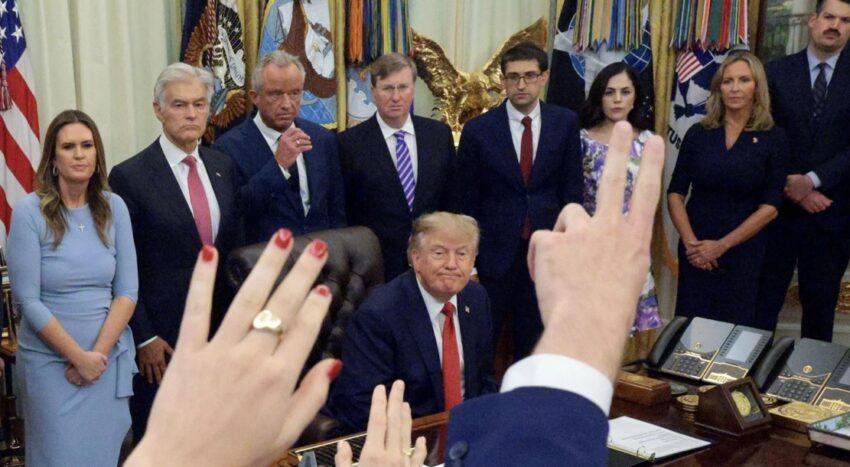
Speaking to reporters later in the Oval Office, Trump defended his position and said he wanted what he described as an “honest” press.
He also indicated that other organisations could be targeted.
The Washington Post reported that Trump mentioned The New York Times and The Washington Post critically during the exchange with reporters, although he did not announce a ban against either publication at that point.
What Does the White House Ban Actually Mean?
One of the biggest unanswered questions is the practical scope of the announcement.
Trump said the three outlets were banned from the White House, but reports following the announcement indicated that journalists from CNN, MS NOW and Politico were still working on the White House grounds.
The Washington Post and Associated Press both reported that there was no immediate indication that the administration had fully implemented the restriction.
That means the announcement and its practical enforcement were not necessarily the same thing.
Questions remain over whether the administration intends to remove the organisations’ journalists from White House facilities, exclude them from press events, restrict their access to particular areas or take other measures.
Why Press Access Matters
The White House is one of the most important sources of information about the US presidency.
Journalists assigned to the White House report on presidential decisions, policy announcements, meetings, national security issues and statements made directly by the president and senior officials.
Restricting access to particular news organisations can therefore affect not only the organisations themselves but also how their audiences receive information directly from the administration.
The issue also raises constitutional questions because the First Amendment protects freedom of the press.
CNN said it stood behind its White House team and argued that journalists have a constitutional right to conduct reporting without government interference. Politico similarly said it would continue reporting on the administration and defend its First Amendment rights.
Trump’s Dispute With The Press Is Not New
Trump’s conflict with major news organisations stretches back to his first presidency.
One notable confrontation involved CNN correspondent Jim Acosta in 2018. The White House revoked Acosta’s press credentials following a contentious exchange with Trump.
CNN challenged the decision in court, and a federal judge temporarily restored Acosta’s access after finding that the White House had not provided adequate due process. The credentials were eventually restored permanently.
Trump’s second administration has continued to have confrontations with major news organisations, making the latest announcement part of a much longer dispute over presidential authority, media coverage and access to government officials.
What About Trump’s $8 Million Claim About Politico?
Trump also criticised Politico over government spending on its subscription products.
He referred to roughly $8 million that the federal government had spent on Politico products and described the spending as improper.
That claim requires important context.
Federal spending records show that US government agencies collectively spent more than $8 million on Politico subscriptions and products during fiscal year 2024. However, fact-checkers found that this money came from multiple federal agencies and was primarily for subscription services such as Politico Pro and E&E News.
USAID’s portion was far smaller. According to FactCheck.org, USAID payments to Politico in 2023 and 2024 totalled $44,000, not $8 million.
Federal records also show that government agencies purchased Politico products under previous administrations, including Trump’s first administration.
Lead Stories reported that federal payments to Politico began before Trump and continued under both Republican and Democratic administrations.
The distinction matters because purchasing a commercial subscription is different from providing a government grant or payment intended to influence editorial coverage.
Why This Matters
The dispute goes beyond three news organisations.
At the centre of the controversy is a broader question: Can a president restrict a news organisation’s access to the White House because he believes its reporting is unfair or inaccurate?
Trump argues that media organisations should not be allowed to publish what he considers false reporting about the government.
The targeted organisations, however, argue that government restrictions on their ability to report from the White House raise constitutional concerns.
The legal question could become particularly important if the administration attempts to enforce the announcement more broadly.
Previous court battles over White House press access demonstrate that disputes over journalists’ credentials can become legal matters, particularly when access is restricted without established procedures.
What Happens Next?
The immediate issue is whether the announced ban will actually be enforced and what form that enforcement will take.
The affected organisations could challenge restrictions through legal action.
The administration could also clarify whether the ban applies to all White House facilities, specific press events, press pools or other forms of presidential access.
Another question is whether additional news organisations will be targeted.
Trump has already indicated that other media outlets could follow the three organisations named in his announcement.
The dispute could therefore develop into a larger confrontation over the relationship between the White House and the American press.
Frequently Asked Questions
Why did Trump ban CNN, MS NOW and Politico?
Trump said he was banning the three organisations because he believes they repeatedly publish false or misleading coverage about his administration. He described their reporting as “fake news” but did not identify specific reports in his announcement that formed the basis for the decision.
Is CNN completely banned from the White House?
The precise scope of the announcement was initially unclear. Reports after Trump’s announcement said journalists from the targeted organisations were still working on White House grounds, indicating that the practical enforcement of the stated ban had not been fully established at that point.
Did Politico receive $8 million from USAID?
No. The roughly $8 million figure referred to federal government spending on Politico products across agencies. FactCheck.org found that USAID’s payments to Politico in 2023 and 2024 totalled $44,000 and were for subscriptions.
Has Trump clashed with CNN before?
Yes. During Trump’s first presidency, the White House revoked CNN correspondent Jim Acosta’s press credentials after a confrontation at a press conference. CNN challenged the decision in court, and a federal judge temporarily restored Acosta’s access after finding due-process problems.
Could other news organisations be banned?
Trump has indicated that other media organisations could face similar treatment. He specifically criticised additional outlets, including The New York Times and The Washington Post, but no broader ban against them was announced in the reporting reviewed for this article.
The Bigger Picture
The latest confrontation puts the relationship between the Trump administration and the American press back under intense scrutiny.
For readers, the most important distinction is between what Trump has alleged, what the affected organisations have said, and what has been independently established.
The White House has accused the three outlets of false reporting. CNN and Politico have rejected the restrictions and indicated that they intend to defend their ability to report from the White House. Meanwhile, the legal status and practical enforcement of the announced ban remain key unanswered questions.
As the administration decides what happens next, the dispute could become an important test of the boundaries between presidential control of White House access and the press’s ability to independently cover the government.