By Desmond Ogbonmwan | Politics Desk
President Bola Ahmed Tinubu has defended his administration’s economic reforms and pledged stronger action against insecurity as Nigeria marked the 2026 Democracy Day celebration.
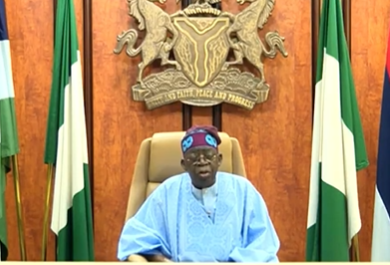
In a nationwide broadcast on June 12, the President said his government remains committed to improving security, expanding economic opportunities, and strengthening democratic institutions across the country.
Tinubu described June 12 as a defining moment in Nigeria’s democratic journey and paid tribute to the heroes who fought for democratic rule.
Tinubu Speaks on Insecurity
Addressing growing security concerns across the country, the President acknowledged the recent abduction of schoolchildren in Oyo and Borno states, describing the incidents as a painful reminder that democracy cannot thrive without security.
He disclosed that the government had approved the recruitment of more than 50,000 police officers and thousands of military personnel as part of efforts to strengthen national security.
According to the President, Nigeria’s 2026 budget allocates ₦5.41 trillion to defence and security, the largest security allocation in the country’s history.
Tinubu also claimed that terror-related deaths have dropped significantly in recent years while thousands of terrorists have been neutralised through ongoing military operations.
President Defends Economic Reforms
The President used the occasion to defend key economic reforms introduced since 2023, arguing that difficult decisions were necessary to stabilise public finances and restore investor confidence.
According to him, government revenues have increased, fiscal leakages have been reduced, and investments are growing across sectors including agriculture, energy, technology, manufacturing, mining, transportation, and the creative industry.
Tinubu said domestic refining capacity has improved while non-oil exports recorded growth over the past year.
However, he acknowledged that many Nigerians continue to face economic hardship and promised that the government remains focused on reducing inflation, creating jobs, improving living standards, and expanding food production.
Electricity and Local Government Reforms
The President also highlighted reforms in the power sector, including the implementation of the Electricity Act, which grants states greater authority to generate, transmit, and distribute electricity.
He stated that efforts are ongoing to address the country’s metering deficit and improve power supply to homes, businesses, markets, universities, and healthcare facilities.
On governance, Tinubu reiterated support for financial autonomy for Nigeria’s 774 local government councils, arguing that stronger grassroots administration is essential for national development and security.
National Honours for Democracy Activists
A major highlight of the Democracy Day address was the announcement of national honours for dozens of individuals who played significant roles in Nigeria’s pro-democracy struggle.
The President said the awards recognise Nigerians who endured persecution, detention, exile, and other hardships during the fight for democratic governance.
He added that the full honours list would be released in the coming days.
Calls for Unity
Tinubu urged Nigerians to reject division and remain committed to nation-building, stressing that every generation has a responsibility to contribute to the country’s progress.
According to him, while Nigeria’s founding fathers secured independence and the June 12 generation secured democracy, the present generation must focus on securing economic prosperity for future generations.
He concluded by calling on citizens to remain hopeful and continue supporting democratic institutions as the country works towards greater stability and development.