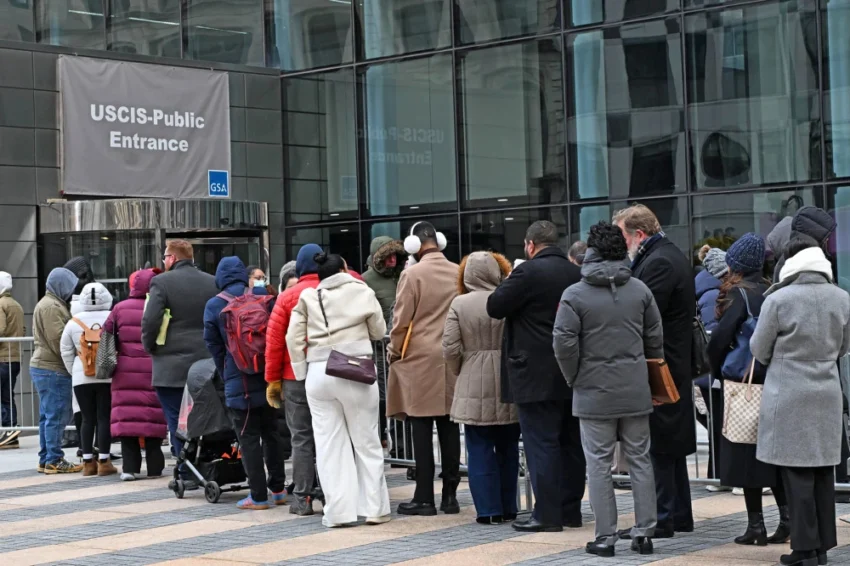
A federal judge in the United States has ruled against a series of immigration policies introduced by President Donald Trump’s administration that affected immigrants from 39 countries seeking asylum, work permits, green cards and citizenship.
Chief U.S. District Judge John McConnell of Rhode Island delivered the ruling on June 5, finding that policies adopted by the U.S. Citizenship and Immigration Services (USCIS) unlawfully prevented thousands of applicants from receiving decisions on their immigration benefit requests.
According to the court, the policies left many immigrants from African, Asian, Latin American and Middle Eastern countries in prolonged uncertainty despite following established legal immigration procedures.
McConnell said applicants had complied with requirements set by Congress and immigration authorities but were left waiting indefinitely while their cases remained unprocessed.
“USCIS’s hold on adjudications cannot be attributed to anything that these individuals did wrong; rather, it arises solely by the happenstance of their birth,” the judge wrote in his ruling.
The lawsuit was filed in March by a coalition of immigrant service organizations and labor unions, which argued that the policies unfairly targeted applicants based on their countries of origin.
The plaintiffs were represented by Democracy Forward, a legal advocacy organization. Following the ruling, the group’s president, Skye Perryman, welcomed the decision.
“This ruling reaffirms a basic principle: the federal government cannot shut down lawful immigration pathways or discriminate against people based on where they come from,” Perryman said.
The policies were introduced as part of a broader immigration crackdown launched after the November shooting of two National Guard members in Washington, D.C. Prosecutors alleged that the suspect, Afghan immigrant Rahmanullah Lakanwal, carried out the attack. Lakanwal has pleaded not guilty to the charges.
In response to the incident, Trump announced plans to tighten immigration restrictions and expanded travel bans affecting 39 countries. Nations subject to full travel bans included Afghanistan, Iran, Haiti, Somalia, Venezuela and Syria.
The administration defended the measures as necessary for national security and immigration vetting purposes.
However, Judge McConnell concluded that USCIS lacked the legal authority to implement the processing restrictions and found that the agency failed to follow federal administrative procedures.
“The rule of law has to apply to everyone equally,” McConnell wrote. “USCIS has neither followed the law nor done things the right way.”
The ruling represents a significant setback for the administration’s immigration policies and could allow affected applicants to move forward with pending immigration benefit requests that had been delayed under the challenged measures.