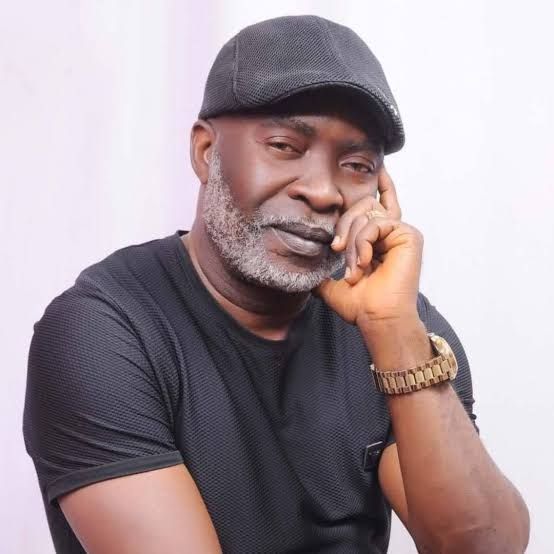
A shocking development has placed Nollywood filmmaker and actor Stanley Amandi at the centre of a major national security case, following his arrest in connection with an alleged plot to violently overthrow President Bola Tinubu’s administration.
Amandi, a former chairman of the Actors Guild of Nigeria (AGN), Enugu State chapter, was reportedly arrested alongside several military officers accused of planning a coup that allegedly involved the assassination of top government officials, including the President and Vice President.
The arrest, which took place in September 2025, only became public knowledge recently, triggering widespread reactions across Nigeria’s entertainment and political circles.
An Actor Drawn Into a National Security Case
According to reports, Stanley Amandi was not accused of being a combatant or military planner. Instead, investigators allege that he was recruited by the suspected coup plotters to serve as a propaganda figure, using his background in filmmaking and media to influence public perception and possibly promote narratives favourable to the alleged plot.
Sources familiar with the investigation say the plan was not symbolic or theoretical. It allegedly involved a violent takeover of the government, with specific officials marked for elimination.
The gravity of the allegations has stunned many Nigerians, particularly because Amandi is a known creative figure, not a career politician or soldier.
What Authorities Say About the Alleged Plot
The Defence Headquarters (DHQ) has since confirmed that investigations into an attempt to illegally remove the Tinubu administration have been concluded.
In an official statement, the military said the probe was “comprehensive” and conducted according to established procedures. The findings, according to the DHQ, identified several officers whose actions were described as inconsistent with the values and professional standards of the Armed Forces of Nigeria.
The military further disclosed that those implicated would be arraigned before military judicial panels, while civilians linked to the case would face trial in civil courts.
Although the Defence Headquarters did not mention Amandi by name in its public statement, sources close to the investigation confirmed that he is among the civilians expected to face prosecution.
High-Profile Targets Named in the Alleged Plan
Government sources previously briefed on the investigation claimed that the alleged coup plot included plans to assassinate some of the highest-ranking officials in the country.
Those reportedly listed as targets include:
- President Bola Tinubu
- Vice President Kashim Shettima
- Senate President Godswill Akpabio
- Speaker of the House of Representatives Tajudeen Abbas
While authorities have not released full operational details, they stressed that the seriousness of the alleged plot warranted both military and civilian prosecutions.
Timeline of Events
The unfolding case dates back to late 2024, when reports first emerged that several military officers were under investigation for what the army initially described as indiscipline and breach of service regulations.
At the time, officials downplayed suggestions of a coup, but by October, at least 16 officers were reportedly under investigation.
As inquiries deepened, investigators allegedly uncovered wider involvement, leading to the arrest of additional officers and civilians, including Stanley Amandi.
Amandi’s last known activity on social media was an Instagram post dated 19 September 2025, just days before his reported arrest. Since then, he has remained silent publicly.
From Film Sets to Courtrooms
Stanley Amandi is a familiar name in Nollywood, with years of experience as an actor, director, producer, and production manager.
His notable works include:
- The Album (Director)
- Tiger King (Director and Producer, 2008)
- Cornerstone (Producer, 2019)
- Once Upon a Dream (Actor, 2024)
Beyond filmmaking, he also played leadership roles within the Actors Guild of Nigeria, contributing to the organisation of actors at the state level.
This background has made the allegations particularly striking, raising questions about how a creative professional became entangled in a case of such magnitude.
Reactions Across Nollywood and Beyond
News of Amandi’s arrest has triggered mixed reactions. Some colleagues in the entertainment industry expressed disbelief, while others urged caution, stressing the importance of allowing the legal process to run its course.
Security analysts have also weighed in, noting that modern coup attempts often extend beyond weapons and soldiers, relying heavily on information, messaging, and public perception.
In that context, investigators believe civilians with media experience can play critical roles, even without bearing arms.
Legal Path Ahead
According to sources familiar with the process:
- Military officers involved will first face court-martial proceedings
- Civilians, including Amandi, are expected to be charged in civil courts
- Some suspects may face both military and civilian trials, depending on their roles
Authorities say the goal is to ensure accountability while following due process.
No court date has yet been publicly announced for Amandi, and he has not made any official statement regarding the allegations.
Presumption of Innocence
Despite the seriousness of the accusations, legal experts have reminded the public that all suspects remain innocent until proven guilty.
The Defence Headquarters itself emphasised that its findings have been forwarded to the appropriate authorities for further action in line with Nigerian law.
Until the courts rule, the allegations remain claims under investigation, not established facts.
A Wider Conversation About Power and Influence
The case has reopened broader discussions about the intersection of entertainment, influence, and politics in Nigeria.
In an age where filmmakers, musicians, and influencers command large audiences, their ability to shape narratives has become a powerful tool — one that can be misused if placed in the wrong hands.
For many observers, the Stanley Amandi case serves as a reminder that national security threats are no longer confined to barracks or battlefields, but can extend into media spaces and creative industries.
What Happens Next
As investigations transition into prosecutions, more details are expected to emerge in court. Nigerians are watching closely, not only because of the political implications, but also because of the unusual involvement of a Nollywood figure in a case of this scale.
For now, the focus remains on the legal process, as authorities prepare to present their evidence and the accused prepare their defence.
Whatever the outcome, the case is already one of the most striking intersections of entertainment and national security in recent Nigerian history.