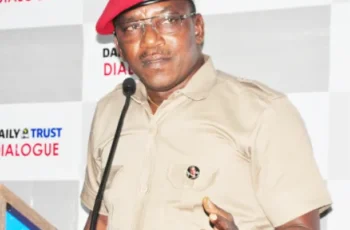

Former Minister of Youth and Sports Development Solomon Dalung has alleged that members of the National Assembly demanded a ₦200 million bribe from him during one of his early budget defence sessions after he was appointed minister.
Dalung made the claims while reflecting on his time in office, describing what he said was one of his earliest encounters with corruption in government.
According to the former minister, he expected lawmakers to question his ministry’s budget proposals but instead faced a demand unrelated to the budget itself.
“I was asked to raise ₦200 million.”
Dalung said he responded by searching through the ministry’s budget documents.
“I looked through the budget documents before me and replied that I had not seen any budget line titled ‘bribe.'”
He added that he told the committee he could not provide money that had no legal appropriation.
‘We Will Take It Up With the Permanent Secretary’
According to Dalung, his refusal to comply changed how he participated in subsequent budget defence sessions.
He claimed that after presenting an overview of the ministry’s budget, he would routinely be excused while committee members continued discussions privately with the ministry’s Permanent Secretary.
“They simply told me, ‘Okay, Mr. Minister, you are excused. We will take it up with the Permanent Secretary.'”
Dalung alleged that he was deliberately excluded from detailed discussions because he refused to participate in what he described as an illegal arrangement.
Claims of an Entrenched System
The former minister further alleged that the incident was not isolated.
According to him, a committee chairman later told him that some ministers—particularly those considered close to the Presidency—regularly met such demands to ensure their budgets progressed without unnecessary delays.
Dalung argued that such practices weaken legislative oversight and undermine accountability in public administration.
He said corruption becomes institutionalised when oversight responsibilities are allegedly used as opportunities for extortion.
“When oversight is transformed into an avenue for extortion, accountability is compromised, public resources are diverted, and the integrity of governance is eroded.”
Calls for Stronger Accountability
Dalung said many governance scandals are symptoms of broader institutional weaknesses.
According to him, fraud and abuse are more likely to flourish when oversight institutions themselves become vulnerable to financial influence.
He argued that the integrity of Nigeria’s budget process depends on transparency, accountability and strict adherence to the rule of law.
As of the time of publication, the National Assembly had not publicly responded to Dalung’s allegations.